


Thesis homemade pretzel bites are what I make when I want the taste of authentic German pretzels, but I am running short on time. So, sometimes I just don’t feel like shaping pretzels, and that’s okay. They are prefect for parties and whenever I make them for ours, they are always gone in no time at all!
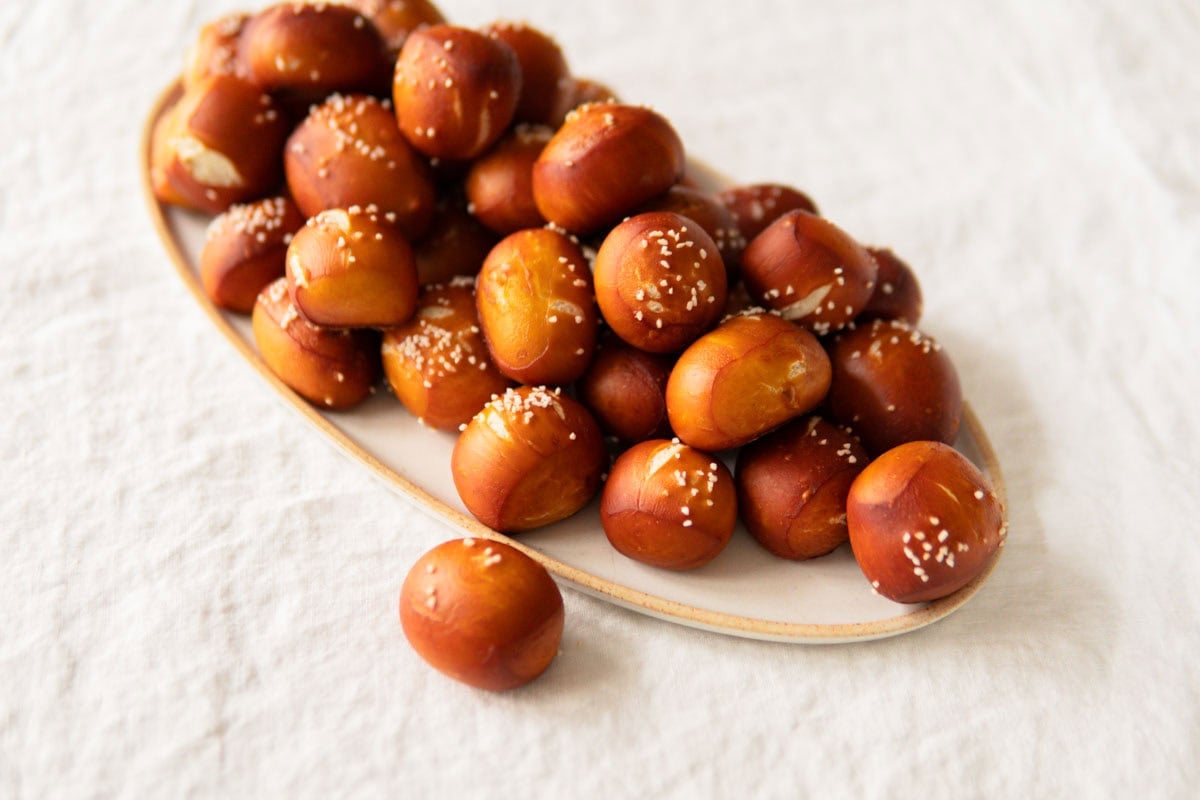
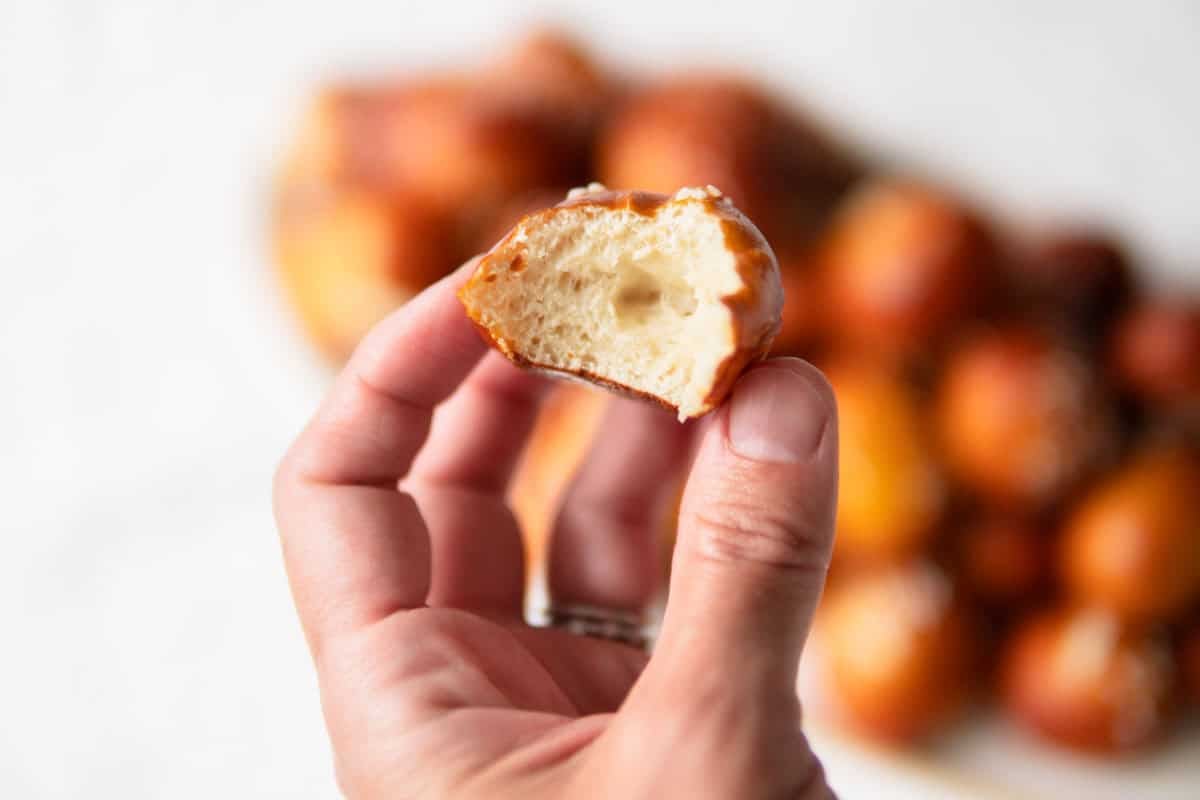
These pretzel bites are soft and golden-brown thanks to the shiny lye dipping process. A light sprinkle of pretzel salt makes them look extra authentic. The dough gets rolled into logs, cut into bite-sized pieces, rested briefly, dipped in a real lye solution, topped, and baked until brown. They’re made with simple ingredients: flour, yeast, brown sugar, butter, salt, water, lye, and pretzel salt.
I’ve been making pretzels for about 10 years, and this is by far my simplest pretzel recipe while still tasting authentic and German. The lye is what makes the biggest difference, giving these pretzel bites that German bakery flavor, color, and texture.

Jump to:
Why you’ll love these pretzel bites
thesis Pretzel bites are much easier than traditional German pretzels because there is no twisting, shaping, or par-freezing involved. You simply roll the dough into logs, cut it into pieces, let the bites puff up, dip them in lye, sprinkle them with salt, and bake.
They are also such a fun party food. Because they are bite-sized, people can grab them straight from a platter and dip them into Obatzda, a Bavarian beer cheese dip or my creamy veggie dip. While in Germany we do not eat pretzels with mustard, you can of course choose your own destiny. My favorite pairing is still butter though! The recipe still gives you the authentic flavor of German pretzels, just in a faster and more casual format.
Ingredient notes
You’ll find the full ingredient list with exact measurements in the recipe card below, but here are a few helpful notes before you start.
All-purpose flour works well for this pretzel dough. You don’t need anything fancy to get a soft, chewy texture.
Active dry yeast helps the dough rise quickly. Make sure your water is only warm, not hot, so the yeast can activate properly.
Brown sugar adds a subtle depth to the dough and helps the yeast get started.
butter makes the dough smoother and softer. Room-temperature butter mixes into the dough more easily.
Food grade lye is what gives German pretzels their signature flavor, color, and texture. Use food-grade lye only, measure it carefully, and follow the safety notes in the recipe card. Do not expect the same results as when you are using baking soda instead of lye (find instructions in the notes of the recipe card below).
Pretzel salt gives the bites that classic German bakery look and taste. Coarse kosher salt works in a pinch, but pretzel salt is worth having if you make German pretzels often.
A few tools make this recipe much easier and safer.
Kitchen scale: This is especially important for measuring the lie accurately.
Bench scraper or dough cutting tool: This helps divide the dough and cut clean, even pretzel bites.
Silicone baking mats: Pretzel dough can stick to parchment, especially after proofing and baking. Silicone baking mats release the pretzel bites more easily.
Steel skimmer: This makes dipping and lifting the bites from the solution much easier.
Steel or glass bowl: Use a non-reactive bowl for the solution. Avoid aluminum.
A few helpful tips before you start
Because these are cut into small pieces, you don’t need to par-freeze the dough before dipping. The bites are much easier to handle than shaped pretzels, especially when using a steel skimmer.
Let the cut pieces rest until they increase in size by about 50 percent. They don’t need to double, but they should look puffier and lighter before going into the lye solution.
Use a silicone baking mat for the resting and baking step. It helps keep the dough from sticking and makes cleanup easier.
When working with lye, Always add the lye granules to cold water, never the other way around. Work in a well-ventilated areawear gloves if you prefer, and keep children and pets away while preparing and using the solution.


German Pretzel Bites Recipe
Pretzel bites are a simplified version of my famous German pretzels, and come together super quickly! I make them for parties all the time and they are always gone in no time!
Ingredients
Lye Solution
- 12 grams food-grade lye I am using food-grade lye granules with a concentration of 100%. Your lye-water solution (once mixed) should have no more than 4% lye. You could use baking soda instead of lye. See notes below.
- 300 milliliters water COLD water
Topping
- pretzel salt Kosher salt can be substituted, although pretzel salt makes your pretzel bites really authentic and it’s inexpensive and lasts forever.
Instructions
-
Stir together the lukewarm (barely warm) water, brown sugar and yeast and allow to bubble up, this should take 5 minutes. If it’s not getting bubbly, your water may have been too hot or your yeast is bad. You’ll have to repeat this step.
15 grams brown sugar, 4 grams active dry yeast, 275 milliliters of water
-
Sift together the flour and salt, and add in the butter and the bubbly yeast mixture. Knead the dough on the low setting for 8 to 10 minutes using the dough hook.
500 grams all-purpose flour, 10 grams sea salt, 30 grams butter
-
Cover the dough with a piece of wax paper (or a clean linen towel) and let it rest for 5 minutes. This is to help prevent a skin from forming.
-
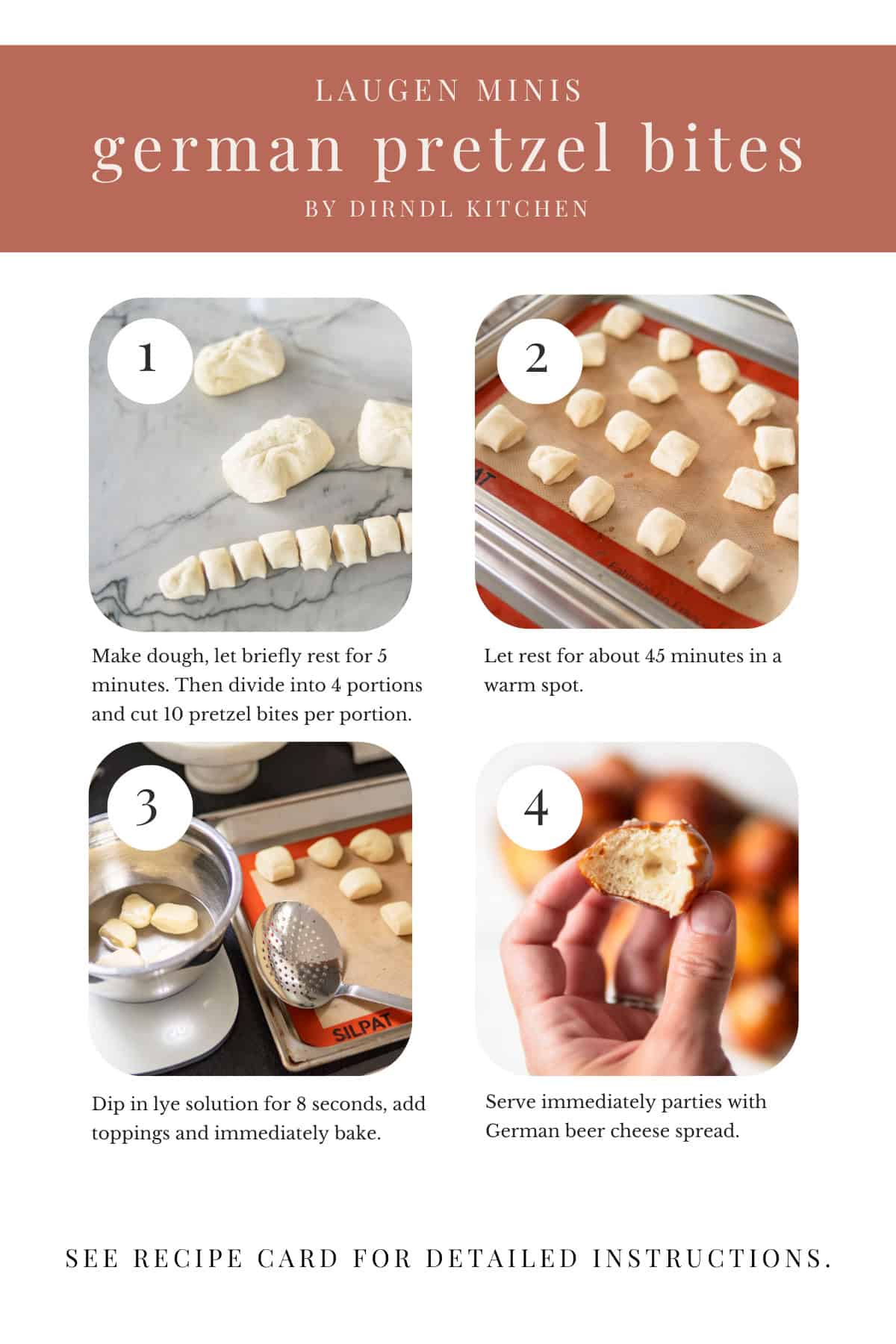
Now it’s time to cut your bites! Divide the dough into 4 equal-ish portions (you can weigh it out if you’d like to be exact). Now roll each dough piece into a long, even-thickness log of about ¾ inch thickness (1.5 cm). Cut each log into 10 pieces. I start by cutting it in half, then I cut each half into 5 pieces. I like using a dough cutting tool (this one’s my favorite dough set).
-
Transfer the pretzels onto sheets of wax paper or silicone baking mats, cover with a clean linen towel, and let them rest and develop for about 30 to 45 minutes. The bites should have increased some in size, but not a lot.
-
Prepare your solution in a well-ventilated area (like standing under a vent hood set to high or ideally being outside) because of potential fumes. I also recommend wearing a cloth or medical grade face mask and rubber gloves to be extra safe (luckily everyone should have these at home by now). Add the premeasured lye (it comes in dry granules) into COLD water, not the over way around. At this point, I like to step to the side for about 10 to 15 seconds to let potential fumes evaporate. Then carefully combine with a whisk until the solution is clear.
12 grams food-grade lye, 300 milliliters of water
-
Now dip the dough pieces using a steel skimmer (you could also use two forks) for about 8 seconds each before transferring them using your skimmer onto a baking sheet covered with a silicone baking mat (I have found the baking mats work best in releasing the pretzels after baking, so it may be time to invest in some).
-
Then sprinkle with the pretzel salt.Alternatively, sprinkle with shredded cheese or seeds. Pumpkin seeds are my favorite seeds to add.
pretzel salt
-
Bake at 355° Fahrenheit or 180° Celsius (convection/fan setting) for about 12 minutes or until golden brown (I like to rotate them after 6 minutes. Allow to cool for a few minutes before enjoying on your own, with butter, Obatzda, a Bavarian cheese spread for this creamy dip that I love so much!
Notes
- No Lye? Use baking soda instead. In a small to medium saucepan, whisk together ¼ cup of baking soda and 4 cups of water. Bring to a gentle simmer and using a slotted turner or a skimmer, dip your pretzel bites in the solution for 30 seconds at a time. To get a more authentic pretzel taste, bake your baking soda before preparing the solution. On a baking sheet covered with foil, evenly sprinkle on the baking soda and bake for an hour at 300 degrees Fahrenheit (150 degrees Celsius), making it more alkaline and closer to a PH value of lye. Then proceed with making the solution.
- No convection setting? Use a conventional oven and increase the temperature to 380 degrees Fahrenheit or 190 degrees Celsius. Bake until the pretzel bites are golden brown.
Nutrition
Calories: 53kcalCarbohydrates: 10GProtein: 1GFat: 1GSaturated Fat: 0.4GPolyunsaturated Fat: 0.1GMonounsaturated Fat: 0.2GTrans Fat: 0.02GCholesterol: 2mgSodium: 103mgPotassium: 15mgFiber: 0.4GSugar: 0.4GVitamin A: 19IUCalcium: 3mgIron: 1mg
Storage
Pretzel bites taste best the day they are baked, especially while still warm. If you have leftovers, let them cool completely, then store them in an airtight container at room temperature for up to 1 day.
To reheat, warm them briefly in the oven until the outside feels refreshed and the inside is soft again.
Leftovers
Leftover pretzel bites are perfect for making pretzel dumplings. Use them in place of bread in my bread dumplings recipe to make pretzel dumplings. They are absolutely delicious, soak up sauces so well and are so, so good with goulash, roasts, or topped with creamy mushroom sauce.
Pretzel bites are more of a modern party-food version of German pretzels, but this recipe uses authentic German pretzel dough and a real lye dip for that classic flavor.
You don’t have to, but lye is what makes these taste like real German pretzels. Baking soda can work as a substitute, especially if baked first to make it more alkaline, but the flavor and color will be different.
Traditional shaped pretzels can be delicate and harder to lift into the lye solution, which is why par-freezing helps. Pretzel bites are small and sturdy, so they can go straight from resting to the lye dip.
They are best fresh, but you can bake them ahead and reheat them before serving. For the best party experience, bake them shortly before guests arrive.
Obatzda is my favorite if you want a German or Bavarian pairing. Next is butter (most traditionally German pretzel pairing). Creamy veggie dip, beer cheese, mustard, and honey mustard are also great options (although not traditionally German).