


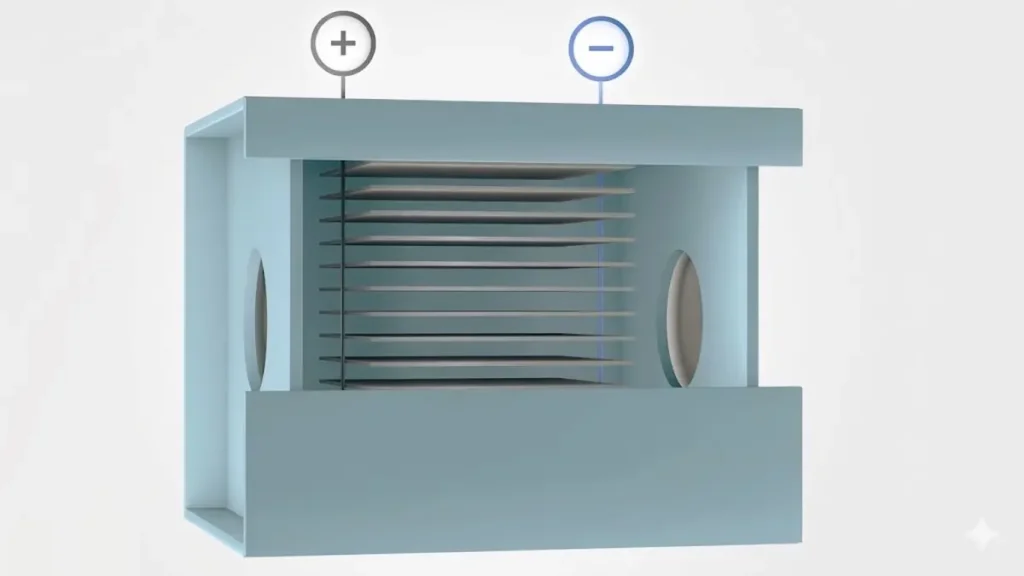
A heat pump that works completely without a compressor or refrigerant: That sounds like a dream of the future, but it is currently becoming a reality in Freiburg. The start-up Qurie has developed a solid-state heat pump that is based on electrocaloric materials and is intended to reduce energy consumption by up to 30 percent.
Current compression heat pumps pollute the environment with climate-damaging refrigerants or require high operating pressures. A new heat pump from the Freiburg company Qurie is instead based on an electrocaloric circuit with solid-state materials such as ceramics or polymers.
When an electric field is applied, the dipoles arrange themselves in the material, causing it to heat up. After the voltage is switched off, the material cools down again, creating a thermal cycle. The slow heat transport usually limited the operating frequency of such systems to one cycle per second.
The start-up wants to solve this problem with a chamber with special heat pipes. In these vacuum-sealed cavities, a working medium such as water or ethanol evaporates and condenses very quickly. The developers have already demonstrated an operating frequency of up to 20 Hertz.
Heat pump without a compressor: How does an electric field generate heat and cold?
The heat pump consists of several modular segments. Special check valves separate the components in the system from each other. According to tests, a four-stage cascade already delivered a cooling output of two watts at a two Kelvin temperature swing. Specially developed power electronics ensure continuous loading and unloading.
The next prototype will consist of 20 segments and achieve an output of 100 watts. The first commercial application of the technology is likely to be in the cooling of control cabinets and laser and photonic systems. In these niche markets, conventional refrigerants are often ruled out due to strict explosion protection requirements. Peltier elements are currently often used there, which are considered inefficient and expensive.
Why conventional refrigerants are on the verge of extinction
Avoiding conventional refrigerants solves a central problem in air conditioning technology. Many substances used are likely to gradually disappear from the market. Qurie co-founder Christian Vogel told PV Magazine:
Many of the best refrigerants are either already banned or are being phased out of the market, primarily because they have either contributed to ozone depletion or have a high global warming potential. Natural refrigerants are a good alternative, but they come with their own limitations. Some are flammable and therefore unsuitable for certain applications, while others, such as carbon dioxide, require very high operating pressures, making small systems expensive and complex.
In the long term, the company is aiming for wider use in the power range below ten kilowatts. The goal is efficient heat pumps for residential buildings. A high-tech start-up fund and a research program from the Federal Ministry for Economic Affairs and Energy support the spin-off financially. Although scaling remains a challenge, compressor-free and refrigerant-free residential heat pumps could be a game-changer.
Also interesting: