


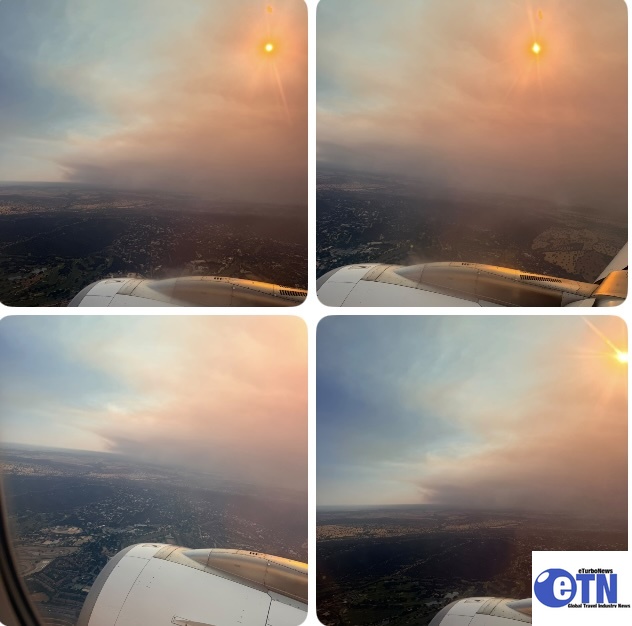
Europe’s peak summer travel season has been disrupted as catastrophic wildfires across France and Spain force more than 200,000 evacuations, including thousands of international tourists. Resorts, campsites, and popular vacation destinations remain under threat as firefighters battle rapidly spreading blazes fueled by extreme heat, drought, and strong winds.
The European Commission says it is helping finance and coordinate the deployment of a record number of firefighters, aircraft, and emergency experts to support wildfire response, including in France and Spain.
Passengers landing in Madrid were able to see and smell the smoke inside the plane.
Are tourists being evacuated from France and Spain because of wildfires?
Yes. Massive wildfires burning across France and Spain have forced the evacuation of more than 200,000 people, including thousands of international tourists vacationing during Europe’s busiest summer travel season.

Authorities say the fires are among the largest and fastest-moving of the year, threatening beaches, campsites, hotels, holiday homes, vineyards, forests, and transportation routes. Emergency crews continue battling multiple fires while additional evacuations remain possible.
Where are the wildfires in France?
The largest wildfire emergency is centered in southwestern Franceparticularly around Cap Ferret, Biscarrosseand areas nearby Bordeaux.
Cap Ferret, one of France’s best-known Atlantic beach destinations, was evacuated after wildfire surrounding the peninsula. Thousands of visitors left by road while others were evacuated by boat as flames approached the only access route.
Additional fires have spread toward the outskirts of Bordeaux, forcing authorities to evacuate nearby communities and mobilize firefighters from across Europe.
Where are the wildfires in Spain?
Spain has declared a national wildfire emergency after multiple fires spread west of Madrid and into parts of Avila Province.
Thousands of residents and visitors have been evacuated or instructed to remain indoors as firefighters battle extreme heat, strong winds, and rapidly changing fire conditions.

The fires continue to threaten communities, forests, and transportation infrastructure.
Which tourists are affected?
The wildfire emergency is affecting travelers from around the world.
The regions impacted are among Europe’s most popular holiday destinations, attracting visitors from:
- United Kingdom
- Germany
- Netherlands
- Belgium
- Switzerland
- France
- Other European Union countries
- North America
- Asia
Although authorities have not released detailed nationality figures, tourism officials confirm that international visitors are among those evacuated from hotels, resorts, campsites, vacation rentals, and beach communities.
How serious are the France and Spain wildfires?


Live: France deploys military plane as wildfires spread towards Bordeaux
French Prime Minister Sébastien Lecornu has ordered the armed forces to deploy an A400M military transport aircraft as early as Saturday to help combat fires raging in the southwest, his office said.…
Emergency officials describe the situation as one of the most significant wildfire disasters affecting European tourism this summer.
The fires have already forced:
- More than 200,000 evacuations and shelter-in-place orders
- Closure of roads and tourist areas
- Disruptions to holiday travel
- Large-scale firefighting operations involving several European countries
- Emergency assistance through the European Union Civil Protection Mechanism
Hundreds of firefighters, aircraft, helicopters, and military personnel remain deployed.
Why are the wildfires spreading so quickly?

Meteorologists point to several factors:
- Extreme summer temperatures
- Prolonged drought
- Very dry vegetation
- Strong winds
- Low humidity
These conditions have created ideal circumstances for rapidly expanding wildfires that can change direction with little warning.
Climate scientists continue to warn that Europe is experiencing longer and more destructive wildfire seasons as global temperatures rise.
What should travelers do?
Visitors currently in France or Spain should:
- Monitor official emergency alerts.
- Follow evacuation orders immediately.
- Contact airlines and accommodation providers regarding travel changes.
- Avoid closed roads and wildfire zones.
- Check travel insurance coverage before changing travel plans.
Travelers planning vacations in affected regions should monitor conditions closely, as fire activity continues to evolve.
Europe’s Tourism Industry Faces Another Climate Challenge
The wildfire emergency comes during the height of Europe’s summer tourism season, when millions of visitors travel to France and Spain for beach holidays, wine tourism, cultural experiences, and outdoor recreation.
While many destinations remain open and safe, authorities continue to monitor changing fire conditions, and additional evacuations cannot be ruled out.
The events underscore how climate-driven extreme weather is becoming an increasingly important factor for the global travel and tourism industry, affecting visitor safety, destination management, transportation, and tourism resilience across Europe.
As firefighters continue working around the clock, travelers are urged to rely on official information and remain flexible with travel plans while emergency operations continue.