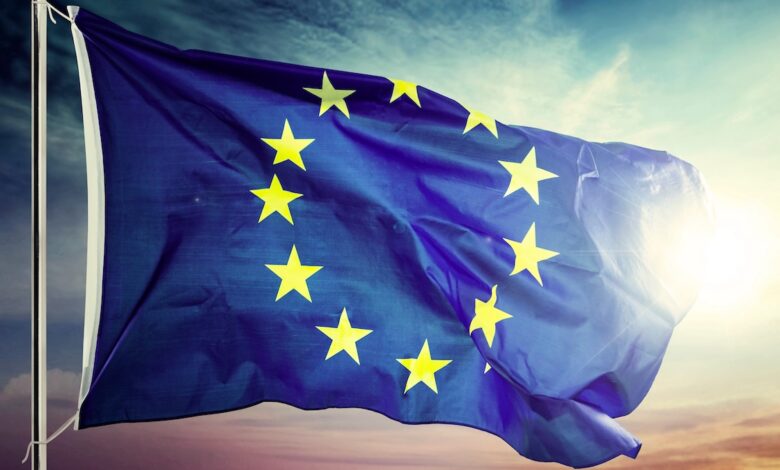
The EU Inc. is revolutionizing the way companies are founded: a digital, cross-border online process replaces lengthy national bureaucracy and strengthens Europe’s international competitiveness. In this way, Europe is sending a clear signal for modern competitiveness and leaving outdated start-up patterns behind.
There are moments when, as an observer of Europe’s legal developments, you think: What is planned here could really change something. The European Commission’s draft for “EU Inc.”, the planned new European corporate form, is exactly such a moment for me.
Not because another form of society is to be introduced here. But because Europe is finally starting to think about setting up companies the way they should work in 2026: digital, fast and modern.
EU Inc.: The regulation breaks national hurdles
Anyone who sets up a company in Germany quickly realizes that it is a complicated and lengthy process. The processes are formalized, many institutions and authorities such as notaries, trade offices, tax offices, etc. are involved, but often without automatic coordination. And even though many things have now become more digital, the feeling remains that you are moving through a system that comes from another century.
The draft for the new “EU Inc.” starts right here. He consistently thinks of founding a business as an online process that should work without physically appearing at any office or authority. This is not a small technical advance, but a clear change of perspective on the implementation of business start-ups.
What I find particularly exciting: EU Inc. is to be introduced by means of a regulation. This means that the regulations on EU Inc. apply directly and do not require implementation into national law as is the case with a European directive. This should effectively prevent member states from circumventing European requirements.
There is no form of company without control
One point that should be mentioned in this context is the role of control. The Commission’s draft does not forego legal protection. Notarial or other preventive audits remain possible if member states deem this necessary. But these tests are no longer seen as mandatory intermediate steps, but rather as part of the entire European founding process.
That sounds unspectacular, but in practice it is something completely new – especially for Germany. For us, many delays are not caused by individual parties involved, but rather by interfaces, coordination and transmission of information – sometimes in formats that do not take digital possibilities into account. For example, consider sending notifications from German commercial registers in paper form instead of via an online portal or by email).
Speed is suddenly taken seriously
What particularly impresses me about this design is the courage to be consistent. The Commission doesn’t just talk about digitalization. It links them to clear objectives that must be implemented.
These include a maximum of 48 hours until the company exists, low costs of a maximum of 100 euros, standardized documents and a central European interface through which the formation is carried out. This is finally no longer symbolic politics, but a serious attempt to accelerate the founding process.
EU Inc.: Founding companies at high speed
This is particularly exciting from a German perspective. There has been a structural problem here for years: individual steps are not too slow. Although that is also the case. Just think of sending the commercial register fee invoices by post when founding a UG. This means that there will be several days of delay.
The whole process is too slow. Anyone who sets up a company doesn’t primarily want to know which steps are legally elegant, but rather how quickly he or she can actually start the new company.
The EU Inc. addresses exactly that. It not only reduces formalities, but also tries to logically streamline the entire process. This is a difference that you will immediately feel in practice.
A form of society that sounds like Europe and not like administration
Another point that is quickly overlooked in my opinion: A “GmbH” as a German corporate form is at least in need of explanation internationally. This naturally applies to all corporate forms used in other member states. You can immediately understand an “EU Inc.” that is the same in all member states. In my opinion this will even be the case outside Europe.
This may sound like a minor point, but it is not. This clarity regarding the corporate form is a real plus point, especially for start-ups that think internationally early on, address European or international investors or build teams across national borders. The EU Inc. seems like a consciously designed offer to precisely this target group.
Finally, there is the flexibility and simplicity of EU Inc. A minimum capital is not required, digital share transfer is standard and there are fewer formal hurdles when there are changes in the shareholder group.
These are not simple details, but rather important core elements that are fundamental when using a corporate form, especially if it is growing and changing quickly.
A shift to the essentials
One thing is important to me at this point: This draft, as new as the founding process is, especially for Germany, is not a frontal attack on the existing system. However, it is clear that there will probably be comprehensive changes.
Control of what happens when a company is founded remains possible, and the goal of legal certainty also remains. However, the way to get there is thought of differently, namely less as a rigid sequence of mandatory appointments and more as an integrated, digitally supported process.
And as a result, bottlenecks will be eliminated. Anything else would be pointless, since the goal should definitely be an improvement due to a new process.
It is also not about blaming individual actors such as notaries or commercial registers for slowing down the founding process. Ultimately, they implement what the laws stipulate. But the laws are no longer up to date.
Why EU Inc. is particularly relevant for Germany
For years, Germany has been faced with a situation that has not yet been properly resolved: How can we make the founding of corporations easier, faster and more attractive without sacrificing the legal quality of the founding process?
The answer so far has been marginal and discouraged innovations such as carrying out the – still mandatory – notary appointment via video call, but this has not improved the process as such and has not really been accepted yet.
EU Inc. could provide an answer here. Although it does not force Germany to completely rebuild its existing system for establishing corporations, it will rather remain in place alongside the European one.
A wake-up call for lawmakers
But the way EU Inc. was founded creates an alternative that will increase pressure to rethink processes. Because why should founders in Germany set up a GmbH when they get the same thing with an EU Inc., just without the complicated process?
In addition, for the first time, EU Inc. offers founders the opportunity to consciously choose a model that is more geared towards speed and scalability than other companies. This is particularly relevant for digital business models, international teams and growth-oriented start-ups.
Anyone who builds a company today often thinks internationally. The legal form should reflect this. My guess is that the EU Inc. will be accepted faster than some lawmakers can imagine.
EU Inc.: A long overdue step in the right direction
The draft for EU Inc. is extremely exciting for me. It remains to be seen how the discussion about this draft will go. But it is a strong signal that gives me hope that changes are finally coming.
In my opinion, Europe shows that it has understood what is important in modern business creation, namely clear, better and faster processes as well as digital implementation. Hopefully this will be understood in Germany.
If this European approach is retained in the final version, the EU Inc. could be more than just a new legal form. This could be the moment when Europe begins to truly understand start-ups as a location factor and competitive advantage. And that would be a development – especially from a German perspective – that we can really be happy about. I will definitely do it.
Also interesting: