


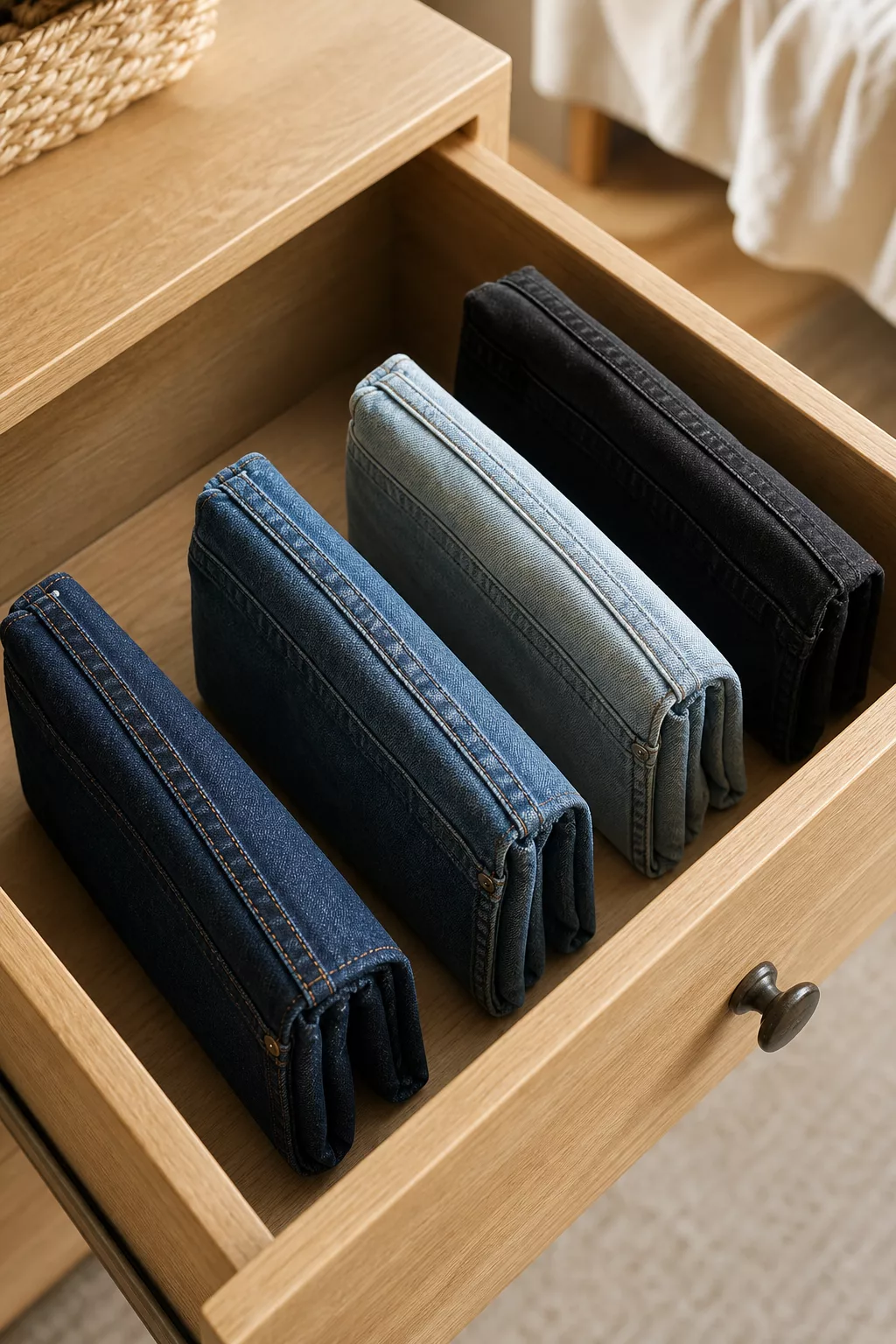
The drawer is stuck because there are five pairs of jeans, two pairs of chinos and a good pair of suit trousers piled up in it. If you want to fold pants to save space, you gain back space and protect the fabric at the same time – provided that each pair of pants is folded in a way that suits its material. Robust jeans handle differently than pleated trousers with sharp creases. In the end, each item stands upright and visible in the drawer, and the crease stays exactly where it belongs.
Folding or sagging: what really protects your pants?
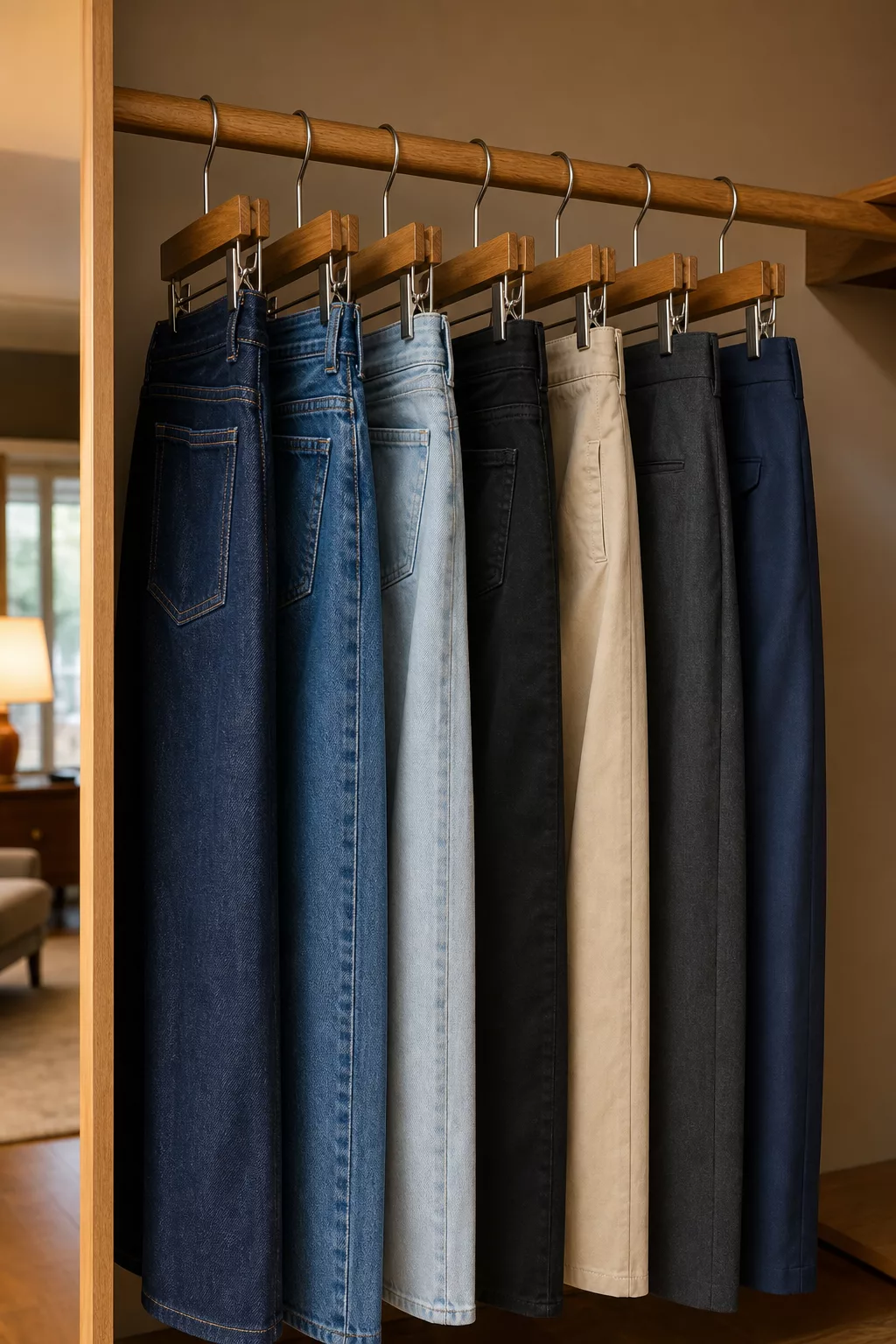
Before you even choose a folding technique, it’s worth asking the basic question: hang up or fold? Pants that are hung up look neat in the closet, but over the weeks their own weight pulls on the fabric. Exactly at the hanging point – on the waistband above the clip or on the hanger bar – the fabric slowly expands. This is hardly noticeable with jeans, but with fine fabric it becomes noticeable over time.
This doesn’t happen when folded. The pants lie flat, the weight is distributed and the shape is retained. In addition, there is the gain in space: a fully hung hanger quickly takes up five to six centimeters of rod width, while the same pair of trousers only takes up two to three centimeters when folded. When placed upright next to each other, folded trousers take up a fraction of what hangers take up in the closet. There is space for eight to ten pairs in a single drawer, each one recognizable at a glance.
Still, it doesn’t work without a hanger. It’s better to hang up freshly washed trousers to dry completely, and leave whatever you’re wearing in the next day or two on the hook and ready to hand. However, for long-term storage – and for anyone who works with open wardrobe systems – folding is the more material-friendly choice.

Fold suit trousers without losing the crease
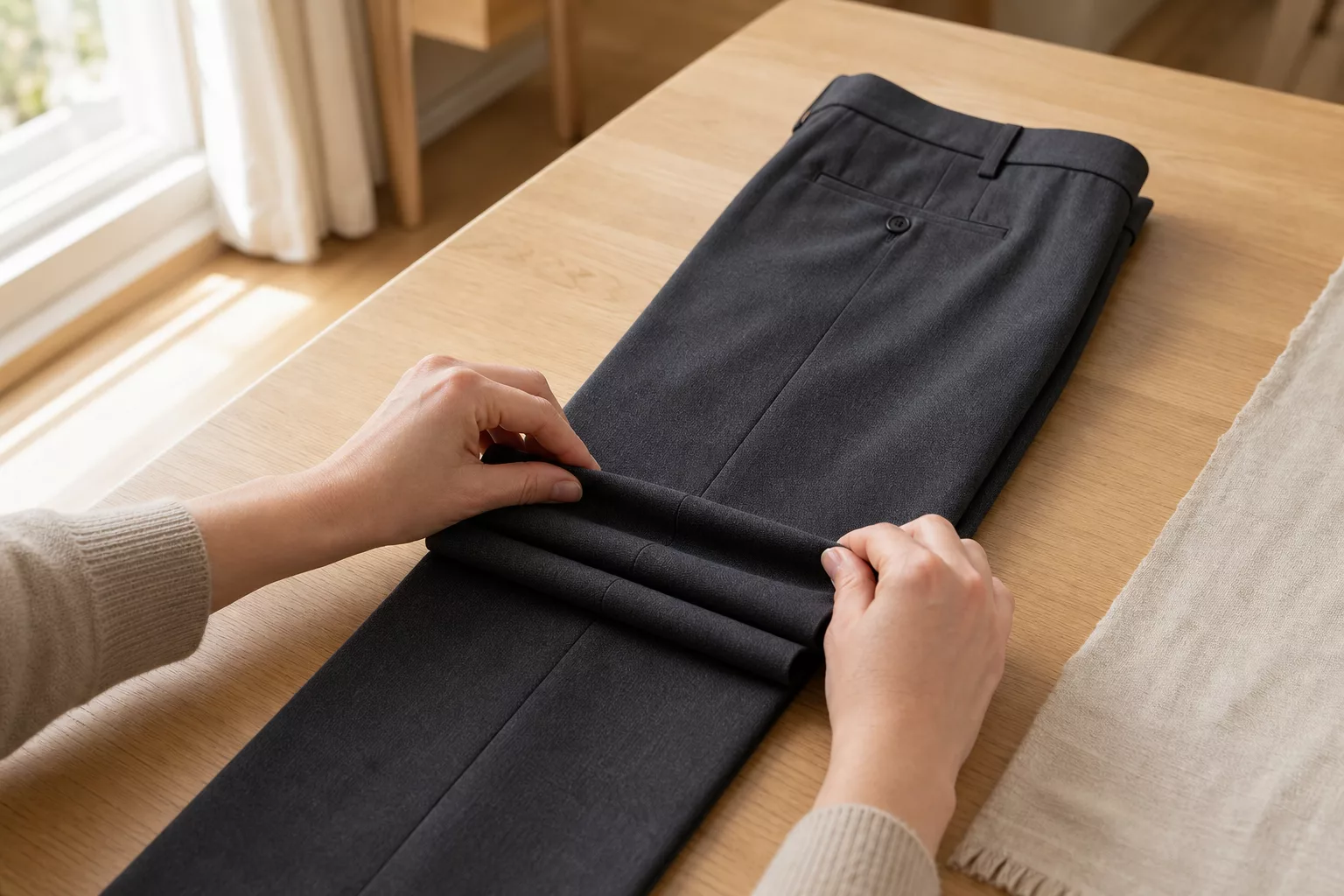
The crease is the first thing that suffers when folded incorrectly. A transverse bend right through the leg and the sharp vertical line is gone. With the accordion fold you can avoid the problem in three steps.
Lay the suit trousers flat in front of you and press the waistband together at the existing leg creases so that both legs lie neatly on top of each other and the crease runs along the edge. This keeps the line in the lead from the start.
Now fold the pants lengthwise in an accordion fashion – don’t roll them, but lay them in even vertical strips. Fold a bulky zipper or button inwards so that nothing is bulky.
Finally, fold the package twice horizontally in the middle. A compact rectangle is finished that carries the crease on the outer edge and thus protects it from pressure. The same fold works just as reliably with chinos and any stiffer fabric that needs to hold its shape.

Fold jeans using the KonMari method
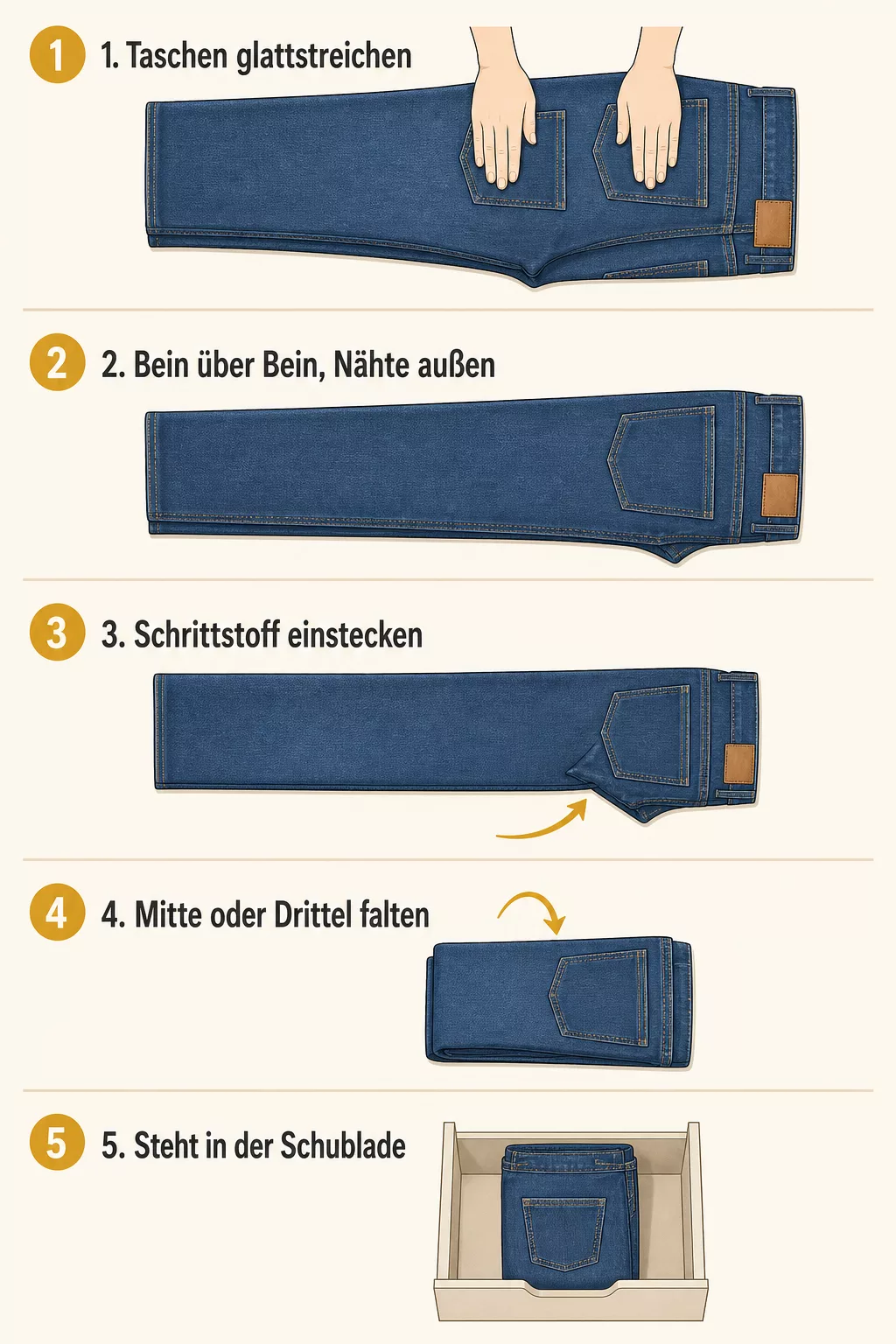
The KonMari method has become established for jeans, sweatpants and everyday trousers – named after the Japanese tidying icon Marie Kondo. It’s quick, makes a sturdy package and ensures that the trousers stand upright in the drawer and remain immediately visible.
First, smooth out the pockets and lay the jeans flat. Wrinkled inner lining on the pockets will otherwise cause dents in the finished package.
Place one leg over the other so that the pants become one long strip with the seams facing outwards. Tuck the crotch fabric that now protrudes to the sides under your legs. The result is immediately narrower and smoother.
Now fold the strip in half or, if the compartment is flatter, in thirds. The tighter your drawer, the smaller the package. Finally, stand the folded jeans upright – they should stay up on their own. This works best with firmer denim materials; Very soft jersey or sweatpants sometimes need an additional envelope so that the package really holds up.
The rolling method for suitcases and narrow compartments
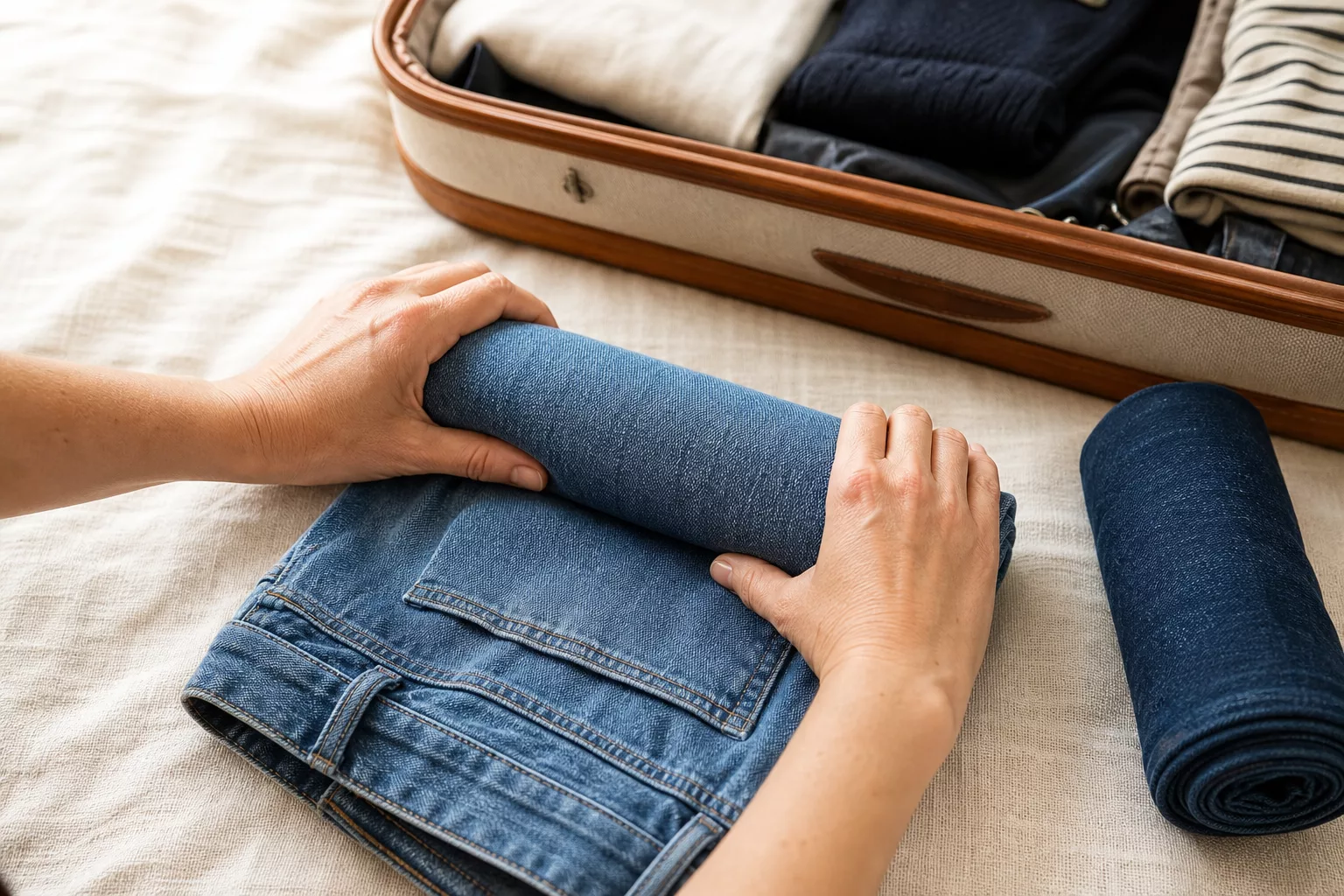
A third technique comes into its own in suitcases and in particularly narrow compartments: rolling. Fold the pants lengthways so that they lie leg on leg, then roll them up tightly from the hemmed end to the waistband. The result is reminiscent of a tightly wound roll of jam – compact and surprisingly wrinkle-free. Roll really tightly: a loose roll will spring back up and end up taking up more space than a neat fold.
Rolling is rarely necessary for everyday use in the closet, but is unbeatable in luggage: rolled pants fill the gaps between shoes and toiletry bag that a flat fold would never achieve. If you would like to try out even more variations, you will find further folding techniques for trousers in our detailed overview.
Fold trousers to save space and keep them tidy over the long term
The best folding technique only works if a few little things are right around it. Three simple steps decide whether the drawer still looks the same after two weeks as it did on the first day.
Professional tips for lasting order
- Seams to the outside: When folding, always align the side seams towards the outside. This keeps the folded edge smooth and prevents the unsightly cross folds that would otherwise sit in the middle of the leg.
- Do not fold on residual heat: Allow freshly ironed or just dried trousers to cool completely. The residual heat fixes every kink that you actually want to avoid.
- Only fill three quarters full: Never fill the drawer to the brim. If everything is too tight, the standing packages will tip over and the entire arrangement will collapse.
What’s Hot

Household
6 clever hacks for the IKEA Gardsbutik bucket
The quickest way to see the difference is to start with a single drawer today: take everything out, sort it by type of pants and rearrange it using the appropriate technology. Twenty minutes later, each pair is standing upright and ready to go. If space is generally limited, a few clever solutions for more space in the home can help – or a well-thought-out clothes rack in the bedroom where the next day’s trousers can find a permanent place.