


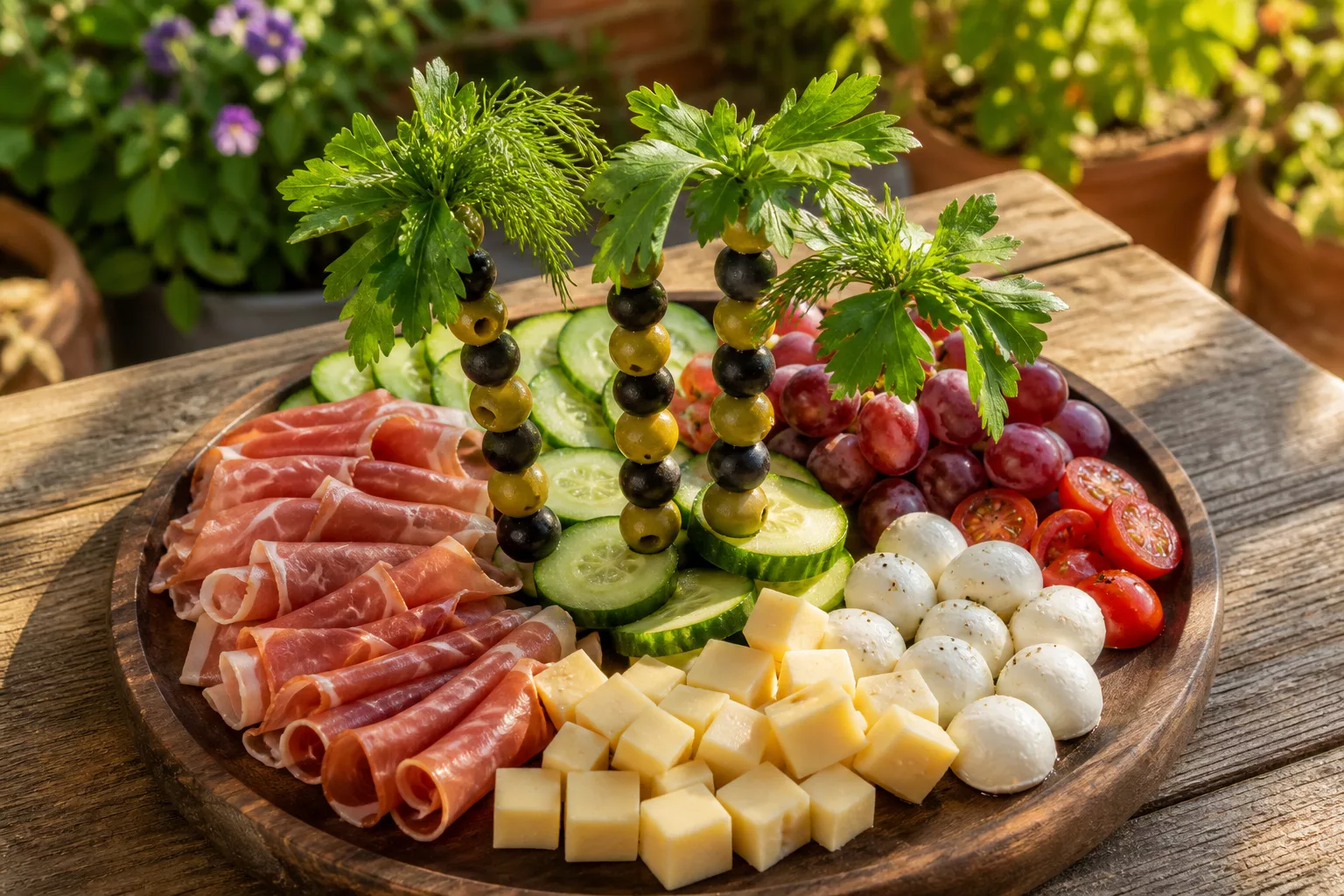
An edible palm tree decoration turns a normal snack plate into a small holiday island in just a few minutes. You don’t need any special tools or a crafting routine, just a few olives, a carrot and a sharp knife. On this page you will find three variants of mini palm trees, the right base for each type of plate and a practical preparation part that most instructions leave out completely.
The nice thing about it: Everything is completely edible. At the end of the evening there is no decorative waste left, but an empty plate. That’s exactly why the idea works equally well for barbecues, birthdays, brunch and spontaneous garden parties.
Why edible palm trees enhance every cold plate
The most common mistake with a cold plate is that everything lies flat. Cheese cubes, sausage, vegetables – beautifully presented, but without a real eye-catcher. This is exactly where the small palm trees come in: they bring height into play. And in food photography, as at a real buffet, height is the easiest way to make a plate look exciting.
There are three reasons for edible palms:
- Structure: The upright skewers break up the flat surface and give the plate a center point.
- Summer look: Palm trees immediately tell a holiday story. This suits every warm season and attracts guests to the table.
- Zero waste: Unlike paper flags or plastic decorations, nothing here ends up in the trash. The palm trees are simply eaten.
A trick from the editors: Always build an odd number of palm trees. A single one acts as a soloist, three at different heights look like a small oasis. Two next to each other, on the other hand, quickly seem like a mistake.
Variant 1: Olive palm with dill or parsley
The olive palm is the fastest of the three and even beginners can do it straight away. They only need a few ingredients and about two minutes per piece.
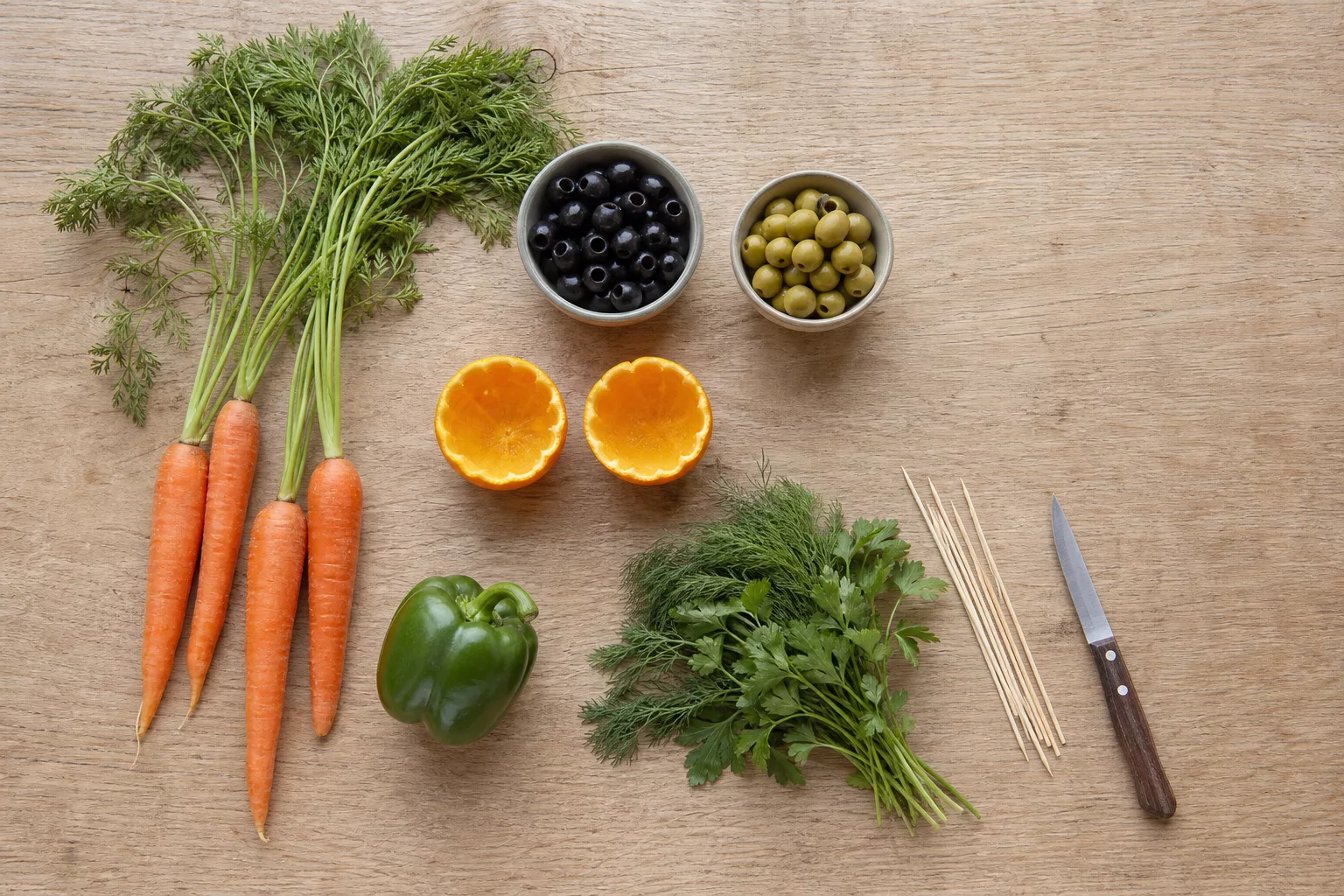
What you need:
- 4 to 6 pitted olives (green, black or mixed)
- a wooden or cocktail skewer
- fresh greens: dill, flat-leaf parsley or fennel greens as a crown
- a base: thick slice of cucumber, half an orange or melon ball
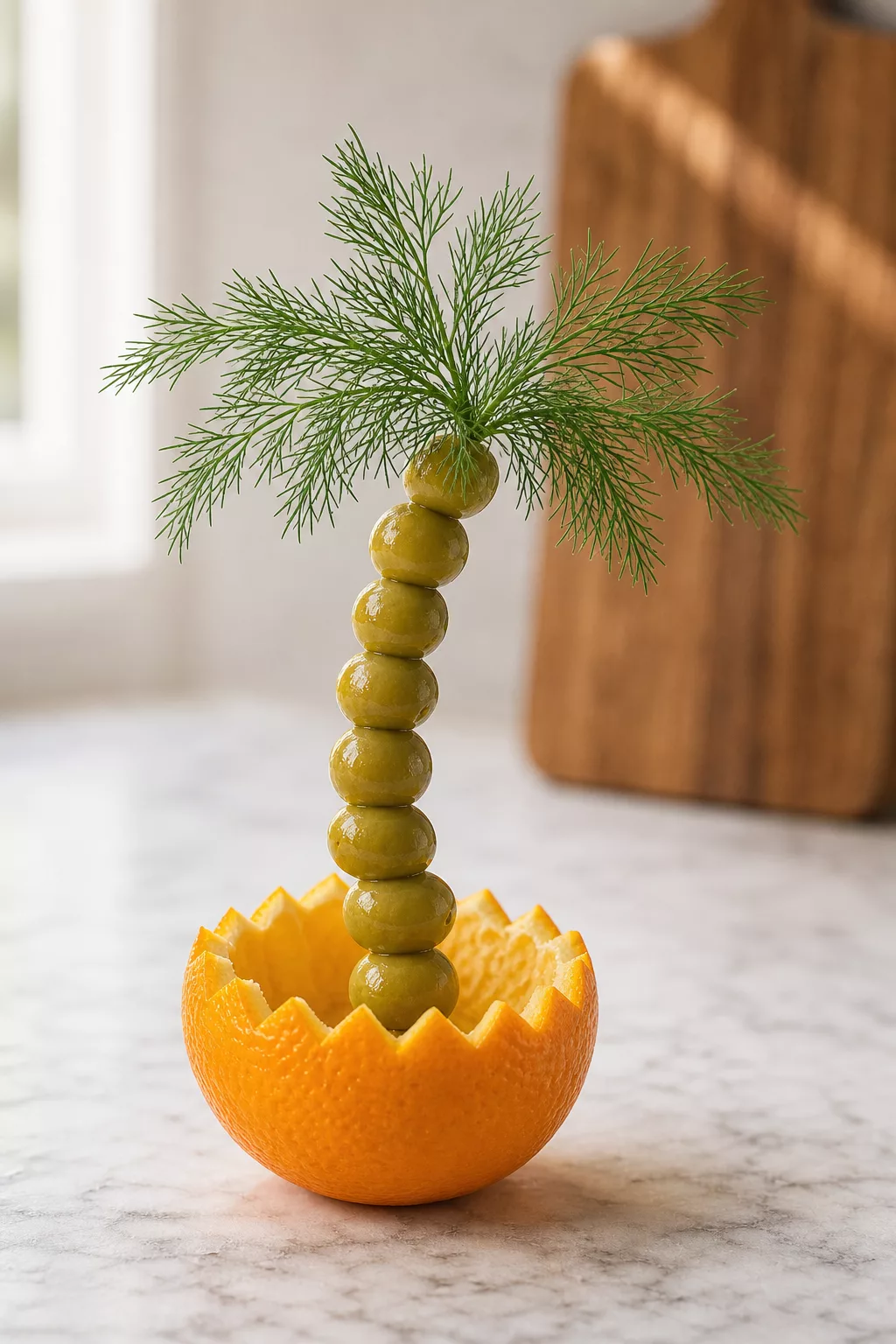
Step by step: Thread the olives onto the skewer one at a time to form a log. Leave one to two centimeters free at the top. Stick a strong bunch of dill or parsley there, which fans out in all directions like palm fronds. Finally, press the skewer deep into the selected base – done.
A mix of colors is worthwhile for the look: alternating green and black olives give the trunk more depth than a single variety. Allow 2 palms for a small board and 3 to 5 for a large board. If you like it particularly pretty, arrange the olive palms in half an orange, the edge of which is hollowed out in a jagged shape – the citrus tone highlights the green wonderfully.

Variant 2: Carrot palm with its own greenery
This variant is the most elegant because the carrot comes with its own palm green. To do this, buy bunched carrots with fresh, strong greens – packaged carrots without cabbage don’t work here.
What you need:
- whole carrots with 8 to 12 cm of standing greens
- a peeler and a small knife
- a base: herb cream cheese, a solid dip or half a melon
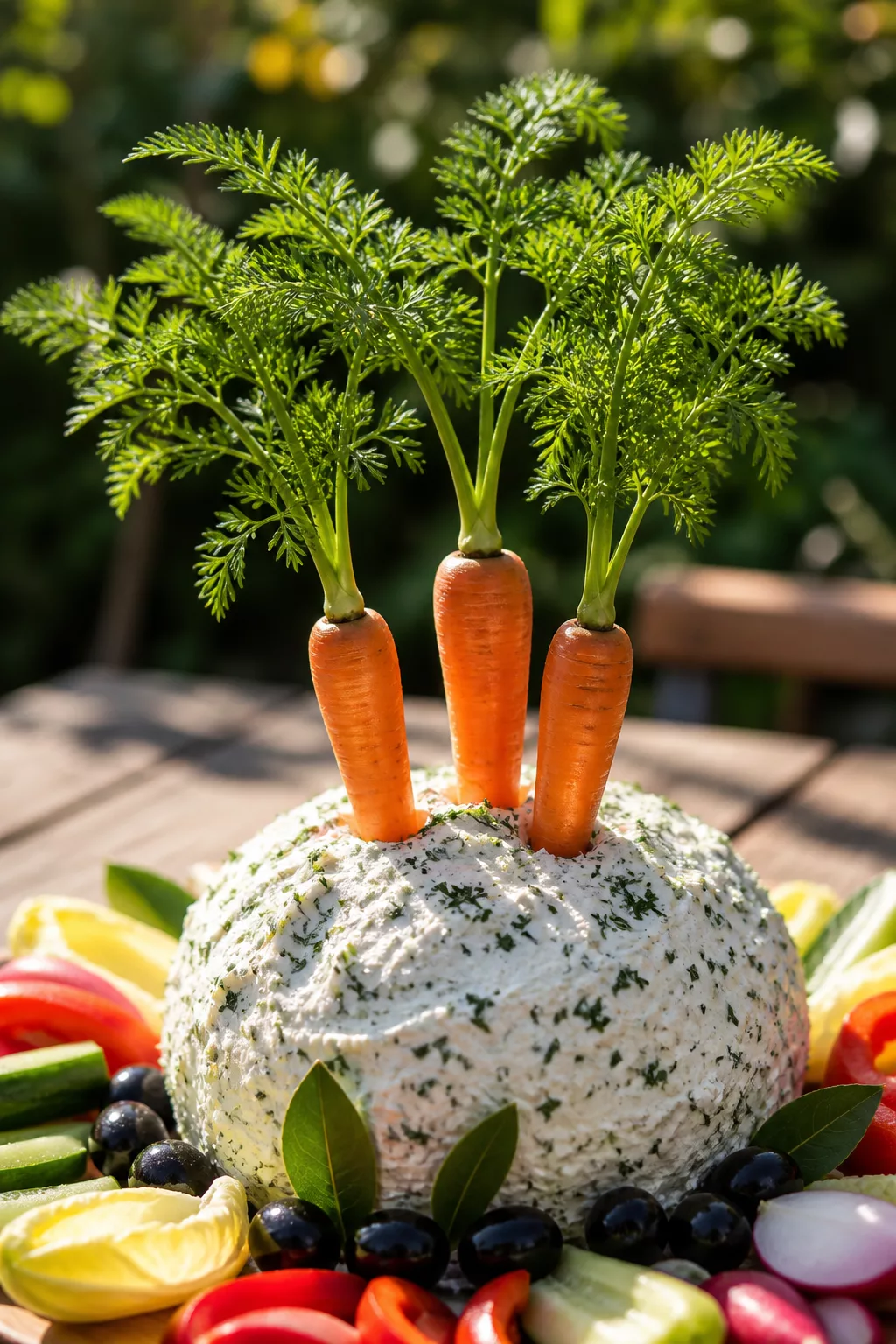
Step by step: Wash the carrot thoroughly including the greens and peel the lower part. The herb at the top remains standing and becomes the crown. Now scratch fine transverse lines into the peeled trunk with the tip of a knife – this imitates the typical bark of a palm tree. If you like, taper the carrot slightly towards the top to make it look slimmer. Then stick the carrot upright into the base.
This motif looks best with three carrots at different heights stuck together in a cream cheese ball. A few olives and bay leaves at the base turn the ball into a small miniature island. This version makes a great make-ahead summer brunch centerpiece.
Variant 3: Carrot-pepper-palm
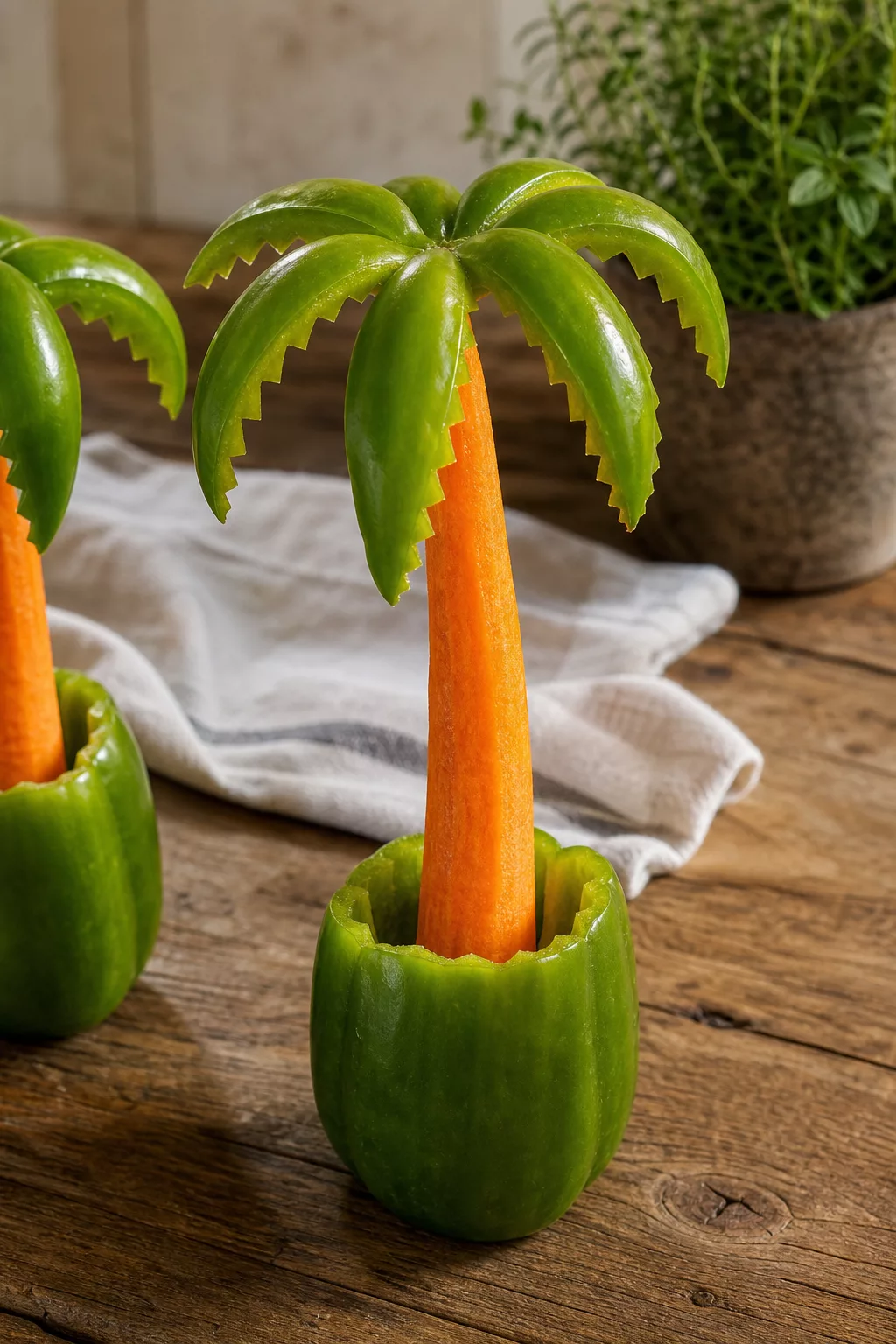
If you want a real palm crown, carve it out of a green pepper. This takes a little longer, but looks deceptively real and is an eye-catcher on every vegetable platter.
What you need:
- a thick carrot as a stem
- a green pepper for the crown
- half a toothpick and a dollop of herb cream cheese
- a base with a base: half a cucumber or a piece of melon
Step by step: Cut off the top half of the peppers. Cut 5 to 6 segments from the ring, which remain connected at the base of the stem – this is how the individual fronds are created. Add fine serrations to the edges of each segment to give the crown its characteristic palm shape. The peeled carrot serves as a stem. Place the pepper crown on top and secure with half a toothpick.
The most important tip concerns stability: a small blob of herb cream cheese between the carrot and the crown acts like edible glue and holds the construction together. This means that the crown does not tip over even if the plate is worn once.
What’s Hot

DIY decoration
Making lavender baskets: instructions for summer decorations
Choose the right base
The base determines whether your palm tree stands securely and visually matches the top. Four options have proven successful:
- Half orange: The classic for olive palms. Hollow them out slightly and serrate the edge – this gives support and a fresh splash of color.
- Thick cucumber slice: Unobtrusive and fresh. Ideal if you want the palm tree itself to be the focus and not allow the base to distract.
- Melon piece: Large, stable and summery – the best choice for large panels and several palm trees at once.
- Herbal cream cheese: Perfect because you simply insert the skewers directly into them. The cheese provides additional support and tastes good with almost everything.
A detail that is often forgotten: For tall palm trees, insert the skewer deep into the base, not just superficially. This is crucial when the plate is later carried from the table to the buffet. The deeper the anchor, the calmer the palm tree is.
How to arrange the palm trees correctly
The most beautiful palm trees are of little use if the plate ends up looking overloaded. When arranging, the following applies: less decoration, more impact. The palm trees should remain the eye-catcher and not be lost in the abundance.
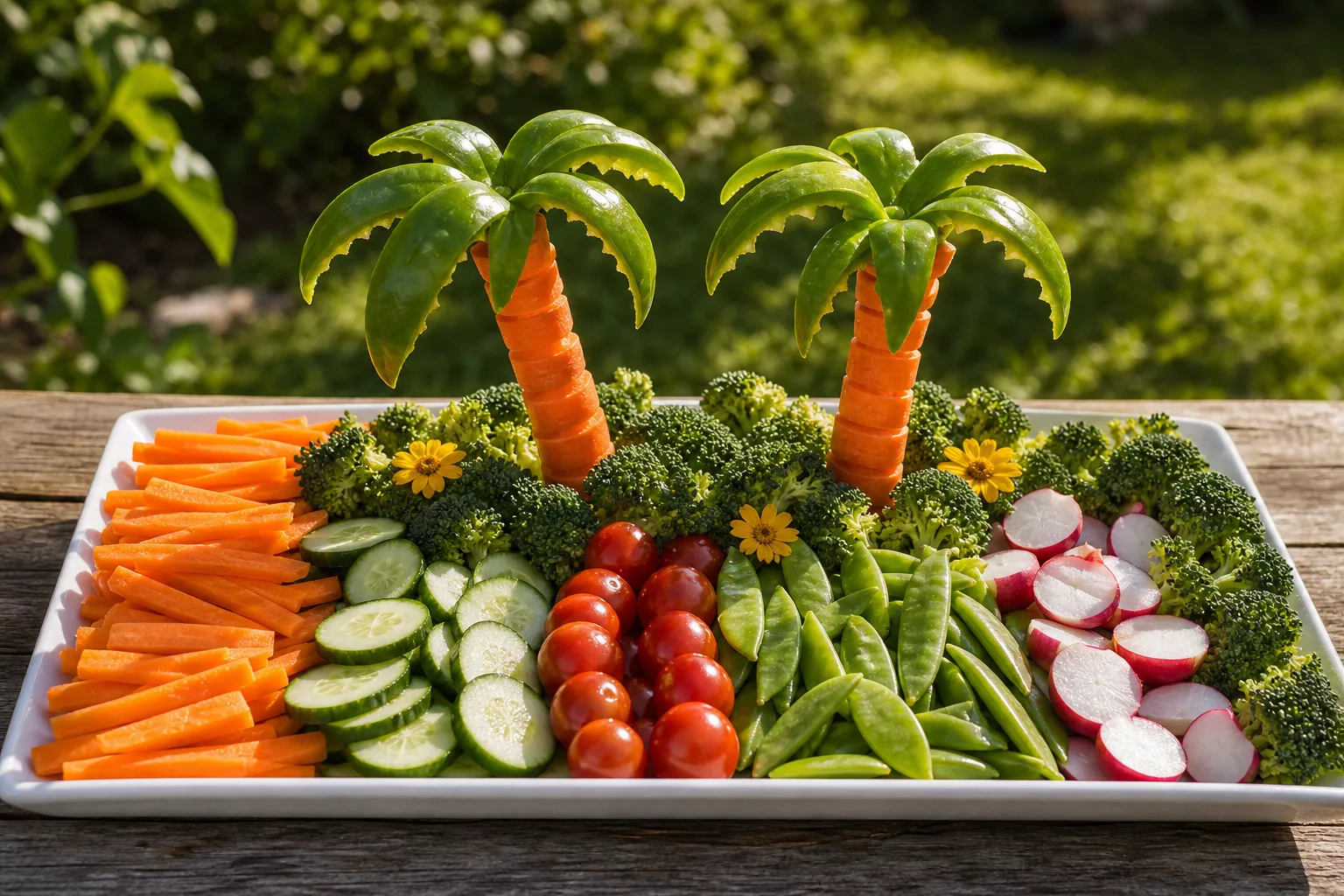
The plate type dictates the arrangement. On round plates either place a single palm tree right in the middle or three at different heights to form a small group. On rectangular boards Several small palm trees work best as an “island” in the middle. In both cases, avoid the edge – the center is more stable and automatically attracts the eye.
Fill the area around the palm trees with color fields. Cheese cubes, salami roses, prosciutto, mini cucumbers, crackers and nuts go well with hearty dishes. It gets fruity with grapes, kiwi stars, mango, melon and berries. You can achieve a cleanly filled board by following the same basic rules as a professional cheese platter: first place the large elements, then fill in the gaps.
Prepare and preserve
The part that hardly any instructions mention: How far in advance can the whole thing be prepared? From pure kitchen logic, a two-stage approach is worthwhile.
The Palm trees themselves You can easily build one to two hours in advance. Wrap the finished skewers loosely in a damp kitchen towel and place them in the refrigerator. This means olives, carrots and peppers stay crisp and don’t dry out. The carrot greens are best preserved if you briefly place the stem end of the carrot in cold water.
The Base and the side dishes Ideally, serve just before serving. Otherwise, cream cheese and sliced fruit will lose structure and color. So build the palm trees into the finished panel as late as possible. The following applies to transport: Insert the skewers deeply, carry the plate flat and avoid jerky movements. If you would like to combine the decoration idea with other appetizers, you will find suitable additions and even more simple party recipes for the buffet in our quick finger food recipes for the party.
Frequently asked questions
How long do edible palms last fresh on the plate?
When freshly built, the palm trees stay looking good for around two to three hours at room temperature – long enough for most celebrations. Carrot greens and herbs are the most sensitive to heat. On very hot days, place the plate in the shade and install the palm trees as late as possible.
Is the palm decoration also suitable for a children’s buffet?
Yes, the carrot and pepper palms are particularly popular with children because they are colorful and invite you to grab them. Before serving, be sure to remove the wooden skewers and toothpicks or replace them with short, sturdy pieces of vegetables. For small children, it is better to leave out the olives.
Can I prepare the palm trees vegan?
Absolutely. All three variants work completely without animal products if you replace the herb cream cheese with a vegan alternative or a solid vegetable dip based on hummus. Cucumber, melon and orange are naturally suitable as a base.
How do I transport the finished panel without the decoration tipping over?
Insert the skewers deep into a heavy base such as melon or cream cheese, always carrying the plate flat with both hands. For longer journeys, transport the palm trees separately in a can and only put them in the plate at the destination. A dab of cream cheese as an edible glue gives tall palm trees extra support.