


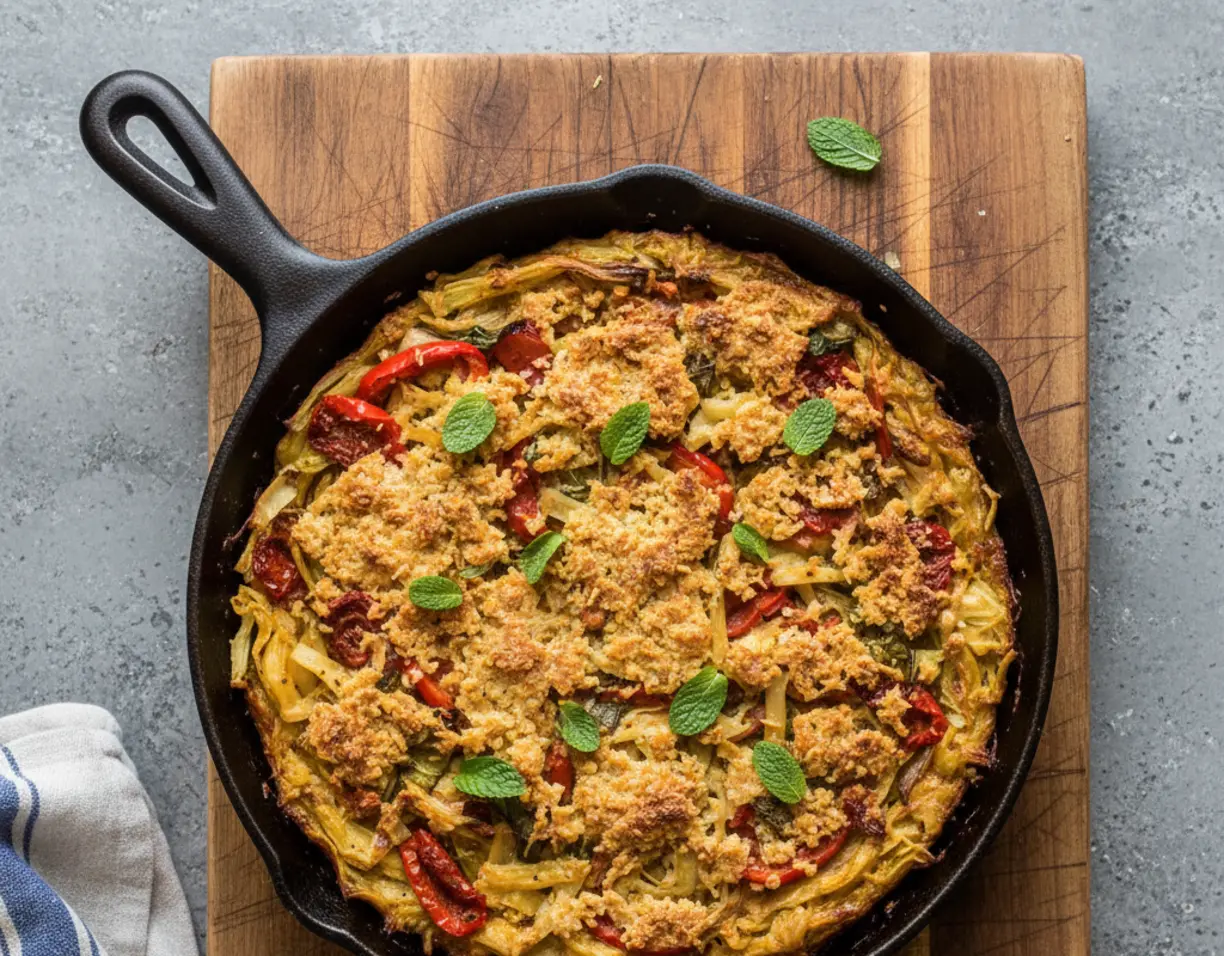
Are you looking for an idea for a quick, healthy and still incredibly tasty meal? Something that fills you up without being heavy on your stomach and adapts perfectly to what your fridge has to offer? Then the frittata is your salvation. This Italian all-round talent can be on the table in around 20 minutes and can be prepared in a hundred different ways. A dish that everyone really loves.
What makes a frittata so special
Think of a frittata as the no-fuss, rustic cousin of the French omelet. The name comes from the Italian word “friggere” (to fry). In contrast to an omelette, which is filled and folded, a frittata cooks uncovered in the pan over a mild heat. The secret to their wonderfully creamy and at the same time stable consistency often lies in baking them briefly in the oven at the end. This makes them juicy on the inside and slightly browned on top.
The heart of every frittata are Eggs – a fantastic source of high-quality protein, healthy fats and essential vitamins. Combined with fresh vegetables, they provide valuable fiber that ensures long-lasting satiety. This makes the frittata an ideal dish, whether you’re trying to lose weight, eat a balanced diet or just want to use up the week’s leftovers cleverly.
The secret to the perfect frittata: recipe & chef tips
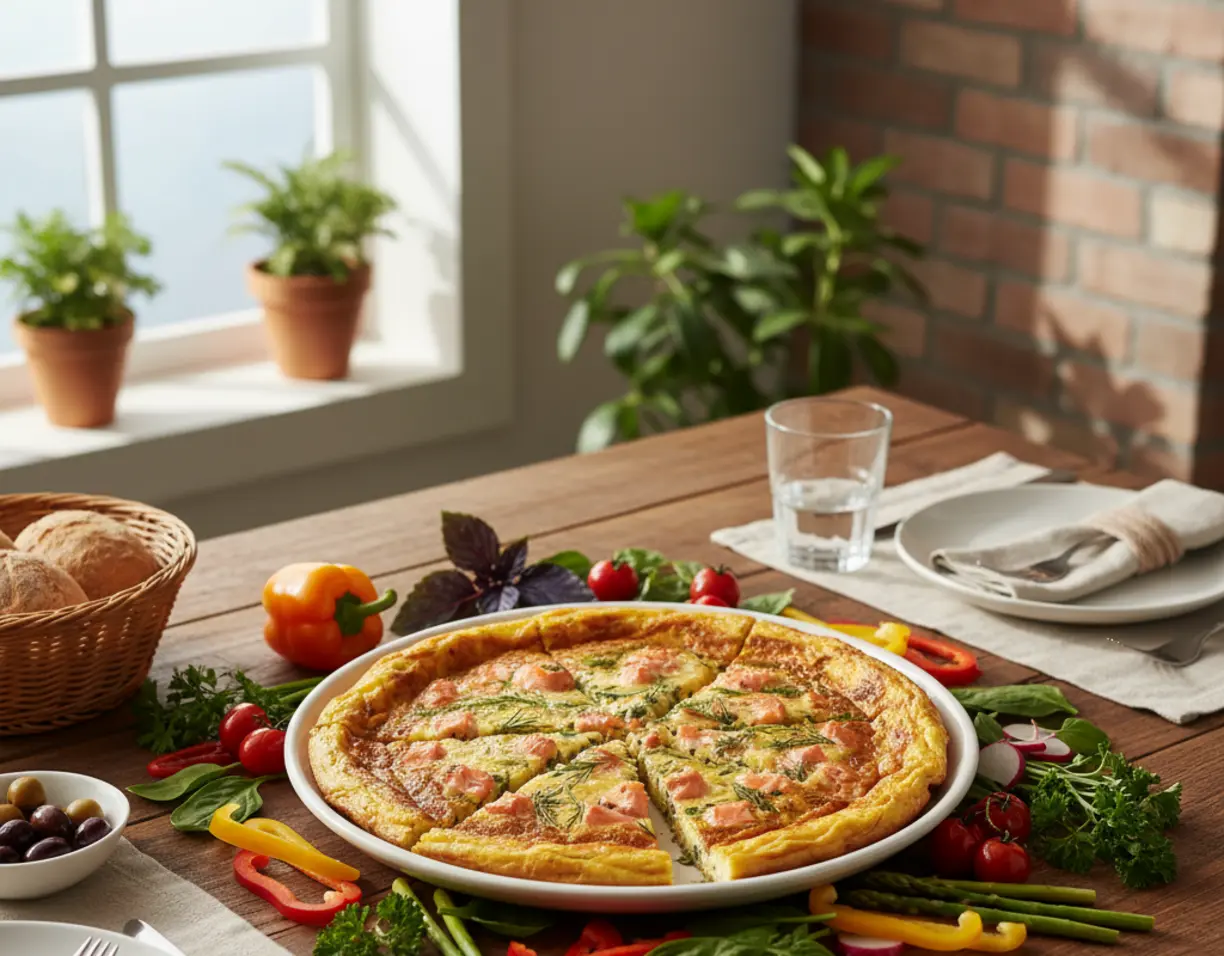
This basic recipe is your basis for countless variations. It’s really easy to make and with a little prep (mise en place) you can easily hit the 20 minute mark.
Ingredients (for 2-3 servings, approx. €2.50 per serving)
- 6 medium organic eggs (Quality makes the difference in taste here)
- 50 ml milk or cream (Cream makes them richer, milk is the lighter option)
- 1 tbsp olive oil or butter
- 1 medium onionfinely diced
- 1 red peppercut into small cubes
- 2 handfuls of fresh baby spinach
- 50g grated cheese (e.g. Parmesan for spice, Gouda for melting or Feta for a salty note)
- Salt and freshly ground black pepper
- Fresh herbs for serving (chives or parsley go well)
Step-by-step instructions
Preparation time: 5-7 minutes | Cooking time: 12-15 minutes
- Preparation (mise en place): Preheat the oven to 180°C top/bottom heat (if you are using an ovenproof pan). Cut onion and peppers. Wash the spinach. Grate the cheese.
- Sauté vegetables: Heat the olive oil in a bowl ovenproof, coated pan (approx. 24-26 cm diameter) over medium heat. Add the onion cubes and sauté until translucent, about 2-3 minutes. Add the diced peppers and fry for another 4-5 minutes until softened.
- Prepare egg mixture: While the vegetables are cooking, whisk the eggs with the milk or cream in a bowl. Boss tip: Beat the eggs just until the yolks and whites are combined. Too much air makes the frittata tough instead of creamy. Season generously with salt and pepper.
- Merge everything: Add the baby spinach to the pan and let it wilt for a minute. Distribute the vegetables evenly. Now pour the egg mixture over it and sprinkle the cheese on top.
- Cooking on the stove: Reduce heat to low. Let the frittata set for about 5-7 minutes without stirring. The edges should be firm while the center is still slightly runny and wobbly.
- Finish in the oven: Place the pan in the preheated oven for the final 5-8 minutes. The frittata is perfect when it is just firm in the middle and has a slightly golden surface. If you don’t have an oven-safe pan, you can put a lid on the pan and finish cooking it on the stove over very low heat.
Avoid typical mistakes – this is how you always succeed
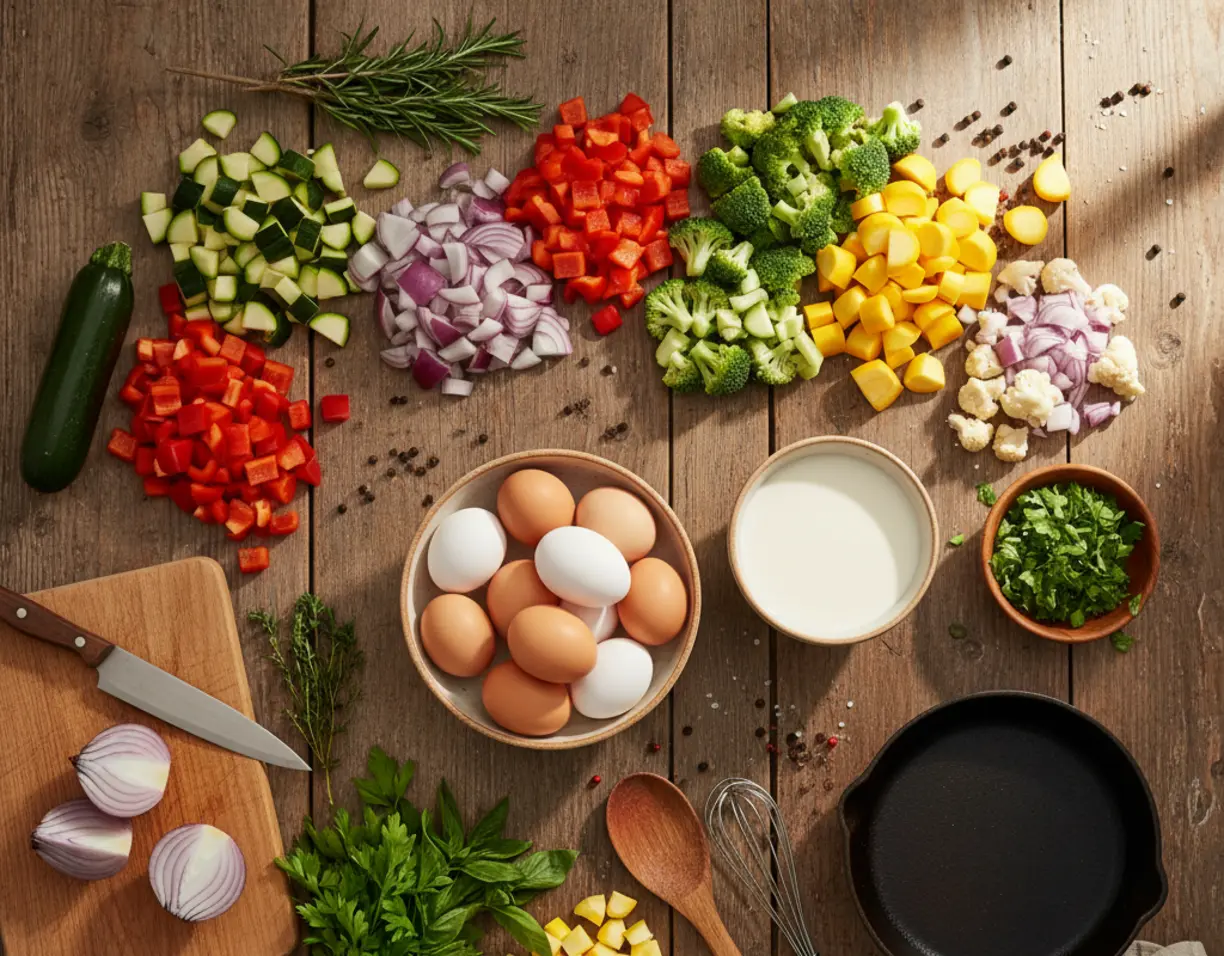
A frittata is simple, but a few little things make the difference between a good and a great frittata. Here are the most common mistakes and how to work around them:
- Too high heat: This is the most common mistake. A frittata needs gentle, even heat. If you fry them too hot, the bottom will turn brown and rubbery before the center even has a chance to set.
- The wrong pan: A good, coated and ideally ovenproof pan is worth its weight in gold. It also works excellently in a cast iron pan, as it retains heat excellently and releases it evenly.
- Wet vegetables: If using vegetables such as zucchini or tomatoes, sweat them well or pat them dry. Too much liquid in the vegetables makes the frittata watery and prevents it from setting properly.
Variations: Make the frittata your own
The beauty of the frittata is its versatility. Think of the recipe as a canvas and get creative with what you have at home.
A few ideas for the German palate:
- Hearty with potatoes: Use yesterday’s cooked potatoes (leftover fried potatoes are ideal!), dice them and fry them with bacon and onions before adding the eggs. Serve with fresh chives.
- Seasonal in spring: With green asparagus (briefly blanched and cut into pieces) and a few strips of salmon, it becomes a noble dish.
- Mediterranean dream: Combine sun-dried tomatoes, black olives, feta cheese and a touch of oregano for a holiday feel.
- For cheese lovers: Mix different types of cheese. A spicy mountain cheese or a mild goat cheese gives the frittata a completely new character.
Serving, storing & wine recommendations
A frittata is incredibly versatile. Serve them hot straight from the pan with a crisp green salad and some bread. But it’s also delicious cold! Cut into pieces, it is perfect for a buffet, as a lunch break snack or for an outdoor picnic.
Storage: A frittata will keep in an airtight container in the refrigerator for 2-3 days. It often tastes even better the next day because the flavors have had time to infuse.
Drink recommendation: A dry, light white wine goes perfectly with a classic vegetable frittata. Try a German Pinot Blanc or an Italian Pinot Grigio. A cold beer or a refreshing apple spritzer are of course also a good choice.