


Governments spend millions of dollars every year hosting tourism investment forums, aviation conferences, hospitality expos, and global travel exhibitions. Ministers of tourism, airline executives, hotel CEOs, investors, and international organizations gather to promote destinations, announce ambitious projects, and promise billions in future investment.
The presentations are often polished and optimistic. The more important question is whether these events actually generate lasting investment in tourism, aviation, and hospitality.
Evidence from international research and experiences across Asia, Africa, Europe, and the Middle East suggests that tourism investment events can be effective—but only when they are supported by credible government policies, quality infrastructure, and investor-friendly business environments.
The Business of Tourism Investment Events


Arabian Travel Market | Travel & Tourism Trade Show
Arabian Travel Market is an international travel trade show unlocking business potential within the Middle East for inbound and outbound tourism professionals.
Around the world, countries compete to host major travel and tourism events such as:
- Tourism investment summits
- Aviation conferences
- Hotel investment forums
- International travel exhibitions
- Destination marketing expos
- Cruise and maritime tourism conferences
The objectives are clear:
- attract foreign direct investment into tourism;
- encourage hotel, resort, and airport development;
- expand airline connectivity;
- promote destinations to global investors;
- create partnerships between governments and the private sector.
Events such as the Arabian Travel Market in Dubai, ITB Berlin, the World Travel Market in London, and the Africa Hotel Investment Forum have become major platforms for governments to showcase tourism opportunities and for investors to explore new projects.
Can a Speech Convince Investors?
Political leaders often hope that a keynote speech promoting their country’s tourism potential will encourage investors to build hotels, airlines to launch new routes, or tourism companies to expand operations.
In reality, investors evaluate much more than speeches.
They ask practical questions:
- Is the destination politically stable?
- Can land and permits be obtained efficiently?
- Are tourism policies consistent?
- Does the airport have sufficient capacity?
- Are roads, utilities, and digital infrastructure reliable?
- Will visitors actually come?
An inspiring presentation may create interest, but it rarely changes the fundamentals that determine investment decisions.
What Research Suggests
Recent studies examining government-business engagement show that investment events can increase investment activity, but only when governments follow public commitments with real policy implementation.
Announcements alone rarely produce measurable results. Investors respond when governments introduce reforms, improve infrastructure, simplify regulations, or provide credible incentives after the conference has ended.
In tourism, successful conferences often serve as the point at which negotiations are already underway are finalized, rather than the starting point for entirely new investment decisions.
Tourism Events as Signals
Large international tourism events can also send an important signal to investors.
Successfully hosting a major exhibition or conference demonstrates that a country can organize complex international events, provide quality infrastructure, ensure security, and welcome large numbers of visitors.
This signaling effect can improve investor confidence, particularly in destinations seeking to establish themselves as emerging tourism markets.
When Tourism Conferences Have Worked
United Arab Emirates
The UAE has become one of the world’s leading destinations for tourism and hospitality investment through events such as the Arabian Travel Market, Dubai Expo 2020, GITEX, and numerous hospitality investment forums.
These events succeeded because they complemented decades of reforms, including world-class airports, efficient visa policies, investor-friendly regulations, free economic zones and sustained investment in tourism infrastructure. The conferences strengthened an already attractive investment environment.
WTTC Global Summit, Rome
The World Travel & Tourism Council (WTTC) Global Summit in Rome provides a recent example of how a tourism summit can help translate opportunity into investment. The event brought together tourism ministers, airline executives, hotel groups, and investors from around the world and concluded with more than US$8 billion in investment commitments for Italy’s travel and tourism sector, supporting hospitality, infrastructure, connectivity, and sustainable tourism projects. Yet the summit did not create these investments on its own.
Italy’s mature tourism industry, modern infrastructure, strong visitor demand, and supportive policy environment made the country investment-ready. The summit provided the platform to strengthen partnerships, showcase opportunities, and announce deals that had been developed over months of engagement.
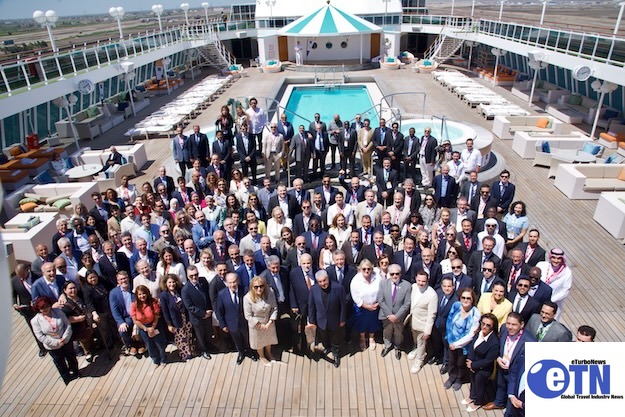
In a second summit, WTTC brought top private tourism CEOs and tourism ministers on a Suez Canal Cruise, setting the stage for a new era of cooperation and policies.
Saudi Arabia
Saudi Arabia has used events such as the Future Investment Initiative and tourism investment forums to promote Vision 2030 and its ambition to become a major global tourism destination.
Large-scale projects, including NEOM, the Red Sea Project, and Diriyah, have attracted international attention. Yet investor confidence has depended primarily on regulatory reforms, expanded aviation capacity, new tourism legislation, and sustained government investment rather than conference presentations alone.
Hotel Investment Forums
Some of the most successful tourism investment events focus specifically on hospitality.
Events such as the Africa Hotel Investment Forum regularly bring together hotel operators, developers, investors, banks, and governments.
Investment deals often emerge because governments present investment-ready projects, developers share feasibility studies, financiers meet potential partners, and hotel brands identify expansion opportunities.
The public speeches typically represent only a small part of negotiations that may have been taking place for months.
Aviation Conferences
International aviation conferences play an important role in expanding global connectivity.
Governments use these events to attract new airline routes, promote airport expansion, encourage aviation investment, and strengthen partnerships with airlines and airport operators.
However, airlines make route decisions based on passenger demand, airport capacity, operating costs, regulatory certainty, and commercial viability—not simply on speeches delivered during conferences.
Business Events and Conference Tourism
Meetings, incentives, conferences, and exhibitions (MICE) have become major contributors to tourism economies.
Cities increasingly compete to host medical congresses, aviation forums, hospitality conventions, tourism exhibitions, and technology conferences.
These events generate immediate economic benefits through hotel occupancy, restaurant spending, local transport, and visitor expenditure while also strengthening destinations’ international reputations.
MICE events