


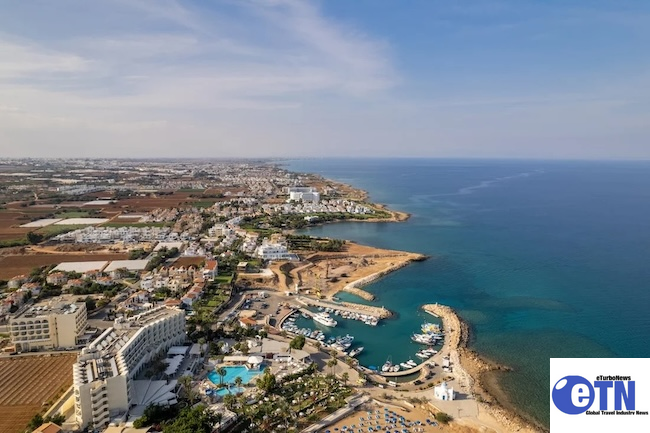
Famagusta’s tourism industry is facing mounting uncertainty as airlines consider reducing flights to Cyprus during the critical summer season. Hotel owners and local businesses fear weaker visitor numbers could damage the region’s economy, while broader geopolitical tensions and rising aviation costs continue to disrupt tourism across the eastern Mediterranean.
Tourism operators in the eastern Cypriot district of Famagusta are warning that the region could face one of its most difficult summer seasons in years as airlines reconsider routes to Cyprus amid rising fuel prices, regional instability, and weakening consumer confidence.
According to reporting by the Cyprus Mail, hotel owners, restaurant operators, and tourism associations in the Ayia Napa–Protaras corridor fear that even modest flight reductions could significantly damage visitor numbers during the crucial May–October tourism period.
The concern comes at a particularly fragile moment for Cyprus’ economy. Tourism contributes heavily to national GDP, and the Famagusta district is among the island’s most tourism-dependent regions, relying overwhelmingly on seasonal foreign arrivals from Britain, Israel, Poland, Scandinavia, and Central Europe.
Why Airlines Are Cutting Capacity
The anxiety in Cyprus is tied to a broader crisis unfolding across the eastern Mediterranean.
Several factors are converging simultaneously:
- Higher aviation fuel costs linked to instability in the Middle East
- Airspace uncertainty following the Iran conflict
- Lower consumer confidence among European travelers
- Insurance and operational risk increases for airlines
- Shifting tourist demand towards western Mediterranean destinations such as Spain, Portugal, Croatia, and Italy
Reuters reported that airlines have already removed approximately 600,000 seats from Cyprus schedules for the 2026 summer season, although airport authorities say the overall reduction may stay below 5 percent if conditions stabilize.
Travel companies across Europe are also observing a wider regional trend: tourists are increasingly avoiding destinations perceived as geographically close to conflict zones, even when those destinations remain safe.
Famagusta’s Particular Vulnerability
The free Famagusta district — especially the resort centers of Ayia Napa and Protaras — depends heavily on direct seasonal flights.
Unlike business-travel hubs such as Nicosia or diversified urban economies such as Limassol, the eastern coast relies almost entirely on leisure tourism concentrated into a narrow seasonal window.
Industry representatives cited by Politis and Cyprus Mail say that some businesses are already seeing:
- Lower hotel booking flows
- Reduced restaurant turnover
- Shorter booking lead times
- Increased last minute cancellations
- Lower spending per visitor
A separate tourism industry report in April suggested occupancy rates in parts of Famagusta had already dropped sharply year-over-year.
Israel Flights: A Critical Market
One of the most sensitive issues for Cyprus tourism has been disrupted to air links with Israel.
Israeli tourists represent one of Cyprus’ most important regional visitor groups due to:
- Short flight times
- Frequent weekend travel
- High per capita spending
- Strong cultural and business ties
Earlier in April, Cyprus tourism officials welcomed the resumption of Israeli flights after a temporary ceasefire reduced tensions.
However, industry leaders remain cautious because any renewed escalation in the region could quickly affect:
- airline schedules,
- insurance costs,
- consumer demand,
- and tourism confidence.
Similar Tourism Regions Facing Comparable Pressure
Famagusta is not alone. Several eastern Mediterranean tourism economies are facing similar challenges in 2026.
Turkish Riviera
Resort areas around Antalya and the Turkish Aegean coast have seen softer bookings from northern Europe as travelers reassess eastern Mediterranean holidays amid geopolitical uncertainty.
Greek Islands
Islands such as Rhodes and Kos remain popular but are experiencing greater booking volatility and stronger competition from western Mediterranean destinations.
Egypt’s Red Sea Resorts
Tourism operators in Hurghada and Sharm El-Sheikh are also dealing with route adjustments and higher operational costs because of regional airspace concerns and insurance risks.
Jordan
Tourism to Aqaba and Petra has reportedly slowed as some European governments issued updated travel advisories for parts of the Middle East region.
A Structural Problem for Seasonal Economies
What makes the current situation especially dangerous for places like Famagusta is the structure of the local economy itself.
Many businesses:
- operate only seasonally,
- depend on high summer occupancy,
- employ temporary workers,
- and rely heavily on airline connectivity.
Even small disruptions can therefore create outsized economic effects:
- fewer flights reduce arrivals,
- lower arrivals reduce hotel occupancy,
- weaker occupancy affects restaurants and retail,
- and reduced tourism income impacts employment across the district.
This chain reaction is particularly severe in coastal resort economies with limited industrial diversification.
Cyprus Authorities Trying to Calm Fears
Cyprus airport operator Hermes Airports has attempted to reassure the sector, arguing that:
- most airline adjustments involve lower frequencies rather than full route cancellations,
- passenger load factors recently improved,
- and demand from Britain and Poland remains relatively strong.
Officials also note that recent weeks have shown signs of recovery, with aircraft occupancy rates reportedly climbing above 80 percent.
Still, tourism operators say uncertainty itself has become the problem. Travelers are increasingly booking at the last minute, waiting to see whether geopolitical conditions stabilize before committing to eastern Mediterranean holidays.
Long-Term Implications
The crisis is accelerating a wider debate inside Cyprus about tourism diversification.
Earlier this year, Famagusta authorities unveiled plans to:
- attract year-round visitors,
- reduce dependence on peak summer travel,
- expand rural and cultural tourism,
- and target older travelers outside school-holiday periods
Analysts say the current turbulence may reinforce the urgency of those reforms.
For now, however, businesses across Famagusta are entering the heart of the summer season with growing anxiety that airline decisions made hundreds of miles away could determine whether 2026 becomes merely a difficult year — or a full-scale tourism downturn.