


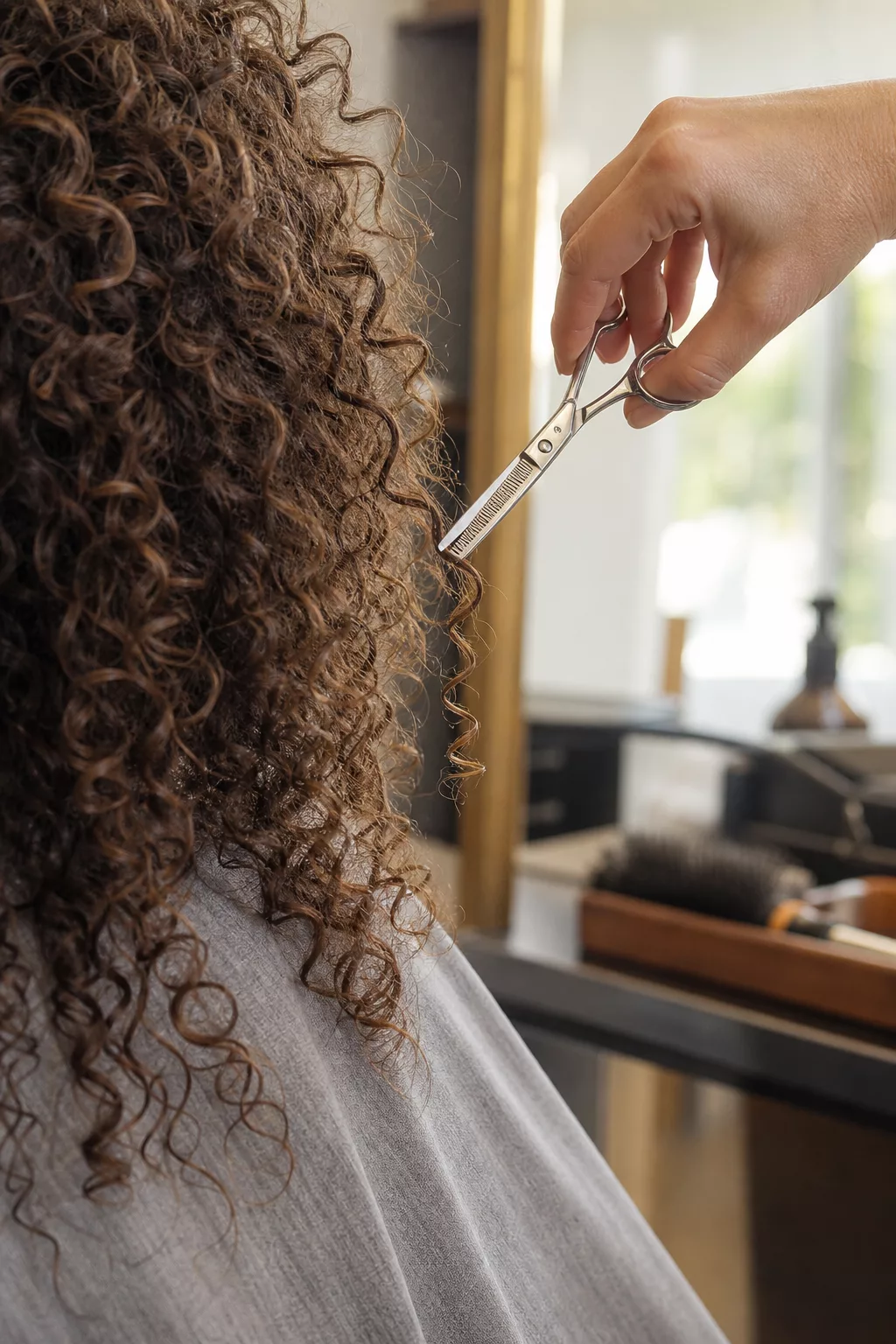
Tight curls pull up up to a third of their wet length when they dry. This is exactly why haircuts for curly hair that are designed according to the logic of straight hair fail: the bob that looked perfect when wet suddenly looks shorter and edgier than expected when dried. Curls carry their volume unevenly, bounce up at the ends and react differently to layers than any straight length. If you think about this, you will retain exactly the bounce that other women use a curling iron for – and get a shape that takes away the uncontrollableness of the fullness without overwhelming the curls.
Why curls need their own cut
The most important difference is called bounce. A curl that reaches your shoulder when wet will pull up several centimeters when it dries – experts speak of shrinkage. With tight spirals, the hair can appear a good third shorter when dried than when wet. A cut that depends on the wet length will almost inevitably be too short.
Layers are not a fashionable extra for curls, but rather the actual tool. They distribute the weight along the length so that the fullness doesn’t pile up in a compact block at the base and fray at the bottom. When set correctly, layers give each individual curl room to unfold.
This leads to the tip that good curly hairdressers follow: cut dry. The hairdresser can only see where the length really ends and which strand is falling out of shape by looking at the dry, loose curls. Ask specifically about this at the appointment – and if in doubt, it’s better to have it cut a centimeter too long. Shortening is always possible, gluing is not possible.

Short haircuts for curly hair
When it comes to curls, short doesn’t automatically mean easy to care for – but when cut well, short curls are the best thing there is because the bounce keeps the shape on its own.
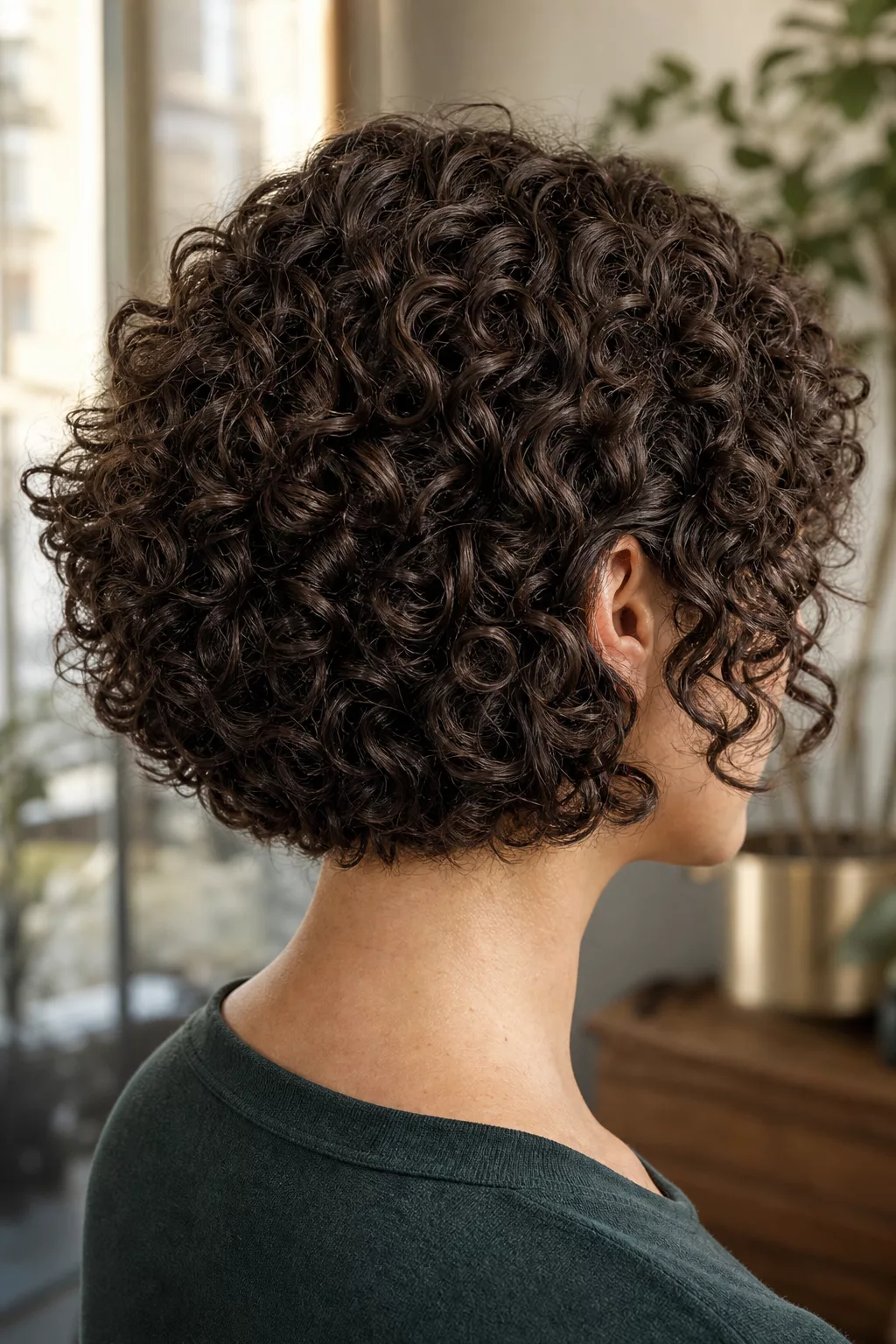
Layered chin length bob
The chin-length layered bob is the all-rounder among curly cuts. It works from a loose wave to a tight spiral because the steps concentrate the volume at the level of the cheekbones and allow it to flow smoothly underneath. Chin length hits a practical point: short enough that gravity doesn’t pull the curls, long enough for movement. If you don’t have much time in the morning, you can use a little curl cream and air dry.
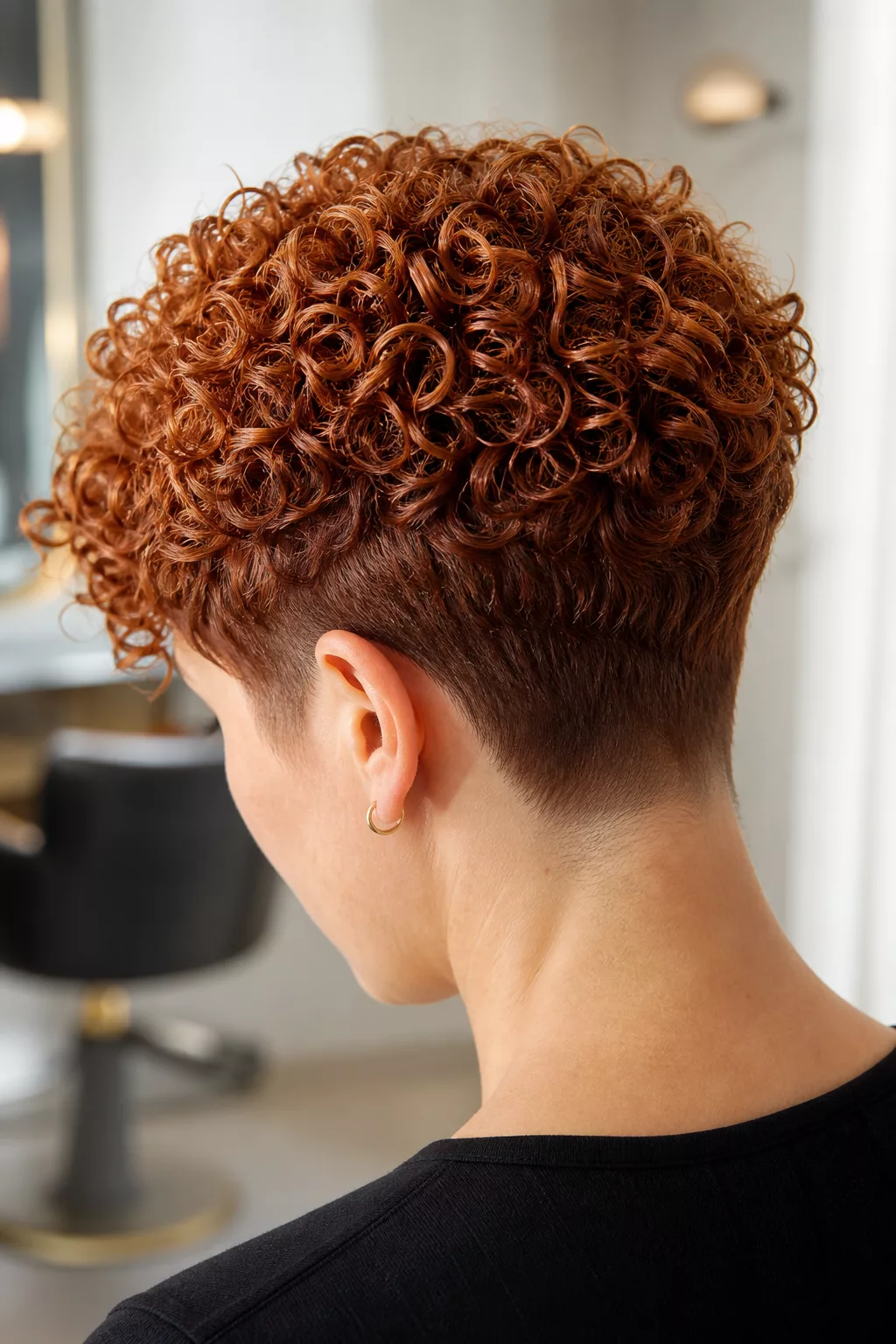
Pixie cut with volume at the top
The pixie is the bravest short cut – and surprisingly grateful for curls if length is left at the top and the sides are taped short or created as an undercut. The volume then collects as a curly crown on the top of the head, while the neck and temples fit neatly. This means the head doesn’t fluff up all around and the curls have room to bounce at the top. Our collection of pixie cuts with curls shows how many variations this shape allows. The price: The cut depends on regular trimming, otherwise the silhouette loses its tension.
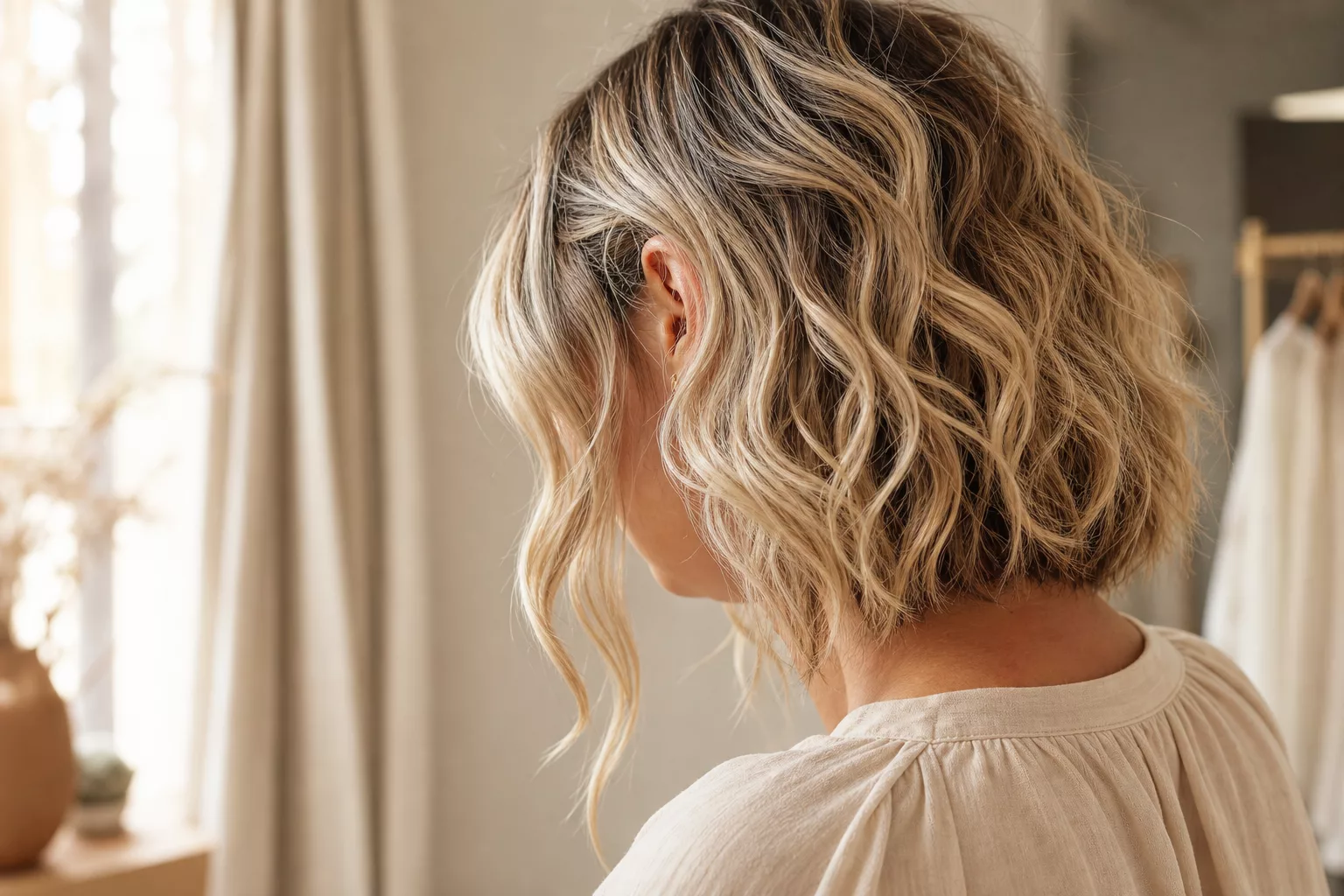
Bob with a short neck
The inverted bob is cut longer at the front and shorter at the neck. This has a tangible advantage when it comes to curls: the short, slightly thinned neck takes out the mass that would otherwise build up there and makes the head appear broad, while the longer front sections frame the face. It’s also easy to care for because the graduated shape stays in place even if a curl gets out of line.
Haircuts for medium length curly hair
The length between the chin and shoulder blade is the comfort zone for many: enough to see the curls fall, little enough that styling doesn’t become a daily task.
Long Bob (praise)
The long bob, or lob for short, sits just above or at shoulder height and is considered a safe choice for curly hair for good reason: this length flatters almost every face shape. Face-framing front strands draw the eye inward and soften an angular jawline, while curl volume adds softness. Our Long Bob Guide shows in detail how versatile the cut can be worn. For curly hair, the front strands should be left a little longer because they will pull up as they dry anyway.

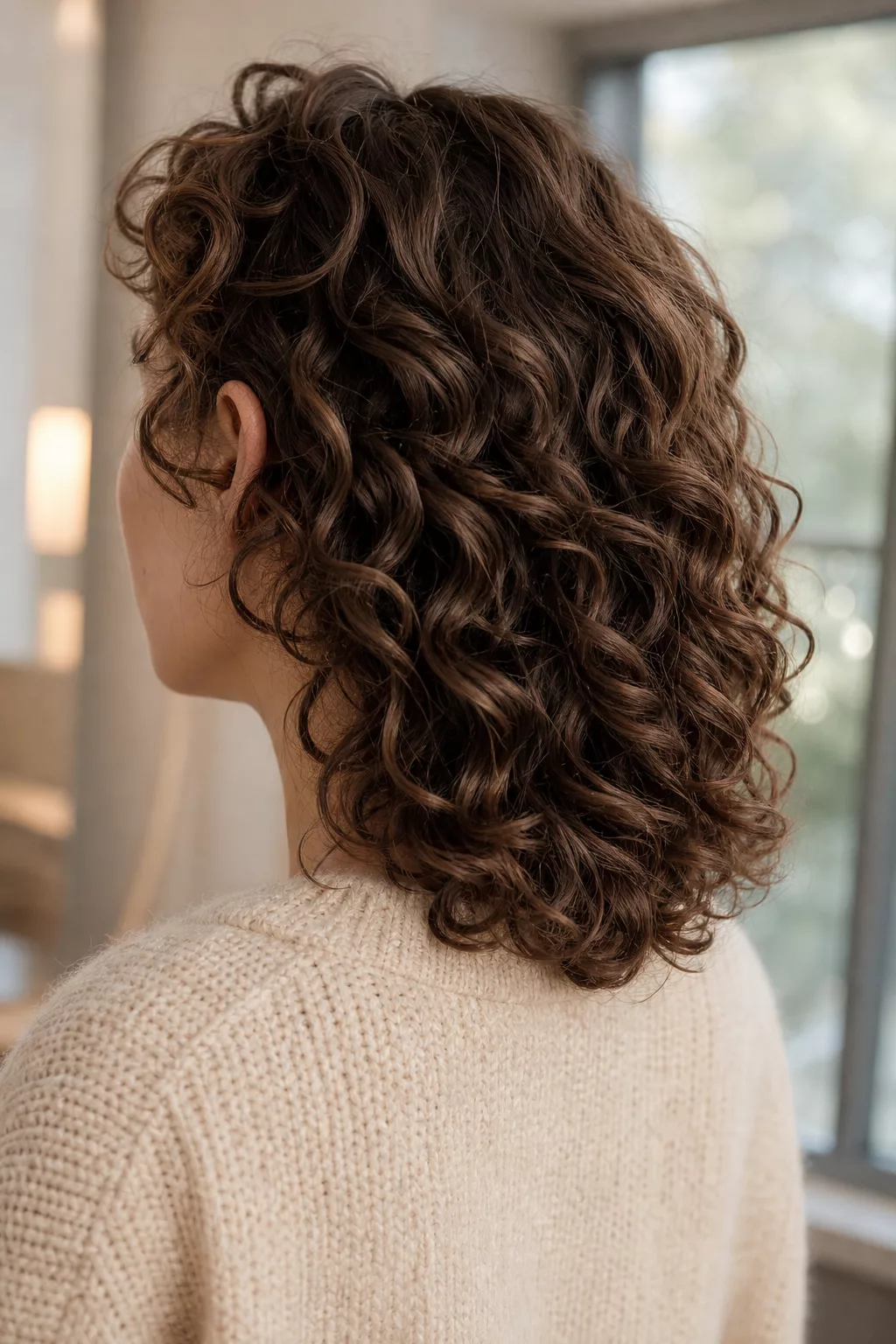
Shoulder length hair with layers
Shoulder-length curls with soft layers are the romantic, timeless classic. The layers take the weight away from the length, which would otherwise pull the lower curls together into a heavy curtain. This means that each individual coil retains its shape and movement. If you are unsure how fine the gradation should be, you will find some clues in our overview of layered hairstyles for medium-length hair. A word of caution: Too many short layers on the top of the head will drive fine curly hair towards frizzy hair – it’s better to use them sparingly.
What’s Hot

Hairstyles
Fine hair over 50: The angle counts, not the cut name
Stacked Layers
Stacked Layers are vertically stacked steps that, when viewed from behind, form a gently rounded, built-up transition. The effect: more height and fullness at the back, a flowing spout at the bottom. This is appealing for curly hair because the stacked structure captures the natural curve of the curls and gives it extra height.
Haircuts for long curly hair
Long curls look effortless, but they need the most structure so that the length doesn’t drag down in a heavy, shapeless mass. Three cuts bring in the necessary movement.
Shaggy long with curtain bangs
The shaggy is the deliberately untamed long haircut: many layers, visible texture, a slightly rebellious basic tone. When it comes to curls, it really shows off its strengths because it doesn’t hide the irregular structure, but rather celebrates it. Plus curtain bangs that fall softly over the sides of the temples and frame the face without requiring the classic bangs care. However, be prepared for this: side-curled bangs need some gel or spray almost every day, otherwise they will fall wayward.

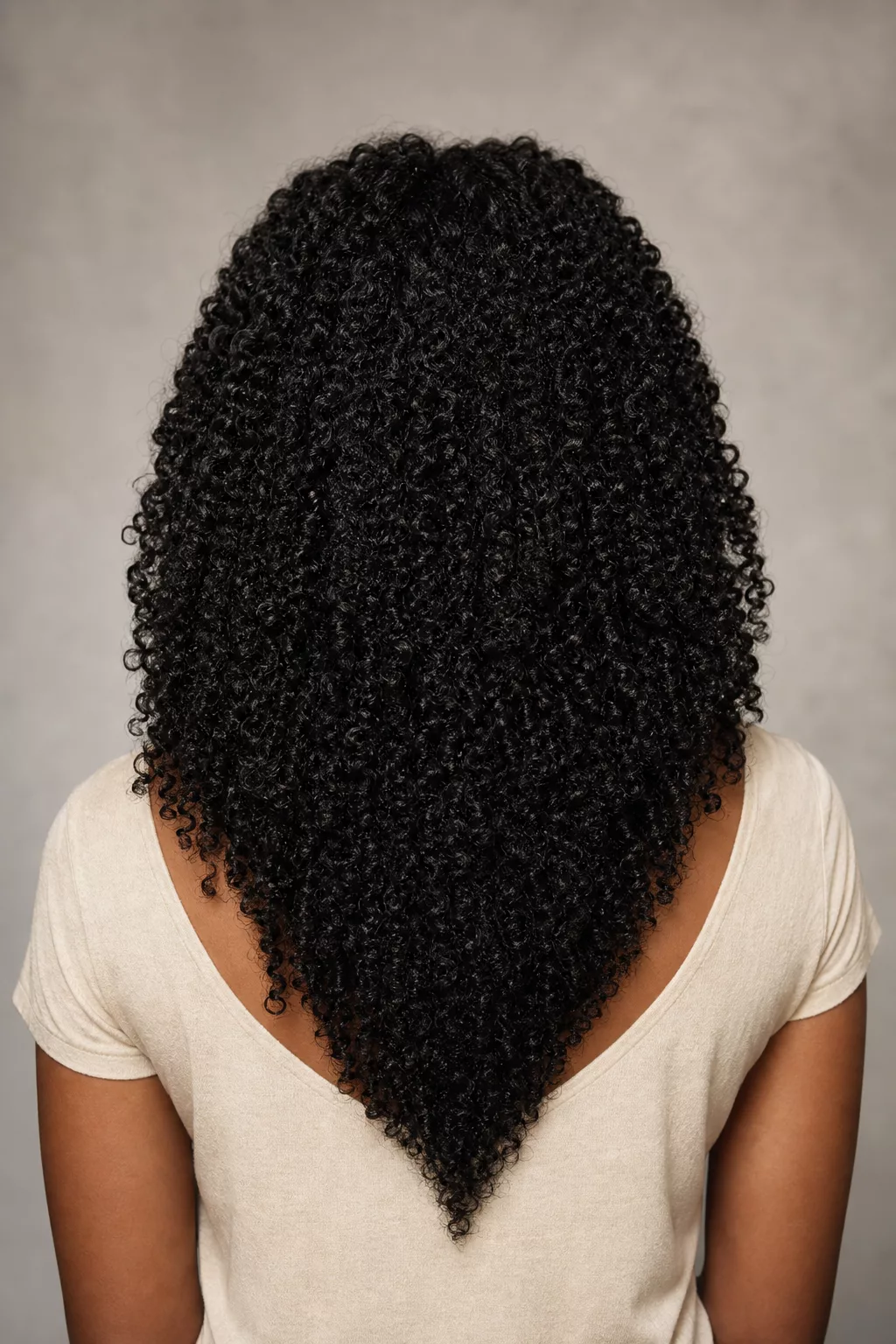
V-cut
The V cut tapers from the sides towards the middle, so that the ends of the hair form a clear V when viewed from behind. This is more than just looks: the tip takes weight out of the bottom end and gives long, thick curls a clear outline that would otherwise easily fray. This shape brings order to the length, especially with tight, frizzy type 4 hair, as can also be seen in our Afro curly hairstyles.
What’s Hot
Short hairstyles for women
5 pixie cut variants from 60 that go with every pair of glasses
Steep steps
Steep, dramatic layers are the answer to thin but curly hair. Where there is a lack of fullness, deep, strong layers create the illusion of additional volume because they visibly layer several layers of curls on top of each other. The cut requires a practiced hand – too steep and the tips appear thinned; When placed well, abundance arises where there was none before.
Which cut suits your curl type?
Hairdressers roughly classify curls into three families: slightly wavy, defined curly and tight-frizzy. Which length and cut are best depends less on fashion than on this structure. The table summarizes what has proven successful in practice.
| Curl type | mark | Matching cuts | What to pay attention to |
|---|---|---|---|
| Slightly wavy (type 2) | loose S-waves, little bounce, tends to lie flat | Long bob, shoulder-length layers, long shaggy with curtain bangs | rather long, soft layers – too short make the hair appear thin |
| Defined curly (Type 3) | clear spirals, lots of volume, medium shrinkage | stepped bob, long bob, steep steps | Bundle volume at cheek height, be sure to cut dry |
| Tight-frizzy (type 4) | dense, tight coils, strong shrinkage | Pixie with volume on top, V cut, layered bob | Allow generous length reserves for high jumping |
Take this classification with you to the appointment and specifically state your type and your desired length. A hairdresser who knows that she is working with type 3 curls and a planned long bob cuts differently than someone who only gets a photo of the straight model.
Frequently asked questions
Should curly hair be cut wet or dry?
For the contour, the dry cut is usually more precise because the curl only shows its final length when dried. Some hairdressers combine both: They first shorten very long or very thick hair in damp sections and then finish the shape dry. When booking, ask specifically for a dry cut if the salon doesn’t already offer it.
How often should you have your curls trimmed?
Short, heavily layered cuts like pixie or bob require shaping about every eight to ten weeks because even a little growing length can tilt the silhouette. Long layered and shaggy cuts last significantly longer, around three to four months. If you want to avoid split ends, just have the ends thinned out minimally every now and then.
What do curl types 2, 3 and 4 mean at the hairdresser?
The numbers describe the structure: type 2 is wavy, type 3 spiral-curly, type 4 tight-frizzy to afro. There are also fine levels A, B and C – from loose to very tightly wound, i.e. around 3A for wide spirals and 3C for tight corkscrews. The higher the number and letter, the more length reserve the cut should allow for shrinkage.
The new cut looks shorter than expected – what should I do?
At the next appointment, have less length removed and specifically thin out the ends – this takes weight out without sacrificing the overall length. Expressly tell the hairdresser that your curls will also bounce upwards when drying. Until then, an extra dose of moisturizer creates a bit of length because well-cared for curls fall looser.