


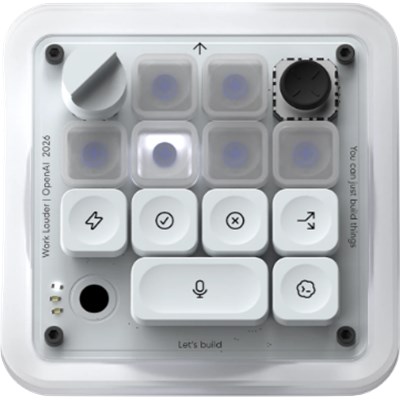


The device, made of aluminum and polycarbonate and with a square base, combines thirteen mechanical switches (quiet or clicky) with some printed, some transparent keycaps. There is also a rotary control and an analog joystick in the upper corners. A microphone is also on board. The device connects to a Mac or Windows PC via Bluetooth or USB-C.
Agent dashboard
The macro keyboard can be set up flexibly in the ChatGPT app’s in-house development environment Codex. Each button can be paired with an AI agent. The built-in RGB LEDs provide feedback about the current status, so users can keep an eye on several complex AI requests at the same time. You give new orders via the microphone. Thanks to an extensive keycap set, users can customize their device; 32 white caps with icons and 11 plain colored caps are included.
$230 plus shipping
Jony Ive is known to be working on revolutionary AI hardware for OpenAI. He most likely did not participate in Codex Micro. The macro keyboard was developed in collaboration with peripheral manufacturer Work Louder. It costs $230 and ships from the USA. Users from Great Britain were surprised at the shipping costs of 71 British pounds. Nevertheless, the first batch was sold out after a short time.

Popular desk accessories
An additional keyboard with freely assignable keys has grown into a respectable niche segment in recent years. Elgato’s Stream Decks, for example, are widely used, in which each key integrates a miniature screen. The keys of wireless numeric keypads such as Keychron V0 can also be assigned the desired functions according to your taste. The DOIO KB16 combines sixteen buttons, three rotary controls and a miniature display into a configurable USB-C input device. Anyone who knows the Python scripting language can get a keypad like the Keybow 2040 and freely determine the functions and lighting effects of the individual keys.