


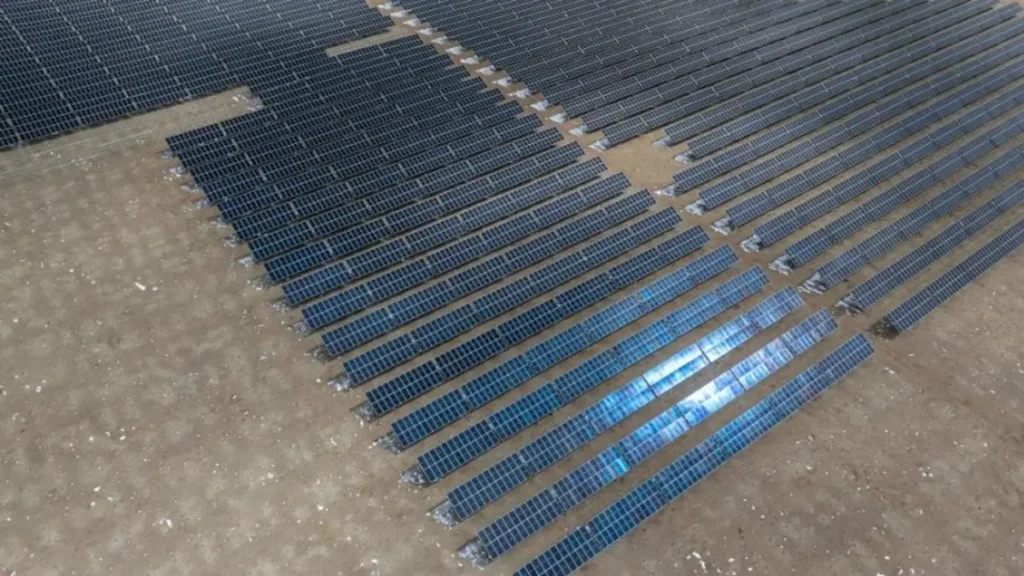
One of the highest solar power plants in the world is being built on the Tibetan plateau. At an altitude of 4,550 meters, a system combines photovoltaics with solar thermal energy and a liquid salt storage facility that supplies electricity even after sunset.
In the Xizang autonomous region in southwest China, the China General Nuclear Power Group has begun construction of a solar thermal power plant at an altitude of 4,550 meters. The system complements a photovoltaic section that has a large output of 400 megawatts. Parabolic troughs covering an area of 242,000 square meters are used for the solar thermal part with a capacity of 50 megawatts.
A central element of the system is the integrated storage system based on liquid salt. It is designed to store energy for up to six hours, which means the power plant can continue to supply electricity after sunset. Within the system, thermal oil acts as a heat transfer medium that transports the captured solar energy from the collectors to the storage.
Liquid salt storage facility will supply the Tibetan capital with electricity at night
The project combines solar thermal energy and photovoltaics to achieve a more stable feed into the power grid. According to the developers, the solar thermal system is intended to specifically absorb excess electricity from photovoltaics that would otherwise remain unused during peak times. In this way, the system is intended to compensate for the natural fluctuations in the generation of conventional solar power.
An example illustrates the need for this hybrid solution for local supply. At night the temperatures on the high plateau drop sharply, which means the need for thermal energy increases massively. Since the photovoltaics do not produce electricity in the dark, the liquid salt storage takes over the supply. In this way, the technicians ensure a continuous supply of energy for the regional capital Lhasa.
Construction site with oxygen supply and hyperbaric chamber
The construction site in Damxung County is in a zone with extremely low oxygen content. Due to the weather, the work can only take place there during a limited period of the year. To support the workforce, the company installed heating systems, an oxygen supply and a hyperbaric chamber.
This special medical equipment is essential for the safety of workers in the thin air conditions. It is used to treat possible health consequences of the extreme altitude for the staff directly on site. Despite these difficult conditions, the project creates over 2,000 jobs for the local population.
According to the company, more than 5.2 million yuan has already flowed into the local economy through wages and the use of regional equipment. This equates to a sum of approximately $753,600. The project therefore also serves as an economic factor in a difficult climatic environment.
What the system should do from 2027
Once it goes into operation, planned for 2027, the power plant is expected to generate around 719 million kilowatt hours of electricity annually. Operators estimate this will save around 220,000 tonnes of standard coal per year. The plant is also expected to reduce carbon dioxide emissions by 652,300 tons annually.
The project is part of the official government work report of the Xizang region. This envisages increasing the installed capacity from 13 million kilowatts in 2025 to 20 million kilowatts in 2026. The regional government is planning to build large, integrated energy bases that combine wind, solar and hydropower at various locations.
Also interesting: