


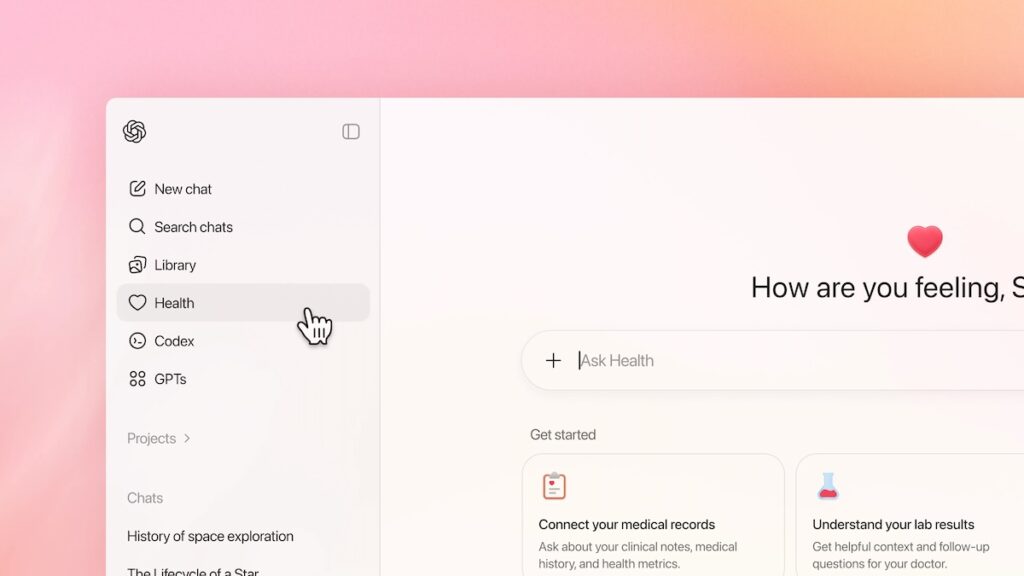
OpenAI adds a new Health tab to ChatGPT, allowing users to upload electronic medical records and connect to health and fitness apps. However, reactions to ChatGPT Health have been mixed. A commentary analysis.
What is ChatGPT Health?
- ChatGPT Health is a specially isolated area within the chatbot. Users should be able to have conversations about health topics without sensitive data getting mixed up with regular chat processes. According to OpenAI, Health can evaluate health data and go beyond general advice to determine when medical attention is needed.
- The system was developed with over 260 doctors to analyze answers to health questions and ensure that ChatGPT provides medically plausible and correct answers. The function can be used with Fitness and health data from apps like Apple Health, Weight Watchers or Peloton. The integration of electronic patient records is initially only possible in the USA.
- According to OpenAI, millions of users consult ChatGPT about health issues every week. The problem: AI chatbots keep spitting due to so-called hallucinations nonsensical to completely wrong answers out of. When it comes to health issues, this can have devastating consequences, as Google recently demonstrated again.
OpenAI shifts responsibility to users
OpenAI emphasizes that ChatGPT Health, despite its close collaboration with doctors do not make diagnoses or recommend treatments may. The tool is officially only intended to provide information and preparation for doctor’s visits.
This is particularly legally relevant, as OpenAI has had ChatGPT Health classified as a consumer product in the USA. This means that the function does not fall under the strict data protection laws for the healthcare sector. The releases OpenAI from certain liability risks and shifts responsibility primarily to the users.
This would certainly not be possible within the EU – and that’s a good thing. Because despite improvements and medical analysis, misinformation in the form of AI hallucinations are by no means completely ruled out. There are also concerns about data protection.
OpenAI does offer purpose-built encryption, but just that no end-to-end encryptionas is common with messenger services. Specifically, this means that there is protection against unauthorized access. However, OpenAI can view the data.
Voices
- Fidji Simo, CEO of Applications at OpenAIin a blog post: “ChatGPT Health is another step in making ChatGPT a personal super assistant, providing you with information and tools to help you achieve your goals in all areas of your life. We’re still at the very beginning of this journey, but I’m excited to bring these tools to more people.”
- OpenAI boss Sam Altman told CNBC back in the summer, “Health care is the area where we’re seeing the biggest improvements. It’s a big part of ChatGPT usage. I think it’s really important to give people better information about their health care and empower them to make better decisions.”
- Author and journalist Aidan Moher scoffs in a post on Bluesky: “What could possibly go wrong when an LLM trained to confirm, support and encourage users’ biases meets a hypochondriac with a headache?”
A health advisor that ChatGPT can never be
Since millions of users continue to consult ChatGPT on health issues despite unanimous warnings, it is first of all welcome that OpenAI has taken on the topic Improve chatbot.
But the company also suggests one Health advisor that ChatGPT can never be. External education of users will therefore be just as crucial as the question of whether the chatbot actually spits out enough warnings in the right places and how it deals with highly sensitive health topics.
That one Processing of medical patient data is not possible in the EU is, points to regulatory hurdles. Because: In Germany, health data is fortunately subject to strict processing requirements. Presumably, OpenAI will use such data in the USA to serve personalized advertising. Complete data protection is not guaranteed.
Also interesting: