


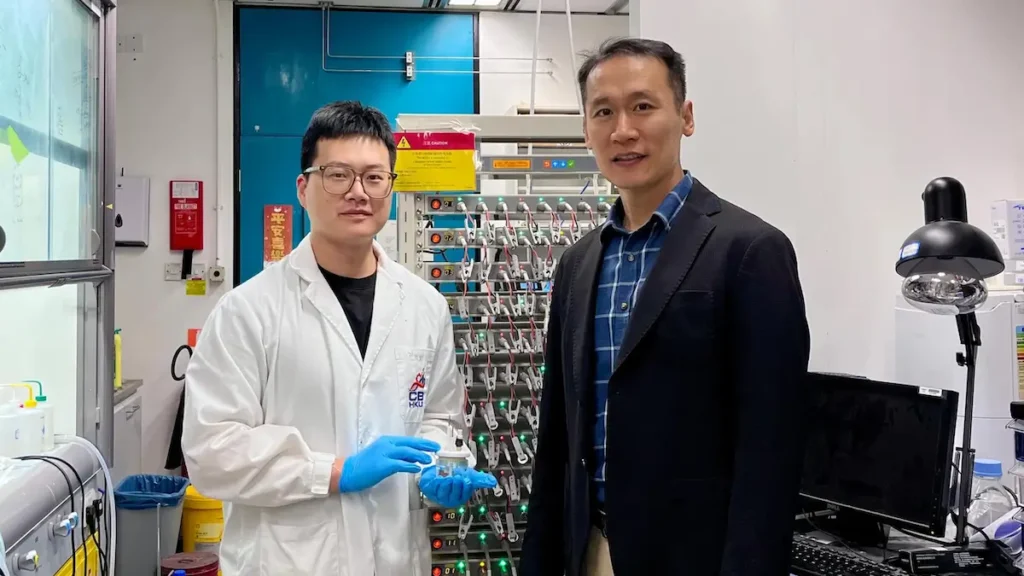
Researchers at the Hong Kong University of Science and Technology (HKUST) have introduced a new method for developing calcium-ion batteries. The scientists used quasi-solid electrolytes made from special organic frameworks, the so-called covalent organic frameworks (COFs).
This process addresses the previously slow ion transport, which limited the use of calcium as energy storage. The team is aiming to improve sustainability and capacity compared to common lithium systems.
As part of their study, the scientists examined two different framework structures: PT-COFs and PQ-COFs. The PT-COF has twenty-four carbonyl groups per repeat unit, while the PQ-COF has only twelve of these groups. The higher density of chemical bonding sites in the PT system leads to significantly superior conductivity of the ions. This structural difference proved to be a crucial factor in the battery’s more stable performance.
Calcium-ion batteries: Efficient ion transport without blockages
In the new process, the calcium ions migrate through the organic material via a specific hopping mechanism. They jump from one carbonyl group to the next along the ordered pores. The team’s simulations show that this movement occurs not only within a plane, but also in the Z direction through the channels.
Through this orderly path, the system prevents the formation of disruptive passivation layers on the anode, which often blocked the function of previous calcium stores. For the practical tests, the team combined an anode made of the organic molecule PTCDA with a cathode made of CuPBA.
This choice of material prevents the components of the electrodes from dissolving in the electrolyte during operation. Through extensive analysis, the researchers confirmed that the entire battery cell retains its structural integrity even under high loads. In doing so, the team solved a central problem of durability in such battery systems.
Performance under heat and continuous load
The developed PT-COF electrolyte achieves an ionic conductivity of 0.46 mS cm at room temperature−1. If the system heats up to eighty degrees Celsius, this value increases to 5.05 mS cm−1 to. The electrolyte can also withstand a high electrical voltage of up to 4.5 volts without chemically decomposing.
This thermal and oxidative stability allows the technology to be used in demanding industrial environments or electric vehicles. In the laboratory tests carried out, the cell delivered a capacity of 155.9 mAh/g at a current of 0.15 A/g.
Even after 1,000 charge and discharge cycles at a current of 1 A/g, the battery retained almost seventy-five percent of its original capacity. The research was carried out in close collaboration with Shanghai Jiao Tong University. The results mark a new performance record for quasi-solid batteries based on calcium ions.
Also interesting:


🤑 Get a €200 bonus
Open yours now free Santander checking account and dust for a short time up to 200 euros bonus for new customers. It’s worth being quick!
Secure €200 now
Requirements apply, advertisement