


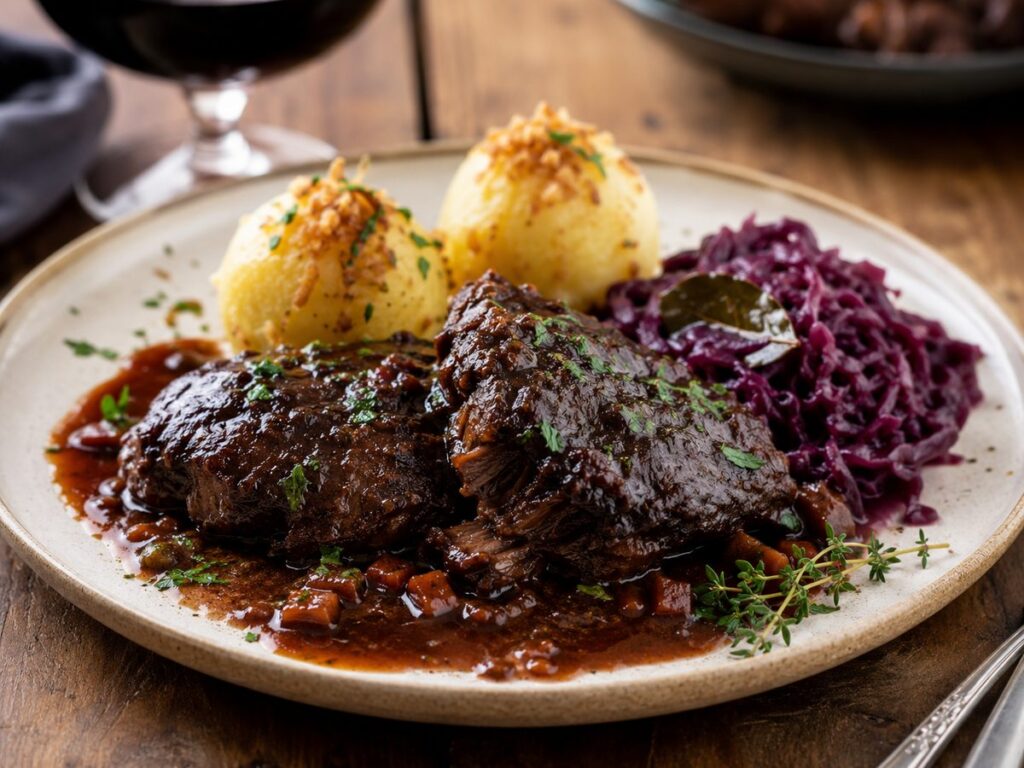


Ox cheeks come from a hardworking muscle, which means they need time, moisture, and gentle heat. When braised slowly with red wine, beef stock, onions, carrots, celery root, herbs, and a touch of tomato paste, the meat becomes silky and full of flavor. The sauce develops into something dark, glossy, and perfect for spooning over dumplings or mashed potatoes.
This is the kind of meal that feels right for Sunday dinner, holidays, cold-weather gatherings, or any evening when the kitchen can take its time. It is rustic in method, refined on the plate, and very much at home in a German kitchen.
What Are Ox Cheeks?
Ox cheeks, also called beef cheeks, are the cheek muscles of cattle. Because they are used constantly as the animal chews, they are rich in connective tissue. That may not sound glamorous, but it is exactly what makes them ideal for raising.
When cooked quickly, ox cheeks can be tough. When cooked slowly in liquid, they become exceptionally tender and flavorful. The collagen melts into the sauce, giving it a natural body and richness that is hard to achieve with leaner cuts.
In German cooking, Ox cheeks are often braised with wine, stock, root vegetables, and herbs, then served with classic sides like potato dumplings, red cabbage, or spaetzle.
Braised Ox Cheeks in Red Wine
Braised Ox Cheeks in Red Wine, or Ochsenbäckchen in Rotwein, is a deeply flavorful German-style beef dish made by slowly cooking ox cheeks with red wine, root vegetables, herbs, and beef stock until meltingly tender. The braising liquid is reduced into a rich sauce and served with potato dumplings, mashed potatoes, spaetzle, or red cabbage.
Ingredients
For the Ox Cheeks
- 3 lbs ox cheeks or beef cheeks, trimmed
- salt and freshly ground black pepper, to taste
- 2 tbsp neutral oil
- 2 tbsp unsalted butter
- 2 onions, diced
- 2 carrots, diced
- 1 small piece celery root, diced, or 2 celery stalks
- 1 leek, white and light green parts only, cleaned and sliced
- 2 cloves garlic, minced
- 2 tbsp tablespoons of tomato paste
- 2 cups dry red wine
- 2 cups beef stock
- 1 bay leaf
- 3 sprigs of fresh thyme
- 1 sprig rosemary
- 6 Juniper berries, lightly crushed optional
- 6 black peppercorns
- 1 tsp German mustard optional
- 1 tbsp red currant jelly or cranberry preserves optional
- 1 tbsp cold butter, for finishing the sauce
Instructions
-
Prepare the ox cheeks
Pat the ox cheeks dry with paper towels. Trim away any tough silver skin or thick outer membrane.Season generously with salt and black pepper.
-
Brown the meat
Heat the oil in a large Dutch oven over medium-high heat.Add the ox cheeks and brown them well on all sides. Work in batches if needed so the meat sears instead of steams.Transfer the browned ox cheeks to a plate.
-
Cook the vegetables
Reduce the heat to medium. Add the butter, onions, carrots, celery root, and leek to the pot.Cook for 8 to 10 minutes, stirring occasionally, until the vegetables begin to soften and lightly brown.Add the garlic and cook for 1 minute.
-
Add tomato paste and wine
Stir in the tomato paste and cook for 2 to 3 minutes, until it darkens slightly and coats the vegetables.Pour in the red wine, scraping up any browned bits from the bottom of the pot.Let the wine simmer for 5 minutes to reduce slightly.
-
Add stock and herbs
Return the ox cheeks to the pot.Add the beef stock, bay leaf, thyme, rosemary, juniper berries if using, and peppercorns.The liquid should come about halfway to two-thirds up the meat. Add a little more stock if needed.
-
Braise slowly
Cover the pot and reduce the heat to low. Simmer very gently for 3 to 3 1/2 hours, or until the ox cheeks are fork-tender.Alternatively, place the covered Dutch oven in a 325°F / 160°C oven and braise for 3 to 3 1/2 hours.Turn the meat once or twice during cooking.
-
Rest the meat
Carefully transfer the ox cheeks to a warm plate and cover loosely.Remove the bay leaf, thyme stems, rosemary stem, and any visible peppercorns or juniper berries.
-
Make the sauce
Strain the braising liquid through a fine sieve into a saucepan, pressing gently on the vegetables to extract the flavor. For a more rustic sauce, blend some of the vegetables into the liquid instead.Simmer the sauce over medium heat until it reduces and thickens slightly.Stir in the mustard and red currant jelly or cranberry preserves if using.Taste and adjust with salt and pepper.Whisk in the cold butter just before serving for a glossy finish.
-
Serve
Return the ox cheeks to the sauce to warm through, or place them on serving plates and spoon the sauce over the top.Garnish with parsley and serve with potato dumplings, mashed potatoes, spaetzle, or red cabbage.
Notes
Tips for the Best Braised Ox Cheeks
Brown the meat well. This step builds much of the final flavor.
Don’t rush the raise. Ox cheeks need time to become tender.
Keep the heat gentle. A hard boil can make the meat tough and cloudy the sauce.
Make the dish ahead if possible. Braised ox cheeks taste even better the next day.
Skim excess fat from the sauce before reducing, especially if making the dish ahead.
Use sides that can catch the sauce. Dumplings, potatoes, noodles, and spaetzle are all excellent choices.
What to Serve with Braised Ox Cheeks
Braised Ox Cheeks in Red Wine are rich and saucy, so they pair best with classic German sides that balance the dish and soak up the sauce.
Good pairings include:
- potato dumplings
- bread dumplings
- mashed potatoes
- Spaetzle
- buttered egg noodles
- braised red cabbage
- roasted carrots
- celery root purée
- green beans
- rye bread
For drinks, serve with a dry red wine, a German Spätburgunder, or a dark lager.
Make ahead and storage
Braised ox cheeks are an excellent make-ahead dish. In fact, the flavor often improves after resting overnight.
Let the meat and sauce cool, then store them together in an airtight container in the refrigerator for up to 3 days.
To reheat, warm gently in a covered pot over low heat until the meat is hot and tender. Add a splash of stock or water if the sauce has thickened too much.
The finished dish can also be frozen for up to 2 months. Thaw overnight in the refrigerator before reheating.
Variations
With Pinot Noir
Use German Spätburgunder for a wine-country version with gentle fruit and acidity.
With mushrooms
Add sautéed mushrooms to the finished sauce for an earthier dish.
With More Root Vegetables
Add parsnip or parsley root to the braising vegetables for a deeper winter flavor.
Without wine
Replace the wine with additional beef stock and add 1 to 2 tablespoons red wine vinegar for acidity.
With Port Style Depth
Add a small splash of port or a spoonful of red currant jelly to the sauce for a richer finish.
Rustic sauce
Instead of straining the sauce, blend the softened vegetables into the braising liquid for a thicker, more rustic gravy.
Frequently Asked Questions
What are ox cheeks?
Ox cheeks are the cheek muscles of cattle. They are flavorful and rich in connective tissue, making them ideal for slow braising.
Are ox cheeks the same as beef cheeks?
Yes. In many recipes, ox cheeks and beef cheeks refer to the same cut.
Why are ox cheeks good for braising?
They contain connective tissue that becomes tender and silky during long, slow cooking. This also gives the sauce a naturally rich texture.
What wine is best for braised ox cheeks?
Use a dry red wine. German Pinot Noir is a good choice, but any dry red wine with good flavor will work.
Can I make this recipe ahead of time?
Yes. Braised ox cheeks are excellent made a day ahead. Store the meat in the sauce and reheat gently.
What can I use instead of ox cheeks?
Beef short ribs, chuck roast, or beef shank can be used, although the texture will be different.
Can I cook this in the oven?
Yes. Braise the covered Dutch oven at 325°F / 160°C for about 3 to 3 1/2 hours, or until fork-tender.
How do I know when ox cheeks are done?
They should be very tender and easily pierced with a fork. If they are still firm, continue raising.