



A bob over 60 with glasses almost looks tidy by itself: the clear cut edge gives structure to thinning hair, and the frame sits in it like a consciously placed accent. However, two questions usually remain unanswered – which bob length goes with which shape of glasses and how often the cut needs to be taken to the hairdresser to ensure that the shape stays in place.
The short answer first: Round glasses like soft, chin-length shapes, angular frames tolerate precise edges, and the more eye-catching the glasses, the calmer the cut can remain. The rhythm of re-editing is just as important – and it consists of two completely different dates, not one.
Why the bob works so well with glasses after 60
With menopause, the hair structure changes: the diameter of the individual hairs decreases, the density decreases, and long hairs quickly hang down weakly. A bob reverses this effect. It takes weight out of the lengths, the hair stands further away from the head, and even a chin-length line looks significantly fuller than shoulder-length, thin hair.
Added to this is the interaction with the glasses. A bob has a geometric base line — an edge at the chin, a straight fringe, a clear transition at the nape of the neck. These lines take up the shape of the edge of the glasses and support them. This gives the face two calm frames that work together.
The short cut is also practical. In the morning, a few minutes with the round hairdryer or a little texture from your hand is often enough and the glasses can be easily put on and taken off without affecting your hairstyle. Anyone who hesitates between several short hairstyles for women over 60 will usually find the bob the easiest compromise between shape and effort.
Correctly combine the shape of glasses and bob length
Now to the heart of the matter. The shape of the glasses also determines which bob variant is really flattering – a connection that is rarely clearly explained in the salon. The basic rule behind it is simple: Soft frames need a counterbalance with a clear edge, hard frames need a soft balance, and eye-catching glasses need a calm frame.
| Glasses shape | Matching bob variant | Why it works |
|---|---|---|
| Around | Chin-length French bob | The soft curve of the frame meets a gentle, chin-length line – harmonious and balanced. |
| Square / rectangular | Blunt bob with side parting | The precise cut edge picks up the contrast and has a deliberately angular, elegant effect. |
| Rimless / discreet | Layered bob with volume | Because the glasses hardly provide any contour, the cut provides the necessary texture of its own. |
| Eye-catching / colorful | A-line or asymmetrical bob | A clear, calm line balances the statement frame without competing with it. |
| Tall/wide | Chin-length bob with side bangs | The curved bangs visually catch wide frames and open up the view. |
If you want, you can read the table backwards: first look for the right bob shape for your favorite glasses. This perspective is often lost in the salon because people usually only talk about the hair while the frame is in the bag.
5 bob variations that suit glasses and age
Instead of twenty barely distinguishable photos, here are five variants that differ significantly in shape, care and glasses partner. Everyone knows where their strength lies – and where the limit is. Other bob variations for glasses wearers can easily be derived from this.
Layered bob for more volume
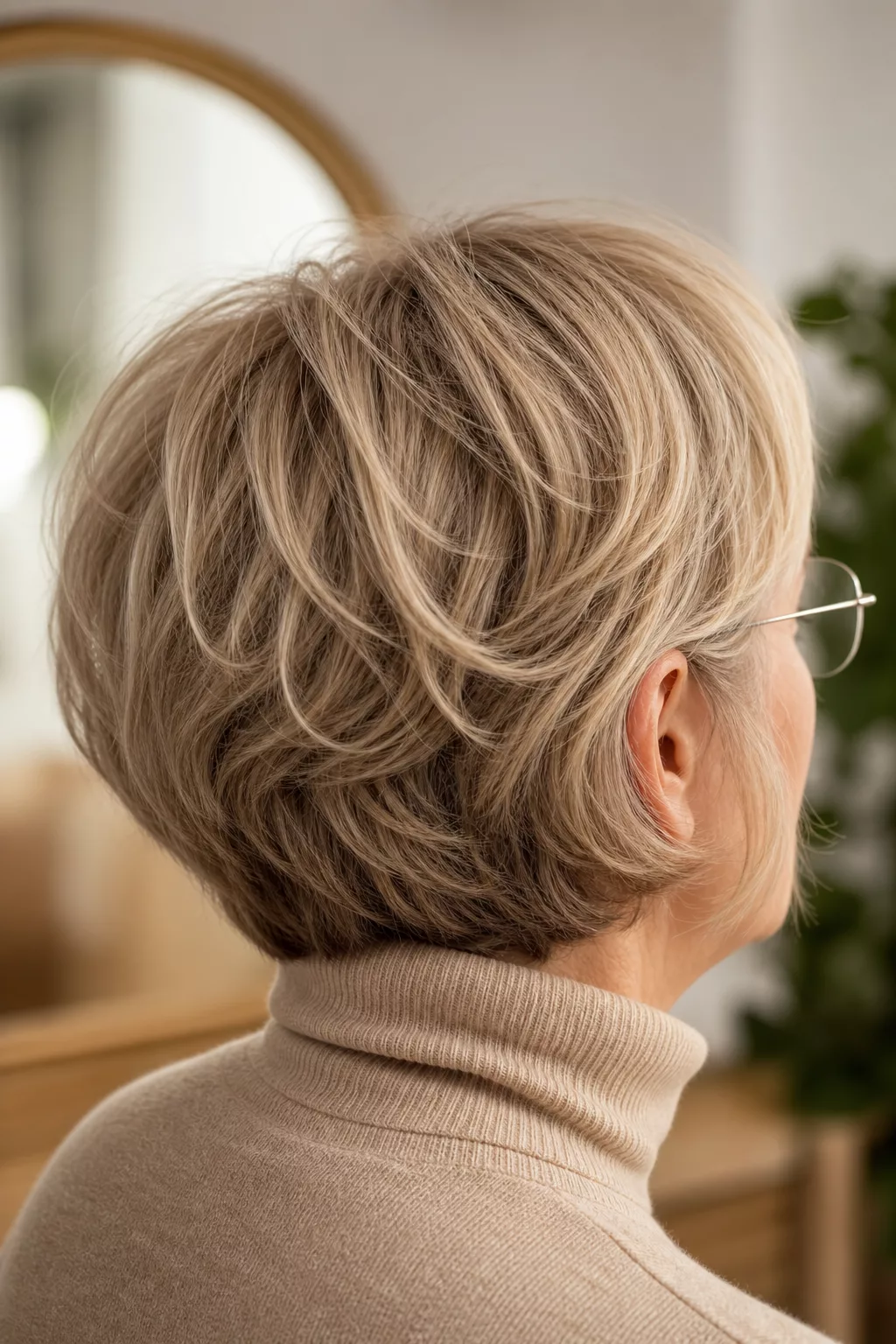
The layered version is the classic against thinning hair. Shorter layers of top hair stand up, creating height on the top of the head and movement in the lengths. This is the best choice for rimless or very discreet glasses because the cut provides the contour that the frame lacks.
A word about the limit: too many layers spoil the effect. Then the bob frays, loses its edge and looks more disheveled than full. Two to three well-placed steps are usually enough. For ideas on structure and length, it’s worth taking a look at layered bob hairstyles with glasses.

Gentle French bob with bangs
The French bob ends just at the chin, the tips are slightly blow-dried inwards, and there are short, airy bangs. These soft curves are the ideal partner for round and oval glasses: they take on the shape of the frame and soften angular features. The cut looks young without being trying.
The direction of the hairdryer is important here. The tips must point inwards, otherwise the bob will stick out to the side and frame the glasses too wide. A medium-sized round hairdryer and a little tension when drying are enough.

Asymmetrical A-Line Bob
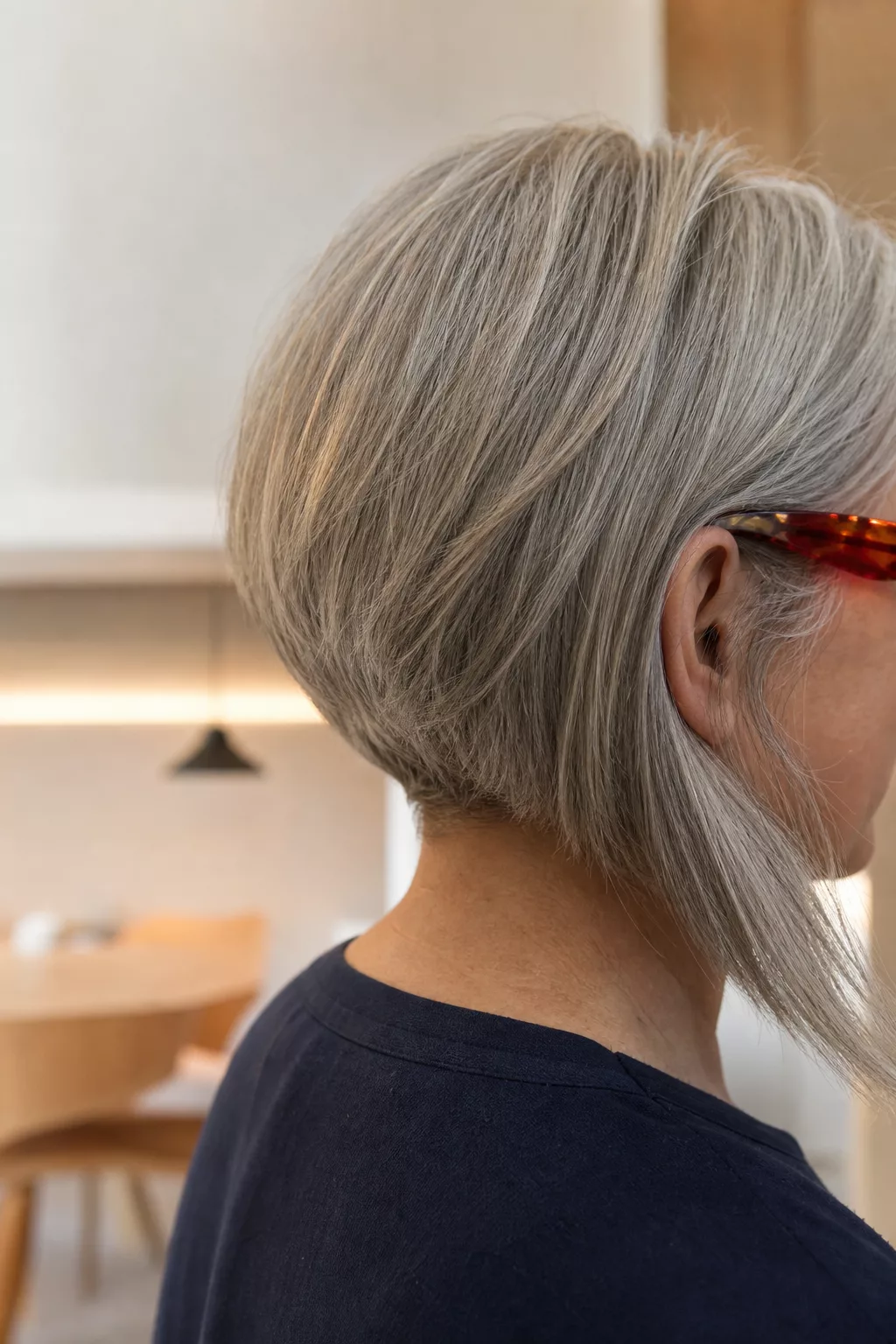
With an A-line bob, the hair is longer at the front than at the nape of the neck. This slanted line draws the eye downwards and visually stretches the face – pleasant if the cheek area has become rounder. Because there is hardly any layering, the shape lasts a long time and requires little styling.
It is precisely this clear, calm line that makes the A-Line Bob the opposite of eye-catching or colorful glasses. The frame can be loud, the cut remains quiet – together this creates a modern, self-confident appearance.
Blunt bob with side parting
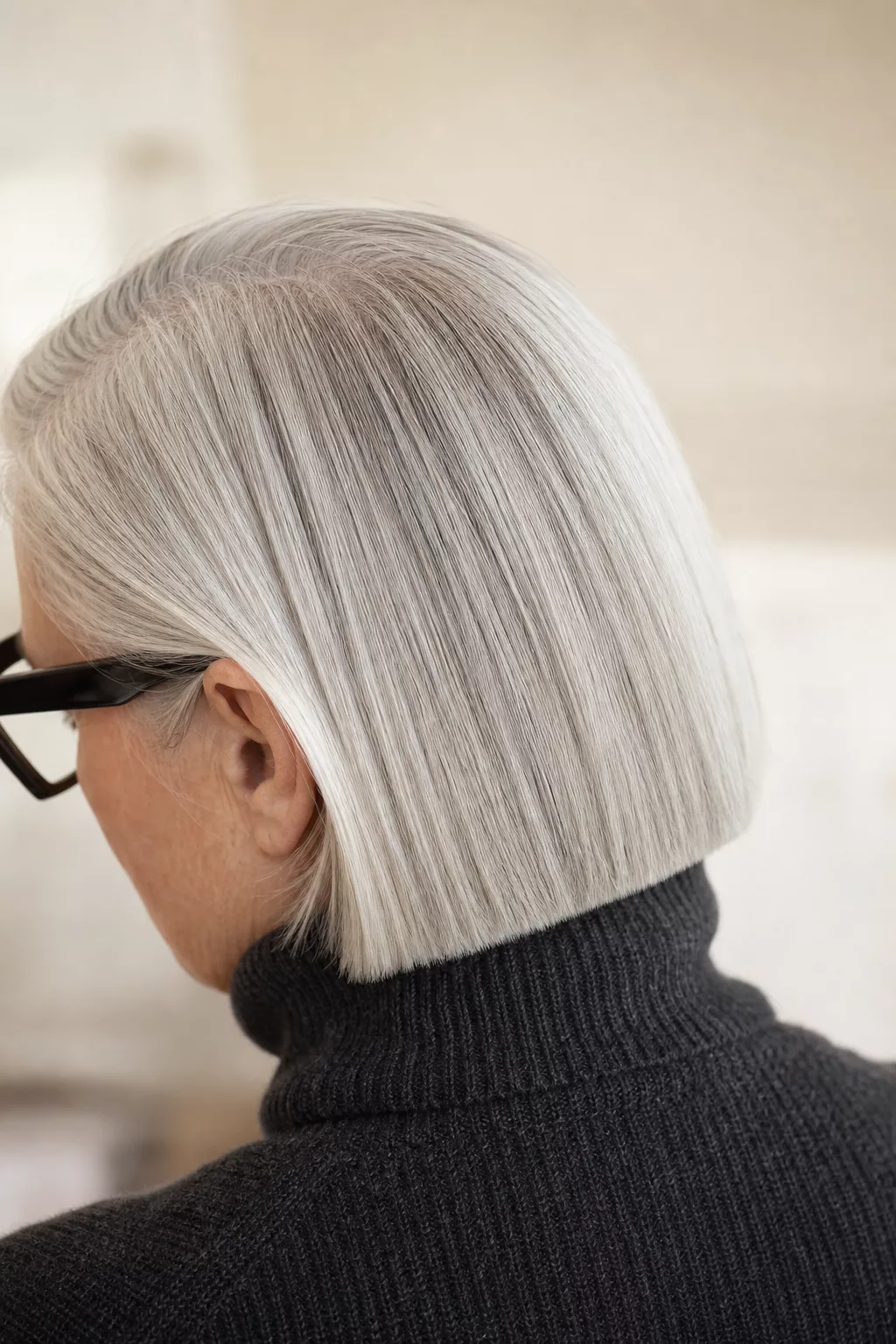
The blunt bob is cut bluntly in one length, without thinned ends. The result is a thick, rich edge that looks particularly elegant on silver and white hair tones. A deep side parting adds momentum and prevents the smooth line from looking severe.
This is a strong duo with square or rectangular glasses – edge meets edge, and both appear deliberately placed. The price for this is a little discipline when it comes to care, because a blunt edge immediately shows any hair that has grown out.
What’s Hot

Children
Hairstyles for boys aged 8 and over: The most practical school cuts
Curtain Bangs Bob
The curtain bangs, parted in the middle, fall on both sides and gently frame the temples. Combined in a warm blonde tone, it opens the look and makes the eyes and cheekbones appear more alert. Other bob hairstyles with an anti-aging effect also use this gentle anti-aging twist. The look is particularly harmonious with round, delicate glasses.
The bangs should be long enough to fall sideways behind the temples of the glasses. This creates a soft transition between the hair and the frame, without a hard dividing line on the forehead.

Combine glasses and bob in everyday life
In addition to the cut and color, a few small details decide whether the glasses and the bob look like they are made from one piece:
- Match frame color to hair color: Silver and gold tones look particularly good on gray and white hair, while strong colors such as berry or petrol stand out against a neutral brown or blonde tone.
- Deep side parting for fine hair: It lifts the roots and brings momentum to the area above the glasses, where thin hair would otherwise lie flat.
- Small earrings for a chin-length bob: Discreet studs or fine hoop earrings complement the line on the chin without fighting for attention with the frame.
Care and cutting rhythm: This is how the bob stays in shape
There is a persistent misunderstanding here because two completely different dates are constantly getting mixed up. A bob needs both – and in different rhythms. The large shape cut redefines the length and structure, the small contour refresh only keeps the neck and bangs clean. Anyone who separates them saves time and still maintains a clear edge.
Professional tips for care and cutting rhythm
- Topiary trimming every 2 to 3 months: This is where the length and structure are renewed – the appointment that keeps the hairstyle alive in the first place.
- Contour every 6 to 8 weeks: Only have the neck and bangs trimmed; This barely takes 15 minutes and prevents the outgrown look between big appointments.
- Volume from the spray: A light salt or volume spray at the roots gives grip without making the bob appear stringy or severe.
- Light streaks around the face: A few face-framing strands on the front sections make the complexion look more awake and draw light onto the face.
Frequently asked questions
How often does a bob really need to be recut after 60?
A good indication for the appointment: As soon as the tips start to rest on the temples of the glasses, the contour is ready for a touch-up. It’s best to say specifically what you want in the salon – “just the neck and bangs, the length remains” every six to eight weeks, the full topiary every ten to twelve weeks. If you have very fine hair, it’s better to stick to the shorter end because thin ends become misshapen more quickly.
Does a bob also fit with progressive lenses with thicker lens edges?
Yes, just the proportions should be right. Thicker edges and wide temples quickly appear dominant, so the bob can have a little more length and texture on the chin – this way the face has a counterweight to the strong frame. A little matting powder on the temples helps against annoying reflections; it takes the shine out of the hair so that no second point of light competes with the lenses.