


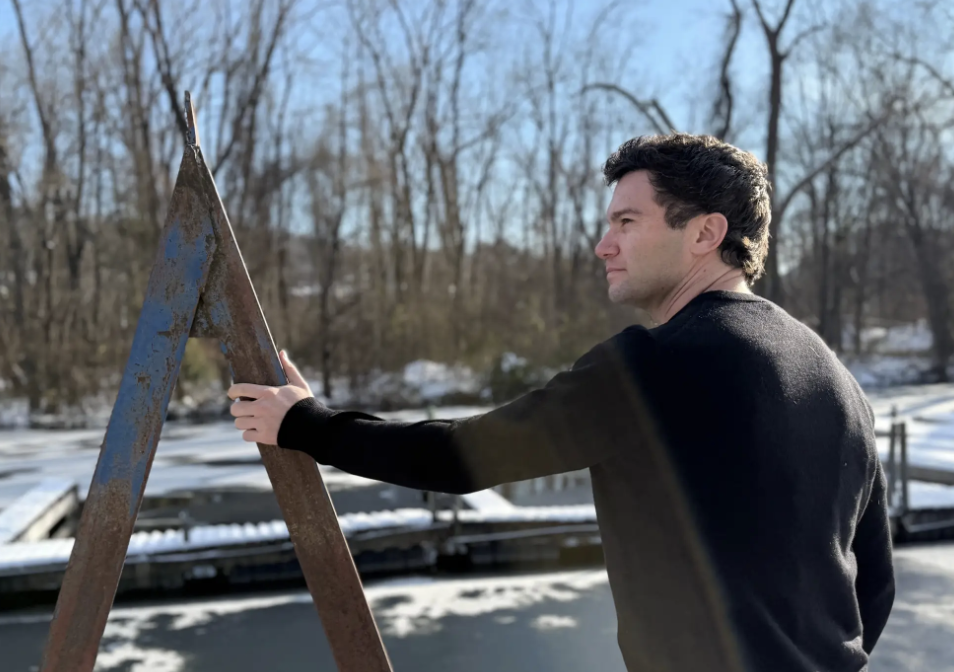
Founder Noah Greenberg goes on a three-day silent retreat every year where he unwinds without a cell phone, laptop, or distractions.

This essay is based on a conversation with Noah Greenberg, 35, co-founder and CEO of Stacker in New York. It has been edited for length and clarity.
Every year in the week between Christmas and New Year I retreat for a three-day silent retreat. I leave my computer at home, turn off my phone, take a journal with me, cover all the clocks – and give myself time to think.
I started this tradition in 2020 because back then I was working from home, opening my laptop in bed and spending the whole day there. I felt trapped in this loop.
The first year had such a profound impact on me – personally and professionally – that I stuck with it. After five years, I want to share what I’ve learned from it – and why I’ve come to realize that the retreat works best when I barely prepare it.
I book an Airbnb for three days between Christmas and New Year
I had been thinking about doing a formal silent retreat for a while, but being completely unavailable for a whole week seemed like too much. Then I realized: I don’t need an organized retreat – I can design one myself.
So I did it. The first two times I was in California over the holidays and booked an Airbnb in the north of the state. I’ve been doing it ever since in upstate New York.
Doing it between Christmas and New Year’s relieves the tension because it’s easier to switch off when I know that things are slowing down at my media company, Stacker, anyway. When I arrived at the Airbnb that first year and turned off my phone, knowing it would stay off all weekend, it was an incredible feeling.
It can be uncomfortable to be alone with my thoughts – but that’s where the value lies
My packing list: journals, comfortable clothing, running shoes or hiking gear in case of snow, and groceries to buy along the way so I don’t have to leave the house. I don’t take a laptop, books, podcasts or anything that could distract me.
I put post-its over the clocks so I can’t see the time. I find it fascinating to live without a sense of time. I think I go to bed much earlier there – just after sunset.
Going hiking is a good way to balance things out because I spend most of the rest of the time sitting on the sofa and journaling. I try to go out twice a day.
At home, I would never do an hour-long lap without headphones – just with my thoughts. On the retreat I have enough discipline to realize: I paid for this Airbnb, rented a car, drove up – and now I’m going to do this for three days.
Too much preparation can ruin the retreat
The week before, I often sit down for an hour and write down my thoughts – professional and personal – so that I go in with a little overview. The first year I didn’t prepare at all.
There is enormous value in just going and writing it all out on the first evening to see how I should spend the next few days. Too much preparation creates pressure to “solve” certain things – and that is counterproductive.
I tell the people in my life that I’m turning off my phone for three days. I try to schedule it on a weekend so it’s only a day or two offline from work. If you, as a CEO, can’t disappear for three days without your company needing you – then you have a bigger problem.
My retreats have changed my habits and improved my life
These retreats are just as valuable for my work as they are for my work-life balance. One year I realized that I wanted to establish a morning routine. I wrote them down, including getting up at 6 a.m. every day – and today I wake up at 6 without an alarm.
I always reflect: What is going well? What’s not working? I realized several times that a process in the team had been bothering me for a long time, but I was in constant grind mode and had suppressed it. After the retreat, I sat down with the team and we changed things.
Every year I ask myself: What would have to happen for me to be able to say at the end: “That was a great year”?
This year my goal was to have 52 coffee dates in 52 weeks to socialize more. Last year I developed my calendar mapping habit – it has massively improved my productivity.
I understand that not every year has to be profound – and that there is still value in the annual ritual
The first year was truly transformative. In the second year I was suddenly disappointed because it didn’t feel as intense. Then I realized: Many of the things that had bothered me the year before had long since been resolved.
I’ve learned that if I go in with expectations, I’ll almost certainly be disappointed. Since then, I have been consciously open – each retreat should be its own journey, without comparison to the first time.