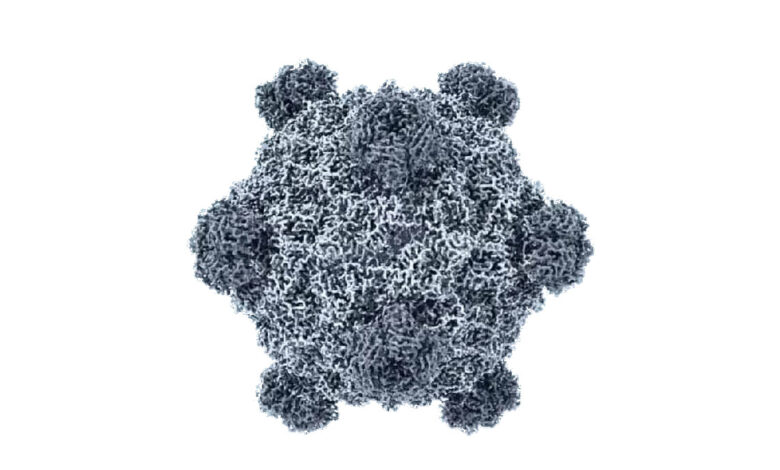
Researchers have succeeded in creating new viruses for the first time using AI. Their goal: new therapies against serious diseases and Antibiotic resistance. However, security experts are concerned.
Artificial intelligence can create videos, generate images and write emails. But can it also create life? A team of researchers in California has managed to use AI to design new genetic codes for viruses. They even got some of these viruses to replicate and kill bacteria. The scientists speak of the first generative design of complete genomes.
Strictly speaking, AI did not create life because viruses are not living beings. Still, the approach is a promising first step toward AI-designed life forms, says biologist Jef Boeke. He says the AI’s results were surprisingly good, suggesting viruses with new, shortened genes and even different gene arrangements.
AI creates viruses
To design the viruses, the researchers used two versions of an AI called Evo, which works on the same principles as large language models (LLMs). The difference: Instead of text, the AI was trained with the genomes of around two million other bacteriophage viruses. She was supposed to develop variants of a virus called phiX174, which has only eleven genes and around 5,000 DNA building blocks.
To test whether the AI’s proposed genomes worked, the researchers printed 302 of the designs as DNA strands and mixed them with E. coli bacteria. Then one night the scientists had success when they saw plates of dead bacteria in their Petri dishes.
In total, 16 of the 302 designs worked. A virus had even begun to multiply, bursting the bacteria and killing them. The researchers are absolutely impressed by these results.
Curse and blessing
The work has the potential to accelerate research on engineered cells and enable new treatments. In so-called phage therapy, viruses are already used to treat serious bacterial infections.
AI could also help find more effective variants in gene therapy, which uses viruses to introduce genes into the body. The new methods have the potential to advance biology because they accelerate processes enormously.
However, this technology also entails significant risks. The Stanford researchers emphasize that they deliberately did not train their AI with viruses that can infect people. But other scientists, out of curiosity or malicious intent, could apply the method to human pathogens, exploring “new dimensions of lethality.”
J. Craig Venter, who created some of the first organisms using DNA from the lab, warns of serious concerns if someone uses this method on viruses such as smallpox or anthrax.
Also interesting:

🤑 Get a €200 bonus
Open yours now free Santander checking account and dust for a short time up to 200 euros bonus for new customers. It’s worth being quick!
Secure €200 now
Requirements apply, advertisement