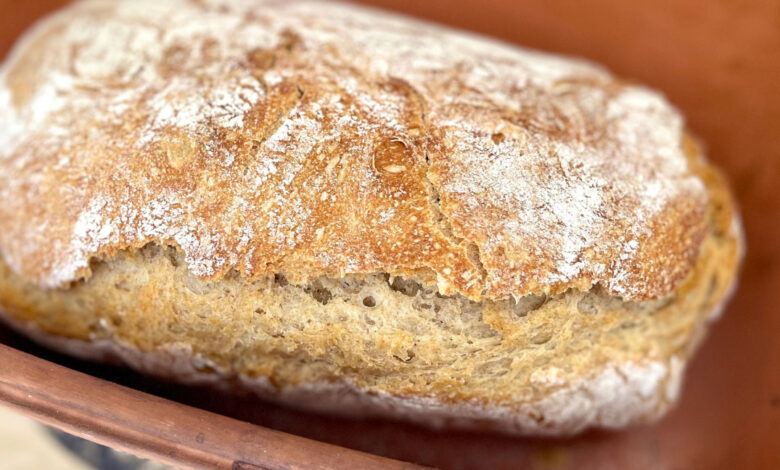
Spelled bread tastes nutty, mild and delicate. It is easily digestible and goes well with every meal. Baking spelled bread yourself is not difficult at all. Plus, fresh bread out of the oven smells wonderful. And yes, it makes you proud when you do it well. It tastes good with butter, cheese or jam. It goes well with soup, salad or baked vegetables. In short: it is versatile, easy to prepare and very tasty.

Bake your own spelled bread in the Roman pot – that’s what it says
The bread from the Römertopf is juicy on the inside and extra crispy on the outside because the clay stores water and releases steam during baking, which results in good baking and a golden crust. In addition, overnight cooking ensures more aroma, better crumb and longer freshness, so that the bread still tastes great the next day. This is how you combine simple steps with great results: little work in the evening, relaxed baking in the morning and bread like from the bakery. If you don’t have a Roman pot, you can also use a cast iron pot or a casserole dish with a lid.
In addition, the long dough process often makes the bread easier to digest because problematic components are broken down and less yeast is required, which many people find pleasant. Overnight cooking also improves the taste, crust and juiciness, which significantly increases enjoyment and shelf life. This means that spelled bread with a long dough rest fits well into everyday life because it is digestible, aromatic and stays fresh for longer.
The health benefits of spelled
Spelled is an ancient grain. It contains lots of fiber, protein and minerals. There are also magnesium, zinc and iron. These nutrients are important for muscles, immune system and energy.
Many people tolerate spelled well, usually better than normal wheat. It contains gluten, but is often less cross-linked than wheat. That’s why some people find it more digestible. In addition, spelled bread often stays moist for longer. This way you can enjoy it for longer.

The most important ingredients for spelled bread
For a good spelled bread you only need a few ingredients:
- 500 g spelled flour (type 630 or 1050)
- 4 g dry yeast
- 350 ml lukewarm water
- 1-1.5 tsp salt
- 1 tbsp olive oil
Optional extras for more bite or flavor:
- 2-4 tbsp sunflower seeds, pumpkin seeds or linseeds
- 1-2 tsp dried herbs, e.g. E.g. rosemary or thyme
- 2-3 tbsp oat flakes or chopped nuts
- 1 teaspoon bread spice or 1 teaspoon caraway
This way you have a clear basis. And you can vary slightly if you like.

Step-by-step instructions for baking your own spelled bread
In this recipe, the dough is made in the evening so that it can rise overnight. It is also baked in a Roman pot, which gives the bread a crispy crust.
1. Activate yeast
- Heat some water to lukewarm.
- Add yeast and stir briefly.
- Let stand for 10 minutes until bubbles appear.
2. Mix the dough
- Place flour in a bowl.
- Mix in salt.
- Add yeast water and oil.
- Mix everything briefly until there are no more pockets of flour.
- Let rest for 30 minutes.
3. Knead the dough
- Knead gently for 5 minutes. In a food processor setting 2-3. Spelled likes it short and gentle.
- The dough should be soft, smooth and slightly sticky.
- If necessary, adjust 1-2 tbsp water or 1-2 tbsp flour.
4. First walking time
- Cover dough in bowl.
- Let rise in a warm place for 60 minutes.
- It should increase significantly.
5. Knead the dough again
- Transfer the dough from the bowl to a floured work surface and turn it over.
- Knead briefly and return to the bowl.
6. Second walking time
- Cover the dough and let it rise for at least 6 hours, preferably overnight.
- The dough should visibly rise.
7. Baking in the Roman pot
- Water the Roman pot with cold water about 30 minutes before baking.
- Meanwhile, preheat the oven to 200 °C top/bottom heat.
- Tip the water out of the Roman pot.
- Put the dough in the Roman pot and bake for about 30 minutes with the lid closed.
- Then remove the lid and bake for another 15-20 minutes until the top is crispy.
8. Cool down
- Remove the pot from the oven and let it cool.
- The bread should come out of the pot easily.
- Let cool completely on a rack.
- This keeps the crust crispy and cuts much better.

Tips for the perfect dough consistency
- Spelled dough requires less kneading than wheat dough. Knead briefly and gently.
- The dough can be soft. Better to be a little too soft than too firm. This makes the crumb juicy.
- If the dough sticks, use wet hands instead of more flour. This keeps it moist and elastic.
- A dash of oil in your hands helps with shaping. It prevents sticking without weighing down the dough.
- Cover the dough while rising. This way it doesn’t dry out.
Common mistakes when baking spelled bread and how to avoid them
- Water that is too hot: Yeast dies. Take lukewarm water.
- Kneading too long: spelled becomes dry. Knead briefly but thoroughly.
- Too little rising time: the bread stays dense. Give the dough time.
- Cold oven: Preheat well. This way the crust will be even.
- Too little salt: bread tastes flat. Keep 1-1.5 teaspoons per 500g of flour.
- Too much flour when shaping: the dough will become stiff. It’s better to use wet hands.

Variations of spelled bread: from grains to spices
- Grain bread: 3 tablespoons sunflower seeds, 2 tablespoons linseeds, 2 tablespoons pumpkin seeds in the dough.
- Seed source: Soak 4 tablespoons of seeds in 60 ml of water for 30 minutes. This makes the crumb juicy.
- Herb bread: 1-2 teaspoons dried herbs and 1 tablespoon extra olive oil. Very aromatic.
- Nut bread: 3-4 tablespoons chopped walnuts or hazelnuts for a nutty bite.
- Spiced bread: 1 teaspoon bread spice, e.g. E.g. caraway, fennel, anise. Mild and hearty.
- Sweet version: 2 tablespoons honey, 1 teaspoon cinnamon and a handful of raisins. Perfect for breakfast.
Proper storage of spelled bread
- Store bread at room temperature. Use a bread bin or a cloth bag.
- Avoid the fridge. Bread dries out more quickly there.
- For longer freshness: Slice and freeze.
- To enjoy: briefly toast the slices or bake them at 160°C for 5-7 minutes.
- Revive the crust: Spray the bread with a little water and bake it hot for 5 minutes.

Spelled bread as part of a healthy diet
Spelled bread provides complex carbohydrates. It keeps you full for a long time and provides consistent energy. Fiber supports digestion. Protein helps maintain muscles. Combine the bread with egg, hummus, avocado or cottage cheese. This creates a wholesome meal in no time. Simple, quick and good.
Conclusion and personal recommendations for baking your own spelled bread
Baking your own spelled bread is easy. With just a few ingredients, clear steps and some rest time, you can definitely do it. Make sure you use lukewarm water, a short kneading time and enough walking time. This makes the bread moist and the crust nice.
For more flavor: Use a soaking piece with seeds. If you want more nutrients: Swap some of the flour for whole spelled. For more bite: Sprinkle the surface with seeds. Try what you like. So your favorite recipe grows with every baking day.

Description
Baking your own spelled bread is very easy here: mix the dough in the evening, let it rise overnight and bake it in the Roman pot the next day. This makes the crumb juicy and the crust extra crispy. The recipe requires just a few ingredients, is family-friendly and sure to succeed – ideal for breakfast, the lunch box or dinner.
- Heat some water to lukewarm and add the yeast and stir briefly. Let stand for 10585 minutes until bubbles appear.
- Place flour in a bowl. Mix in salt. Add yeast water, remaining water and oil. Mix everything briefly until there are no more pockets of flour. Let rest for 30 minutes.
- Knead the dough gently for 5 minutes. In a food processor setting 2-3. Spelled likes it short and gentle. The dough should be soft, smooth and slightly sticky. If necessary, adjust 1-2 tbsp water or 1-2 tbsp flour.
- For the first rising time, cover the dough in the bowl. Let rise in a warm place for 60 minutes. It should increase significantly.
- Knead the dough again. Transfer the dough from the bowl to a floured work surface and turn it over. Knead briefly and return to the bowl.
- Cover the dough and let it rise for at least 6 hours, preferably overnight. The dough should visibly rise.
- Water the Roman pot with cold water about 30 minutes before baking. Meanwhile, preheat the oven to 200 °C top/bottom heat. Tip the water out of the Roman pot. Put the dough in the Roman pot and bake for about 30 minutes with the lid closed. Then remove the lid and bake for another 15-20 minutes until the top is crispy.
- Remove the pot from the oven and let it cool. The bread should come out of the pot easily. Let cool completely on a rack. This keeps the crust crispy and cuts much better.
Notes
TIP1: Try 2-4 tablespoons of sunflower seeds, pumpkin seeds or linseed
TIP2: Or use 1-2 teaspoons of dried herbs, e.g. E.g. rosemary or thyme
TIP3: For more bite, add 2-3 tablespoons of oat flakes or chopped nuts to the dough
TIP4: 1 teaspoon bread spice or 1 teaspoon caraway gives the bread a completely different taste
- Preparation time: 15 mins
- Cooking time: 45 mins
- Category: Breakfast
- Method: Bake
- Cuisine: International