



The comprehensive establishment of fiber optic networks should not only be seen as a modernization of network technology, but also as a cornerstone for economic growth and digital potential. While copper lines still dominate in some regions of Germany, Sweden is already a decisive step ahead. A nationwide fiber optic structure was created there, which was pushed forward quickly and effectively not only in the metropolises but also in rural areas.
Experts have been pointing out for years that a powerful network has an immense impact on various aspects from modern corporate communications to the digital education revolution.
Advanced networks for future-proof communication
In many cities in Northern Europe it is clear how closely fiber optics are linked to the development of flexible working models. A stable broadband connection is considered an essential feature here, so that in Sweden even in remote areas, performance rates are available that are often still discussed in Germany. For those interested in connecting to state-of-the-art technologies, a suitable fiber optic tariff can make a decisive contribution to meeting increasing requirements. In addition, it is increasingly relevant that digital platforms and applications run smoothly. For example, anyone who operates sophisticated platforms can get an idea of redundant solutions and high data security by comparing servers.
Sweden’s example shows how consistent infrastructure policy can be combined with investments in new fiber optic cables.
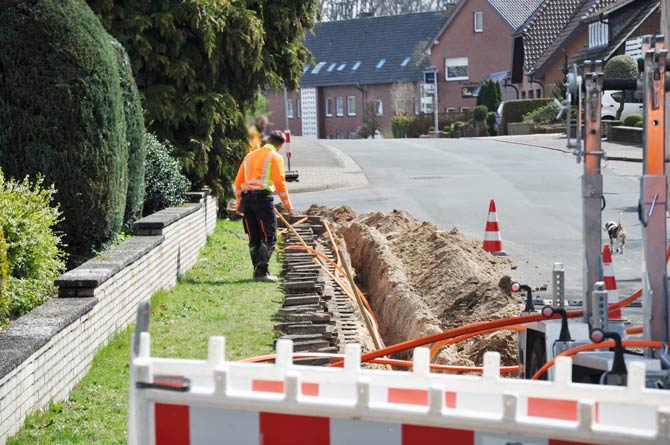
State funding programs and private sector consortia cooperate smoothly to offer connections with gigabit speeds. Solid planning and early awareness of future bandwidth needs should not be underestimated. Discussions with local telecommunications providers suggest that Germany could adopt these strategies to avoid costly retrofits. At the same time, speed is required so that the situation in this country improves quickly.

#358533317 – stock.adobe.com
Practical factors influencing fiber optic expansion
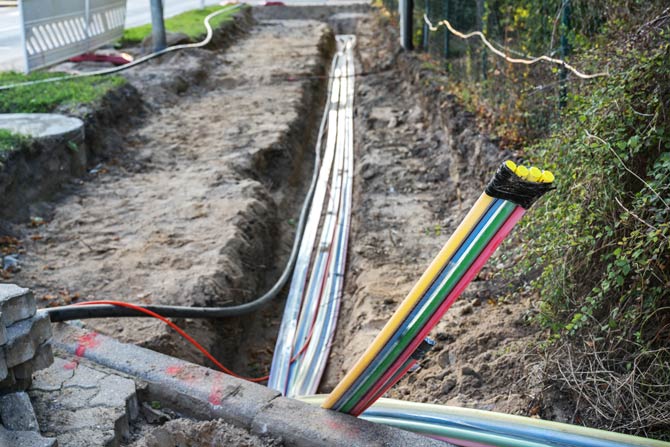
Different regions in Germany usually present various challenges when it comes to civil engineering work. Extensive approval processes or complex ground conditions often make it difficult to lay high-speed cables quickly. However, the systematic development of the fiber optic infrastructure must not fail because of this. Existing studies and analyzes provide information about what fiber optic infrastructure professionals need to do to ensure a smooth rollout. Structural experiments from Scandinavia also show that engineers can provide each other with valuable experience about climatic challenges and more intelligent laying techniques.
In addition to pure expansion, the availability of broad bandwidths can also be linked to social aspects.
Many municipalities in Sweden have set up citizens’ initiatives to promote the connection of remote places. Civil society participation often accelerates progress by stimulating informed opinion formation and innovative financing methods. Authorities attach great importance to clear regulations that structure the interaction of several actors. Such concepts are also becoming increasingly important in Germany when it comes to reliable data transmission rates beyond metropolitan areas.

#378644458 – stock.adobe.com
Challenges and impulses for new solutions
The backlog in broadband expansion can limit the participation of various social groups. Especially for municipal services of general interest and educational offerings, it can be seen how crucial a good connection to online services can be. Digital participation initiatives take up this idea by enabling practical access to learning and working platforms. Companies that want to shift their processes to home offices also need sufficient capacity and a permanently stable connection. Anyone who works on innovations in the areas of telemedicine or cloud computing will benefit directly from higher data rates.
Stable networks also have an impact on future industries such as artificial intelligence by accelerating the movement of relevant data packets and eliminating bottlenecks. Numerous cities and municipalities in Sweden have shown that strategic concepts can generate a great response at the local and national level. While technical solutions are available in this country, a clear roadmap is often still needed – and the willingness to invest in the long term. The targeted involvement of private companies and comprehensive funding models is considered an effective method of boosting expansion in all federal states.
In particular, global competition in areas such as streaming, gaming or data-driven research makes it clear how important fiber optics will be in the foreseeable future. The demand for stable and fast network connections is constantly increasing, which is why prompt action is necessary. An exemplary role model like Sweden illustrates that continuous cooperation between the state, business and the population can form a sustainable foundation for digital sovereignty. Germany could benefit from this by investing even more decisively in expansion measures and further expanding coordination between the federal government, states and regional actors.