
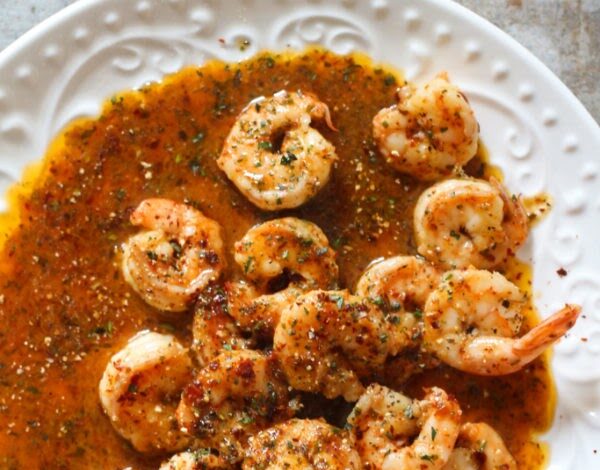

Another recipe from my project #arthur’sdaughtercooksthenewyorktimesempty. Rosé Shrimps – Shrimp with rosé, blood orange juice and fresh herbs
When I prepared these tender, juicy king prawns in August, I had to do a little trickery. The Original recipe by Eric Kim for New York Times Cooking involves the abrasion of an orange peel. But I don’t like buying fresh oranges in the summer because they only taste half as good. Although they are available in supermarkets all year round, their season in Europe runs from November to March. So I resorted to dried orange peel and used blood orange juice (straight juice) from the refrigerated section for the sauce. This ensures the – in contrast to the original – strong color. Another benefit is the slightly bitter taste of blood oranges, which is due to the antioxidants limonin and naringin. Blood oranges have a tart, spicy aroma of dark berries. I would prepare these rosé shrimp exactly the same way again. You can get blood orange juice in the refrigerated section all year round as freshly squeezed juice.
In November, however, you may no longer have the large selection of fresh herbs that I used and have to resort to dried ones, as the original recipe calls for them anyway. But there’s always something, isn’t it? My large herb box on the terrace is still overflowing with greenery. The tarragon is growing like crazy, the chives are blooming relentlessly, laurel is fresh all year round anyway, the lavender in the garden is still fragrant, only the parsley is complaining a little because of the excessive rain. I’ll link you to the right herbs and spices in the service section, including a 20% voucher.

This is how it’s done: Shrimp in rosé and blood orange sauce with herbs from Provence
Ingredients
- 10 – 15 shrimps per person, depending on size (i.e. size of the shrimp, not the people 😅)
- 1/2 tsp Piment d’Espelette*. The taste of Piment d’Espelette, the complex, spicy-savory aroma with simultaneous mildness and sweetness, is unique and cannot be adequately replaced.
- 1 tsp Herbs of Provence*
- a good whoosh of dry rosé
- a good dash of blood orange juice
- 1 level teaspoon dried orange peel (or freshly grated)
- a dash of very cold butter
- Salt, olive oil, something Muscovado sugar*
preparation
- Peel the shrimp, make thin cuts on the back and pull out the intestines.
- Dab, salt and fry briefly on both sides in a little olive oil in an iron pan. The shrimp should now have a light (!) color, i.e. change from gray to pink. Please don’t fry them completely right now, even if they aren’t completely pink yet, they will continue to cook later! Transfer to a deep plate and cover with another plate.
- Now add a pinch of Piment d’Espelette and herbs to the pan and fry it in the hot fat for a few seconds
- Stir in the sugar and then deglaze with the rosé, then with the blood orange juice, and let it simmer briefly
- Now stir in the butter and simmer until creamy for a few minutes
- Add the shrimp again, turning them in the sauce a few times until they are cooked through (this is quick!)
- Place on a preheated plate, sprinkle with herbs, orange peel and a pinch of Piment ‘d Espelette, serve immediately!

Arthur’s daughter verifies tips and tricks for preparation
- What I particularly liked: The combination of the berry blood orange aroma with the floral freshness of a dry rosé wine.
- Please don’t miss out on Piment d’Espelette. I promised to always point out separately when an ingredient should not be replaced with an alternative. That’s how it is here!
- Please do not use “Crevettes rosé” or other types of pre-cooked shrimp. They must be raw, i.e. gray.
- Remove the shell before frying and freeze it; you can use it later to make a crustacean stock.
- Size matters! Bigger is better. I used shrimp 13/15, like in this recipe for king prawns in rosemary-wormwood sauce with bay leaves.
- What do the numbers like 13/15 mean for shrimp? or 21/30 or 31/40?
This is the usual weight and size measurement for shrimp in “pieces to English pounds”, i.e. pcs/lb.
13/15 then means: Between 13 and 15 shrimps per pound, i.e. 453.59 g. So the smaller the two numbers, the bigger the shrimp because: The larger the shrimp, the fewer pieces per pound
Service part


- Original recipe from Eric Kim: HERE
Note on my project “Arthur’s Daughter Empties the New York Times”:
No, I don’t get any money for it, it’s just my personal favorite project at the moment. I also pay every penny myself for unlimited access to the recipes. You are welcome to support me by recommending the articles and sharing and linking them wherever you can and like, that would be great and I thank you very much for that! ❤
I can’t guarantee that I’ll actually finish the NYT. Maybe I’ll just stop after the first ten thousand recipes.
I don’t follow a system when choosing recipes. I cook whatever I feel like and whatever comes to my virtual feet. I’m happy to take suggestions from you at any time!
I don’t just convert the units of measurement from cups, ounces and so on, I also adapt them to the recipes up and down. I also modify the recipes based on ingredients and habits available in Germany.
Except in Recipe register I collect all the recipes I have cooked in this article
 Make delicious great again!