


The lime and cement industry is responsible for around eight percent of global CO2 emissions. Until now, it was considered difficult to decarbonize because greenhouse gases escape directly from the rock used. The East German start-up Litherm Technologies has now developed a fully electric calcination process that is intended to solve exactly this problem.
The cleantech company Litherm Technologies from Wernigerode wants to replace conventional lime kilns with fully electric fluidized bed calcination. With this approach, electricity heats the fine-grained raw material directly, eliminating the need for gas or coal.
The process CO2 that is unavoidable during production is produced in a highly concentrated form. It should then be recycled or stored directly in order to reduce further emissions. This CO2 capture is integrated into the heat recovery of the system.
All-electric calcination replaces classic ovens
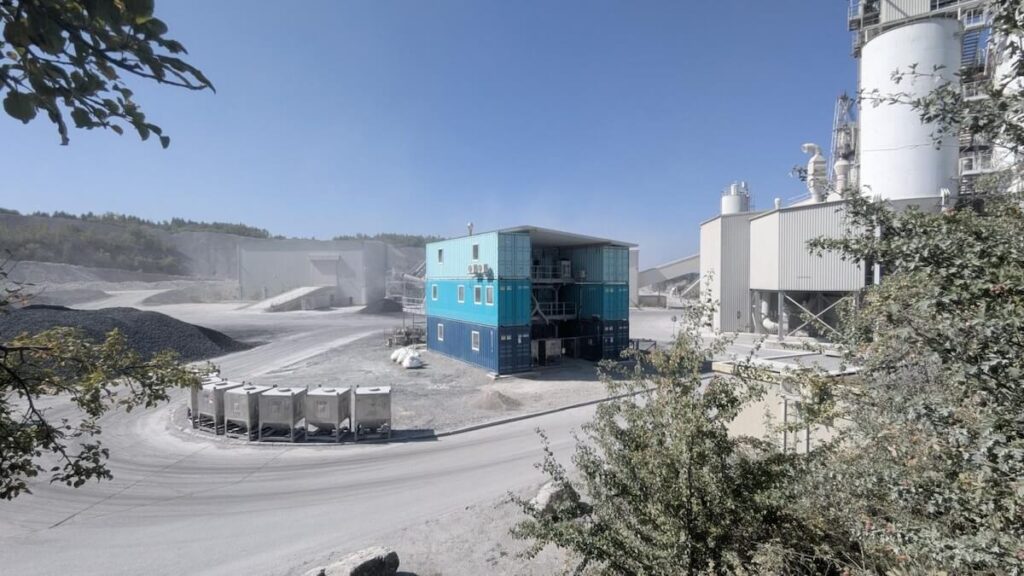
According to the start-up, the process requires neither additional equipment nor extra energy expenditure. A corresponding pilot system is already running on the Fels-Werke site in Elbingerode. The seed financing received in the amount of 6.5 million euros from March 2026 will now serve as the next step towards the first commercial demonstration plant.
Litherm Technologies was also included in Bill Gates’ fellowship program. The investors include the Canadian world market leader Graymont and the Swiss lime factory Netstal. The overarching goal of those involved is to scale the technology for large-scale industrial use. According to Graymont Vice President David Chamberlain, the combination of all-electric production and directly usable CO2 as a by-product is unique in this form.
Why the procedure is also financially worthwhile
Avoiding additional energy requirements for deposition supports the economic basis of the system. Felix Nelles, Managing Director of Litherm Technologies, explained:
Our technology addresses exactly the part of emissions that cannot be solved by simple electrification in the lime and cement industries. The fact that we can integrate carbon capture into the process without additional equipment and energy requirements is a central lever for economic efficiency.
Lime is an indispensable raw material for dozens of important industrial processes. The material is required, among other things, in steel production, water treatment and the construction industry. Decarbonization of this sector therefore has a major impact on entire downstream value chains. Until now, this chemical process was considered one of the most stubborn fossil processes because the CO2 escapes from the rock itself.
Also interesting: