


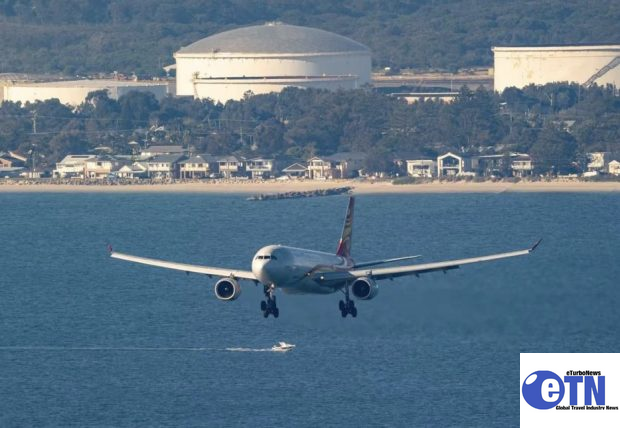
At the CAPA Airline Leader Summit in Berlin, airline executives warned that aviation’s biggest challenge is no longer demand recovery but fragile global supply chains. From soaring maintenance costs and fuel uncertainty to talent shortages and AI-driven predictive maintenance, carriers are redesigning operations around resilience, long-term partnerships, and strategic control.
Berlin- At the CAPA Airline Leader Summit in Berlin, aviation executives warned that the industry’s greatest threat may no longer be demand shocks — but the hidden fragility of the global systems that keep aircraft flying.
The aviation industry has endured crises before: oil shocks, volcanic ash clouds, terrorist attacks, financial collapses, pandemics. Yet executives gathered in Berlin at the CAPA Airline Leader Summit suggested that the latest disruption confronting airlines is more pervasive — and potentially more permanent.
Supply chains, once treated as a background operational function, have become a defining strategic concern for global aviation.
During a session titled “Building resilient and innovative responses to supply chain disruptions,” Industry leaders painted a picture of an airline ecosystem struggling to adapt to chronic shortages of engines, aircraft parts, fuel, and skilled labor, all while navigating inflation, geopolitical instability, and increasingly complex technology risks.
The panel brought together Harsha Majeti of CAE, William Boulter, Conor McCarthy of Emerald Airlines, Ramiro Sequeira of Iberia, and Tilman Felix Reinshagen of TUI Airline.
Together, they described an industry that has been forced to abandon many of the assumptions that defined modern aviation for decades.
Lessons From a Decade of Disruptions
The industry’s vulnerabilities did not emerge overnight.
Panelists pointed to a series of warning signs stretching back nearly two decades: the delayed delivery of Boeing 787 aircraft to Virgin Atlantic between 2004 and 2011, the collapse of enthusiasm for the Airbus A380 program, and the 2010 Icelandic volcanic ash cloud that shut down much of European airspace and exposed how dependent aviation had become on tightly synchronized logistics systems.
Then came the COVID-19 pandemic, followed by the blockage of the Suez Canal — a single stranded vessel that disrupted global shipping routes and demonstrated how easily international supply chains could seize up.
For airlines, the consequences have lingered long after borders reopened.
“Before COVID, supply chain was like an operational issue,” Sequeira said during the discussion. “Since COVID, and especially in the moment we are living now, it has become a strategic issue.”
Airlines, he argued, can no longer focus solely on the next operational quarter. They must now plan years ahead for shortages of engines, parts, fuel, and maintenance capacity.
“You need to start looking at least three years in advance,” he said.
The High Cost of Scarcity
Nowhere is that transformation more visible than in aircraft maintenance.
McCarthy described how shortages of critical ATR 72 components left aircraft grounded for months. One aircraft remained out of service for nine months because a replacement nose landing gear could not be sourced.

CAPA Airline Leader Summit – Airlines in Transition 2026
If you have a group of 5 or more, we do offer group discounts – You could even earn yourself a free ticket!
Contact me today:
Shivaun Kilbane (Delegate Relations Manager) – ✉ sh***************@*****ma.com
Meanwhile, the economics of spare parts have changed dramatically.
“We’ve seen LLP costs on engines go up by 200 percent in five years,” McCarthy said, referring to life-limited engine parts. “A propeller hub with an $80,000 list price was selling secondhand for $300,000 because there was no supply.”
In the scramble for scarce inventory, brokers and middlemen have gained extraordinary leverage over airlines desperate to return grounded aircraft to service.
The situation has also exposed the limitations of aircraft manufacturers and major suppliers, many of whom continue struggling to restore production capacity years after the pandemic.
“And when you’re stuck with an aircraft on the ground,” McCarthy said, “you get absolutely rogered by the middlemen.”
Bringing Maintenance Back Home
The crisis is forcing airlines to rethink a decades-long strategy of outsourcing maintenance to the lowest-cost global provider.
For years, heavy maintenance was treated as a commodity business. Aircraft were routinely flown across continents for major overhauls if labor costs were cheaper elsewhere.
That logic is now reversing.
At TUI Airline, Reinshagen said vertically integrated maintenance operations in Europe — once viewed as expensive — have become strategically invaluable.
“Some of them went down or didn’t even come back after COVID,” he said of outsourced maintenance providers. “Now having our own heavy maintenance capability in the center of Europe is actually an asset.”
Emerald Airlines has taken similar steps through Dublin Aerospace, a sister company that now performs ATR landing gear overhauls internally, cutting turnaround times by half.
“You have to take stuff in-house,” McCarthy said.
The shift reflects a broader industry realization that resilience now matters as much as efficiency.
Airlines Seek ‘Customer of Choice’ Status
The post-pandemic era is also reshaping relationships between airlines and suppliers.
For decades, procurement strategies often revolved around aggressive cost-cutting and reverse auctions. Airlines pushed suppliers relentlessly for lower prices and thinner margins.
That approach is increasingly being abandoned.
“What we’re trying to do post-COVID is becoming a customer of choice,” Reinshagen said. “We appreciate the value of long-term relationships much more now.”
Rather than squeezing suppliers, airlines are investing in closer partnerships, recognizing that supplier instability can quickly become an operational crisis.
Executives described a future in which airlines and OEMs share data more openly, coordinate forecasting more transparently, and collaborate more closely on production planning.
“This is the step for airlines and OEMs to work differently,” Sequeira said. “To share systems, to share transparency, and understand each other’s needs.”
AI and the Search for Predictability
Technology, particularly artificial intelligence, is emerging as one of the industry’s most important tools for managing uncertainty.
At Iberia, predictive maintenance systems powered by AI are being developed to identify parts likely to fail before they trigger aircraft-on-ground events.