


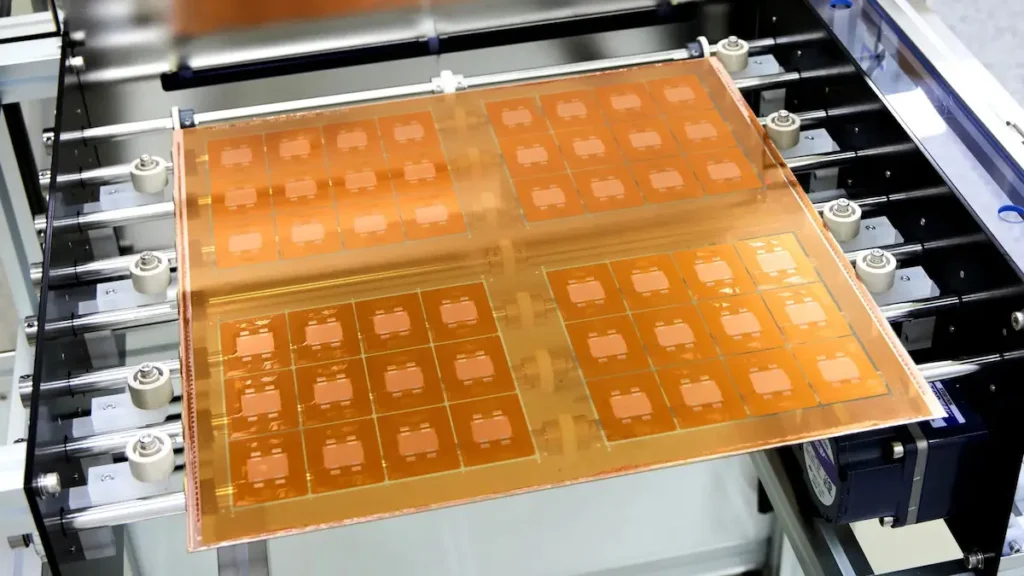
In the future, special glass panels could replace organic carrier layers in the semiconductor industry and increase the efficiency of AI processors. While traditional substrates deform under heat, glass provides the mechanical stability necessary for the next generation of high-performance computers. The material change could mark the beginning of a new phase in global data centers.
The U.S. government is funding a partnership between Absolics and Georgia Tech with $175 million from the CHIPS for America program. The USA is thus securing a central role in the semiconductor supply chain. A factory for the commercial production of these glass substrates has already been built in Covington, Georgia.
AI chips on glass: Focus on global competition
Behind the scenes, an industrial race has developed between the leading technology nations. In addition to the US company Intel, South Korean companies such as Samsung and LG are accelerating their research. Chinese companies are also among the early adopters of this technology.
The supplier JNTC is already producing semi-finished glass panels in large quantities for the global market. The company is planning an additional production line in Vietnam for 2027. Analysts forecast the sector to grow to as much as $4.4 billion by 2036.
The physical advantages of glass over epoxy resin are measurable: the surface is 5,000 times smoother than organic substrates. This enables ten times greater density of electrical connections. This means that around 50 percent more silicon chips can fit in the same area.
Light-based signals for AI hardware
The panels have a thickness of just 700 micrometers to 1.4 millimeters. Nevertheless, they should withstand the thermal stress of modern AI workloads. Glass promises precise alignment of the components and prevents deformation.
Future chip generations could use the transparency of the material for integrated optical signal paths. Designers would build these directly into the substrate. Light pulses replace power-intensive copper paths and reduce the energy requirements of data centers.
Intel already demonstrated a functional computer with a glass core substrate in early 2025 that launched the Windows operating system. New production tools now reliably stabilize the processes. The technology is moving from the prototype stage to industrial mass production.
Also interesting: