


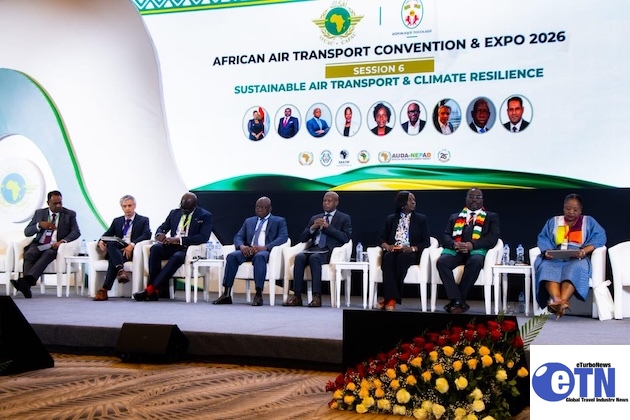
The inaugural African Air Transport Convention & Expo 2026 concluded in Lomé with the adoption of the landmark Lomé Declaration, setting a roadmap to accelerate aviation liberalization, strengthen connectivity, attract investment, and advance sustainable air transport. The event brought together more than 950 stakeholders committed to transforming Africa’s aviation industry.
Lome, Togo – The inaugural African Air Transport Convention & Expo 2026 concluded successfully after five days of high-level dialogue, strategic collaboration and concrete commitments aimed at accelerating the transformation of Africa’s aviation sector.
Organized by the African Civil Aviation Commission (AFCAC) in partnership with the African Union Commission (AUC), the AfCFTA Secretariat and AUDA-NEPAD, the Convention brought together more than 950 participants from across the continent and beyond. The event attracted 24 Ministers, 32 Directors General of Civil Aviation, Heads of State, regulators, airline and airport executives, development finance institutions, technology providers, and international partners, making it one of Africa’s largest aviation gatherings.
Held under the High Patronage of HE Faure Essozimna Gnassingbé, President of the Council of the Republic of Togo and Champion of the Single African Air Transport Market (SAATM), the Convention also welcomed distinguished leaders, including HE Paul Kagame, President of the Republic of Rwanda, and Chief Olusegun Obasanjo, former President of Nigeria.
Throughout the week, delegates engaged in ministerial dialogues, technical sessions, business meetings, and an international exhibition centered on advancing the implementation of SAATM. Discussions focused on improving air connectivity and affordability, strengthening air cargo and trade corridors, promoting seamless mobility, mobilizing infrastructure investment, advancing sustainable aviation, accelerating digital transformation, and expanding opportunities for women and youth across the aviation industry.
A key outcome of the convention was the adoption of the Lomé Declaration and its accompanying Implementation matrixestablishing a continental roadmap to accelerate aviation liberalization, improve connectivity, reduce the cost of air transport, mobilize investment, develop sustainable aviation fuel initiatives, and strengthen innovation, technology, and human capital throughout Africa’s aviation ecosystem.
The Convention also established a coordinated African platform ahead of the International Civil Aviation Organization (ICAO) Air Transport Conference, reinforcing aviation’s strategic role in delivering the African Union’s Agenda 2063 and supporting the 2027 African Union Theme of the Year. Delegates emphasized that an integrated air transport network will be instrumental in driving trade, tourism, regional integration and inclusive economic growth across the continent.
“The African Air Transport Convention & Expo 2026 demonstrated that Africa is ready to move from commitments to implementation,” said Adefunke Adeyemi, Secretary General of AFCAC. “The partnerships forged, the political momentum generated and the adoption of the Lomé Declaration provide a clear roadmap for building a more connected, competitive and sustainable aviation sector that delivers tangible benefits for African citizens and economies.”
The successful conclusion of the Convention marks the beginning of a new phase of coordinated implementation, with AFCAC and its partners committed to translating the outcomes of the Lomé Declaration into measurable progress through stronger connectivity, increased investment and the development of a truly integrated African aviation market.
AFCAC, the African Union’s specialized agency responsible for civil aviation policy coordination and development, serves as the Executing Agency of the Single African Air Transport Market. Through its leadership, AFCAC continues to drive the liberalization of Africa’s air transport market in support of the continent’s integration, economic development, and sustainable growth objectives under Agenda 2063.