


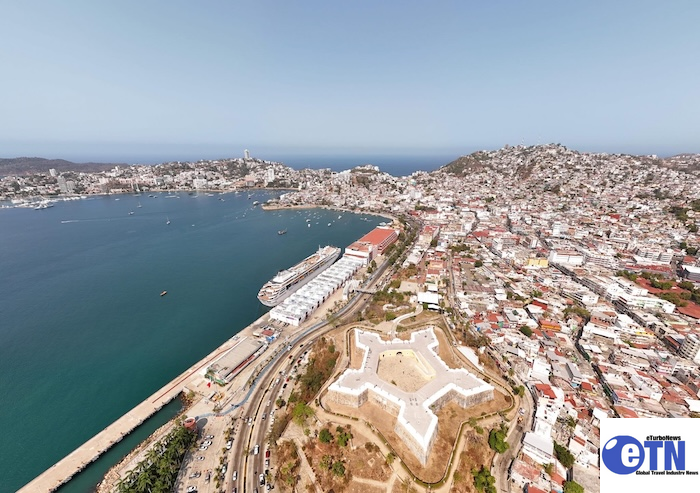
Acapulco’s new 24-year cruise port concession with Global Ports Holding signals a major turning point for Mexico’s tourism sector. Backed by global cruise growth highlighted by the World Travel & Tourism Councilthe project combines infrastructure investment, enhanced security, and economic opportunity to reposition the destination on the global cruise map.
Acapulco—once the crown jewel of Mexico’s Pacific coast—is charting a new course. The 24-year concession awarded to Global Ports Holding (GPH) is not just a port deal; it is a strategic pivot that aligns Mexico with the powerful global resurgence of cruise tourism.
At a moment when the cruise industry is rapidly expanding—and reshaping how destinations compete—this agreement signals Mexico’s intent to secure a larger share of a multi-trillion-dollar global sector.
A Strategic Investment Meets a Booming Global Industry


Under the agreement with Administración del Sistema Portuario Nacional Acapulco, GPH will modernize and operate the cruise terminal while public investment will deliver a new 350-meter pier by 2027—capable of handling larger vessels.
This timing is critical.
According to the World Travel & Tourism Council, cruise tourism is not a niche segment—it is a global economic engine:
- $98.5 billion contributed to global GDP in 2024
- $199 billion in total economic output
- 1.8 million jobs supported worldwide
- $60.1 billion in wages generated
These figures highlight why countries like Mexico are racing to upgrade infrastructure: cruise tourism is increasingly central to national growth strategies.
Why This Matters for Mexico: Jobs, Growth, and Long-Term Demand
The WTTC’s latest “Cruising for Impact” report underscores a key insight: Cruise tourism is deeply embedded in local economies.
- Over $93 billion in direct spending flows into local businesses globally
- 1.4 million jobs are supported onshorefrom transport to retail (
- One job is created for every 20 cruise passengers
For Acapulco, this translates into immediate and long-term benefits:
- Revitalization of small businesses and local supply chains
- Expansion of employment opportunities beyond traditional tourism roles
- Increased investment in infrastructure and services
Perhaps most importantly, cruise tourism acts as a gateway to repeat visitation. WTTC data shows that over 60% of cruise passengers return to destinations they first discovered via cruise a powerful multiplier effect for Mexico’s broader tourism economy.


Security: The Decisive Factor in a Competitive Cruise Market
While infrastructure and economics are critical, security is the foundation of this transformation.
Acapulco’s recent challenges have made safety a defining issue. Cruise lines—guided by standards from bodies like Cruise Lines International Association (CLIA)—prioritize destinations that demonstrate:
- Robust port security systems
- Coordination with national and naval authorities
- Reliable, consistent safety for passengers
The WTTC report reinforces this, highlighting cruise tourism’s role in advancing global standards for health, safety, and crisis response
In this context, GPH’s involvement is critical. As a global operator, it brings:
- International security protocols
- Operational discipline aligned with major cruise lines
- Confidence-building measures that influence itinerary decisions
For Mexico, improving security is not just about protection—it is about regaining trust in global travel markets.
Repositioning Acapulco in the Mexican Riviera
With upgraded infrastructure and enhanced security, Acapulco is poised to re-enter the competitive circuit of Pacific itineraries.
The WTTC emphasizes that cruise tourism thrives on collaboration between destinations, communities, and industry partners —a model clearly reflected in the GPH-ASIPONA partnership.
This enables:
- Integration into broader Mexican Riviera routes
- Development of authentic shore experiences (culture, gastronomy, heritage)
- Positioning Acapulco as both a transit hub and a destination in its own right
As global cruise capacity is projected to grow by 19% between 2022 and 2028 destinations that invest now stand to capture disproportionate gains.
A Blueprint for Resilient Tourism Development
Beyond economics, the WTTC identifies cruise tourism as a driver of inclusive and resilient growthcontributing to:
- Skills development and workforce training
- Cultural preservation and community enrichment
- Infrastructure modernization
- Crisis preparedness and recovery systems
This broader impact reframes the Acapulco deal: it is not simply about ships and terminals, but about rebuilding a destination ecosystem.
The Bottom Line: More Than a Port Deal
Acapulco’s partnership with Global Ports Holding arrives at a pivotal moment for Mexico and the global cruise industry.
It connects three critical forces:
- Global demand growth (validated by WTTC data)
- Strategic infrastructure investment (GPH + ASIPONA)
- Security-led destination repositioning
If executed effectively, this project could redefine Acapulco—not just as a historic port, but as a modern, secure, and economically vital gateway for cruise tourism in the Americas.
In a world where cruise destinations compete on trust, experience, and infrastructure, Acapulco is making a clear statement:
It intends to compete again—and win.