


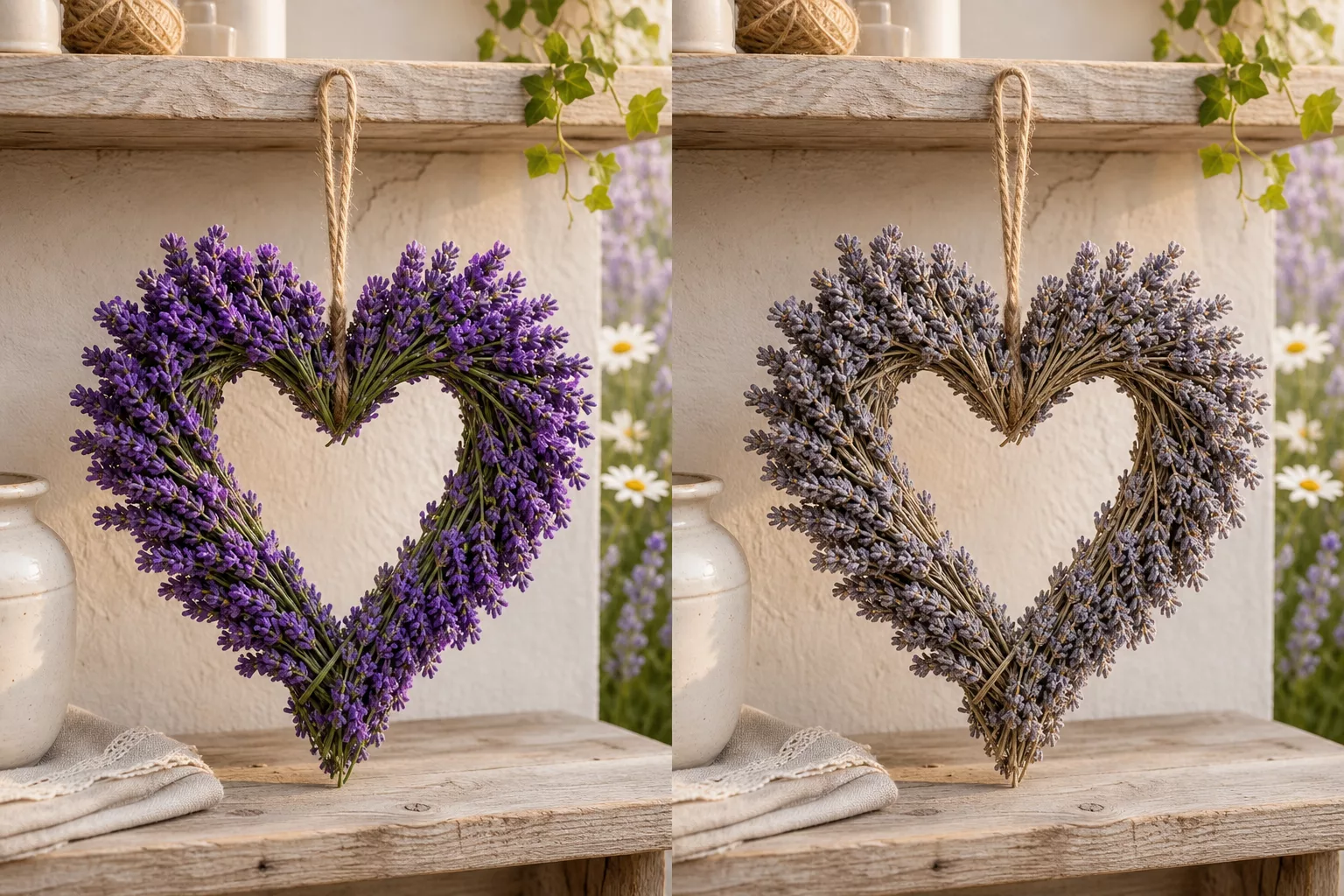
Two handfuls of fresh lavender, a piece of flexible wire, ten minutes – that’s all a lavender heart needs. It smells of Provence as soon as you walk past it and looks just as good as a souvenir as it does on the garden door or on the set table. You can make your own lavender heart in three ways, which differ in effort, appearance and durability. When freshly tied, it stays bright purple for one to two weeks, then dries and decorates for months.
This is what you need for a lavender heart
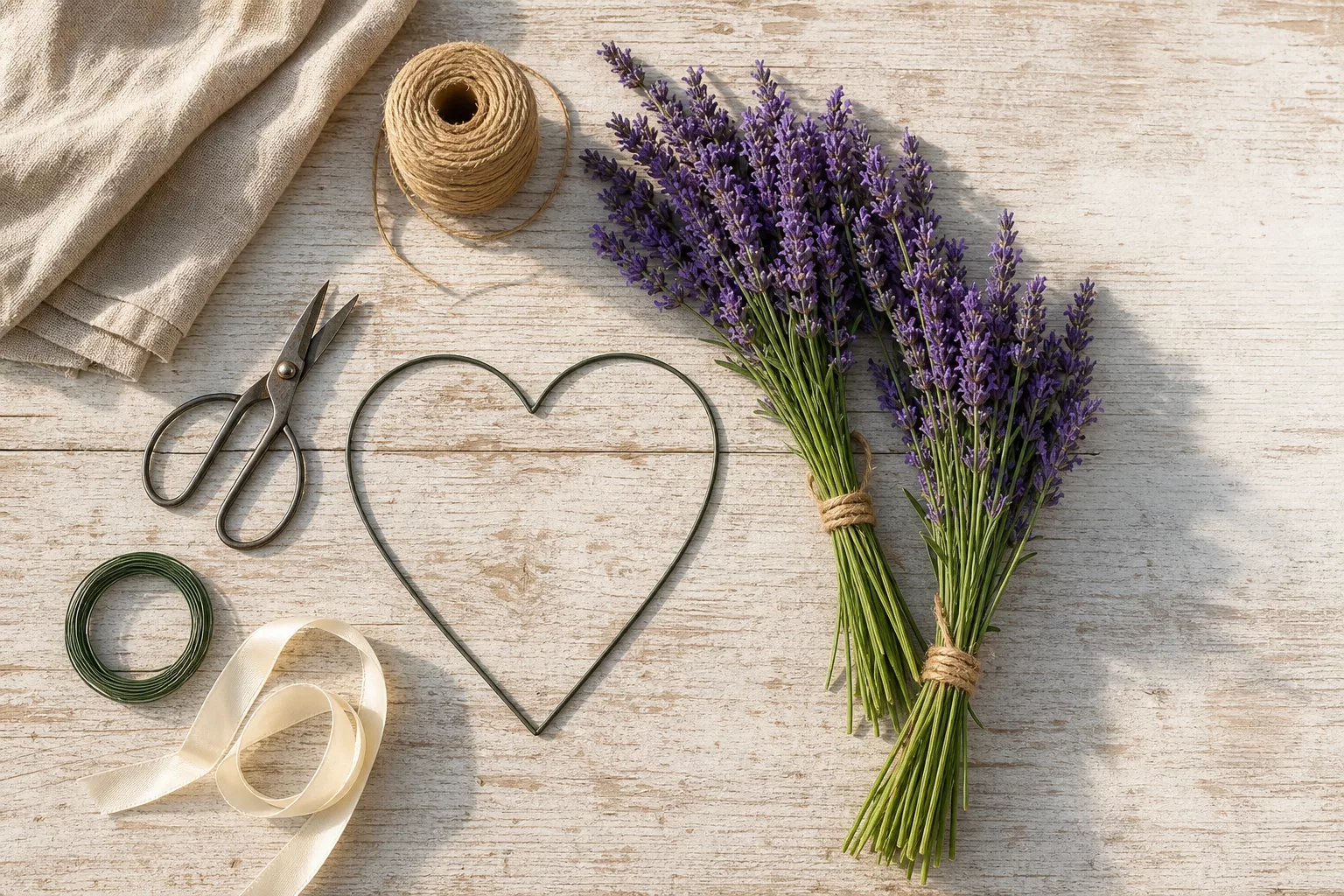
The basic equipment is almost identical for all three variants – you have probably already bought most of it at home. What is particularly important is fresh, long-stemmed lavender: the longer the stems, the easier they are to bend and tie.
- Fresh lavender – long-stemmed, best cut directly before crafting.
- floral wire – for the heart frame, medium strong and easy to shape.
- Jute cord or thin wrapping wire – for attaching the tufts.
- Satin or decorative ribbon – for hanging and bows.
- A sharp pair of secateurs – blunt blades crush the stems.
How much lavender you need depends on the size of your heart. As a rule of thumb from craft practice: For a palm-sized heart of around 15 centimeters, count on 30 to 40 stems, for a lush door heart from 25 centimeters onwards, 60 to 80. It’s better to cut a few stems too many – tied more tightly, the heart looks fuller and holds together better. If there are any leftovers after cutting, they are ideal for a lavender basket as a summer decoration or for scented bags.
Before you get started, it helps to take a quick look at the three techniques in comparison – so you can choose the right one for your purpose:
| variant | Expense | Additional material | Shelf life fresh | Best suited for |
|---|---|---|---|---|
| Wire frame | medium | Wire + jute cord | 1-2 weeks | Table decoration, gift |
| Braided | some practice | Satin ribbon or wire | 1-2 weeks | Hanging decoration, mobile |
| Pure flower heart | fast | only cord + scissors | 1-2 weeks | Door decoration, vase |

Idea 1 – Tie a classic lavender heart to the wire frame
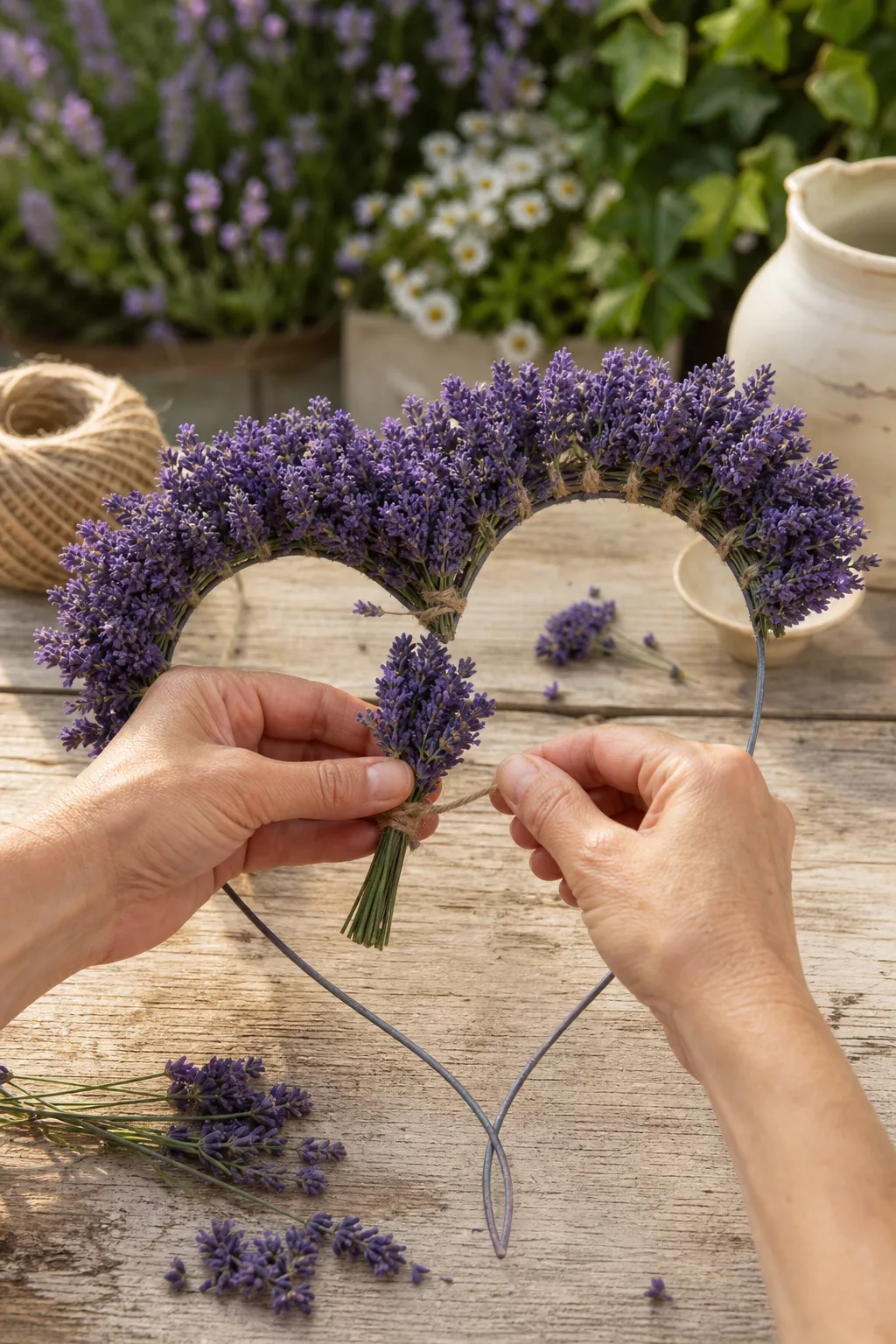
The frame method is the classic and is the most forgiving of beginners’ mistakes because the wire dictates the shape. You work your way from top to bottom, tuft by tuft, until the heart is densely overgrown.
- Bend the floral wire into a heart shape and twist the two ends tightly together at the bottom tip.
- Cut the lavender into even small bunches of five to seven stems each and trim them to the same length.
- Place the first tuft on one of the upper curves and wrap the stems tightly around the wire with jute twine.
- Place the next bunch underneath, overlapping slightly so that the flowers cover the previous binding point, and continue wrapping – working your way down on both sides.
- At the top, bring both sides together and tie the ends with cord to form a small tassel.
A heart like this looks just as good flat in a bowl as it does on its own next to the place setting. Three pieces in different sizes next to each other on a summer table look like a small still life.

Idea 2 – Lavender heart made of braided stems
Without a wire frame, but with a bit of sensitivity: With the braided heart, the stems hold each other in shape. This can only be achieved with fresh lavender – dried stems break easily when braided.
- Divide the stems into three strands of approximately equal thickness and tie them together at the top.
- Loosely braid the three strands into a braid, just like you would when braiding hair – not too tightly, otherwise the stems will kink.
- Gently bend the finished braid into a heart shape, letting the ends meet at the bottom.
- Secure the two ends with a piece of satin ribbon or some wire and shape the upper indentation with your fingers.
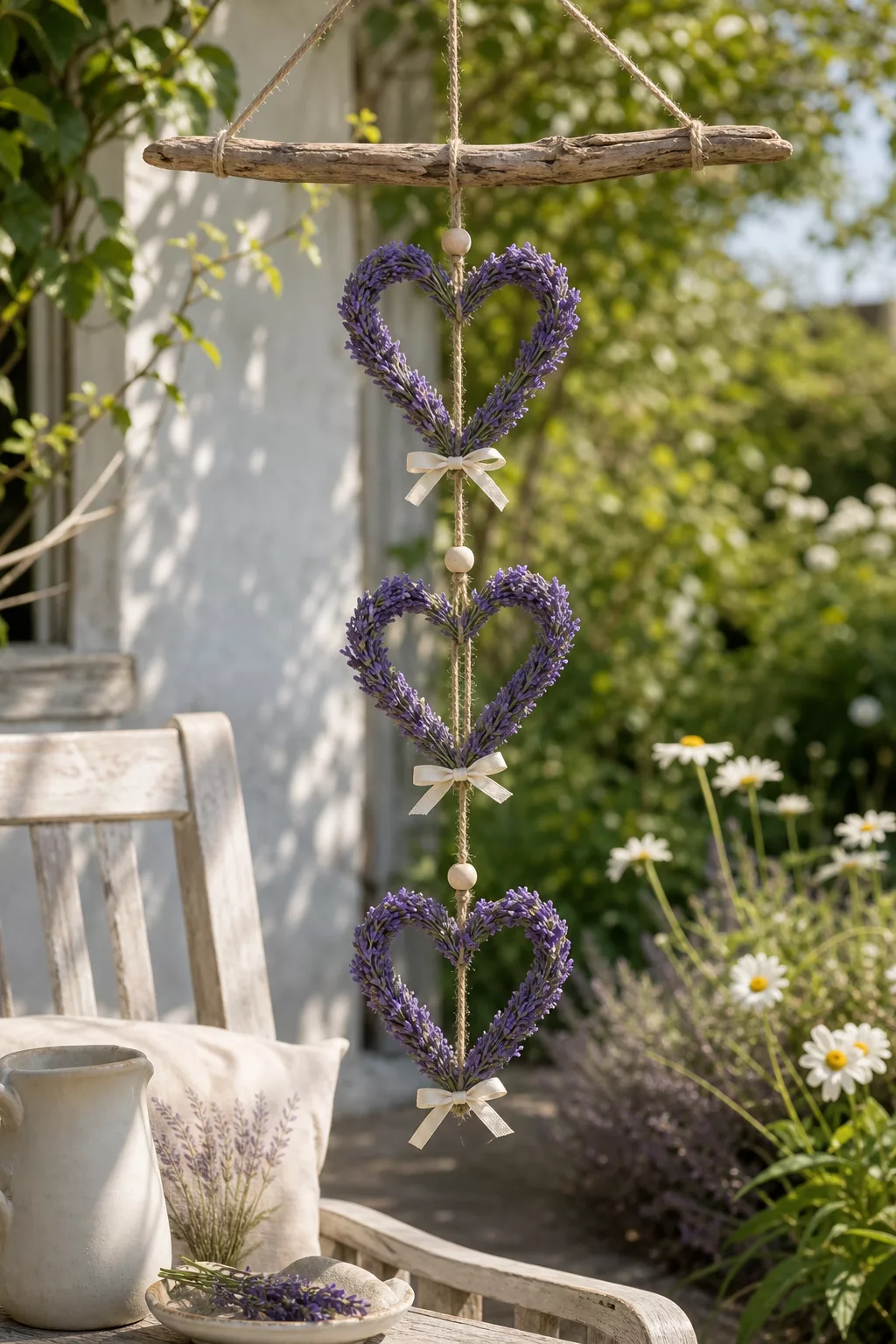
It is particularly pretty as a hanging decoration: three hearts of the same size knotted at different heights to a branch or wooden stick, with a few wooden beads on the cords, create a fragrant mobile for the terrace or window – one of many other lavender decoration ideas for the summer.
Idea 3 – Lavender heart cut from flowers only
The quickest version requires no frame and no braiding. Here the heart shape is created solely through the cut – a bit like topiary in the garden, only small.
- Tie a dense, compact bouquet from many short stems and secure it firmly at the bottom with cord.
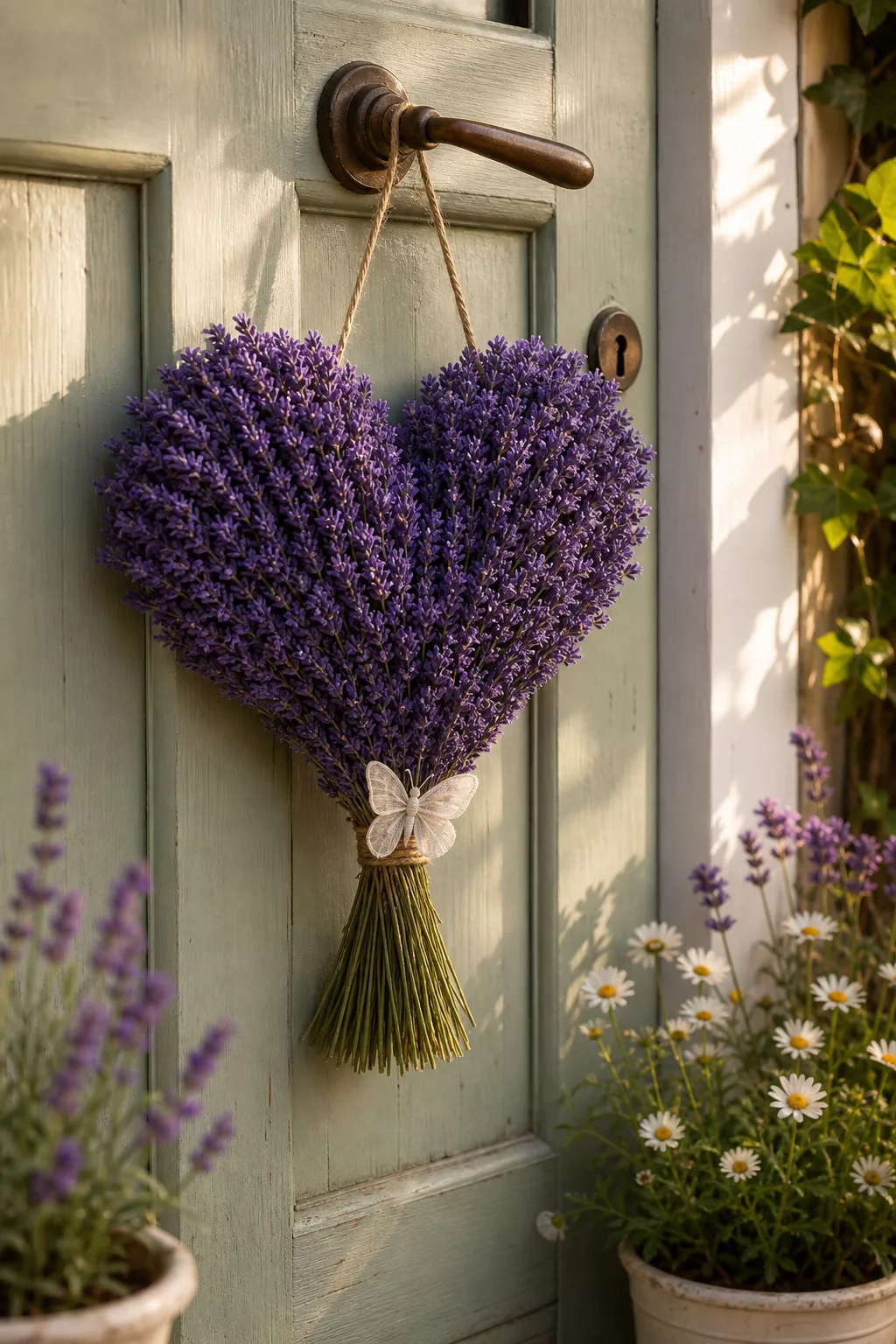
- Hold the bouquet tightly together and cut the flower heads into shape with sharp scissors: leave them longer on the outside and shorter towards the middle so that the typical heart indentation is created at the top.
- Check the silhouette from a distance and cut again – finally add a narrow bow or a fabric butterfly as an accent to the binding point.
The flower heart hangs on a jute loop as a door decoration, next to a lantern it creates a scent on the terrace, and in a slim glass vase it stands as a table decoration. If you prefer round shapes instead of hearts, you will find the steps for making lavender balls in separate instructions.
This means your lavender heart will stay beautiful for a long time
When freshly tied, a lavender heart will remain plump and richly purple for about one to two weeks, depending on room temperature and location. After that, it’s not finished, on the contrary: it dries slowly and remains decorative for many months in a dry, airy place – the color becomes a little silverier, the scent milder.
In order for this transition to be successful, the most important thing is the location. The blazing sun and the heat from the radiator bleach the flowers and make them fall faster. And the less you touch the dried heart, the longer the flowers stay in place – ripe lavender flowers loosen a little with every touch.
What’s Hot

Garden decoration
Your old solar light doesn’t have to go in the trash
Pro tips
- Location: Do not hang in the blazing midday sun or over a heat source – heat bleaches the flowers and accelerates the trickling.
- Dry carefully: Hang the heart upside down in an airy, shady place for a few days, then it will retain its shape as it dries.
- Refresh scent: Rub a few dried flowers between your fingers – this releases the essential oils and the lavender scent returns immediately.
- Use leftovers: Trickling flowers don’t end up in the trash, but in a scented pillow for the wardrobe – the instructions for sewing a lavender bag show you how to do this.
Frequently asked questions
Which type of lavender is best for a lavender heart?
Long-stemmed garden lavender, such as real lavender (Lavandula angustifolia), works best. Its long, flexible stems are easy to shape and braid. Short-stemmed dwarf varieties for balcony boxes, on the other hand, are more difficult to tie.
When is the best time to cut lavender for decoration?
Lavender smells most intensely when you cut it shortly before or at the beginning of full bloom – this is when most of the essential oils are in the flowers. A dry morning is ideal, as soon as the dew has dried off.
Do the instructions also work with already dried lavender?
Only limited. Dried stems are brittle and break easily when braided (Idea 2). With a careful hand, they are suitable for the wire frame heart (Idea 1) because the wire supports the stems – but when freshly cut, the material remains much more malleable.