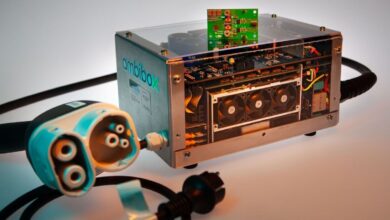
Researchers have developed a lithium-free battery that could make power grids safer and more sustainable. Aluminum and graphite as the main components ensure cheap and available materials.
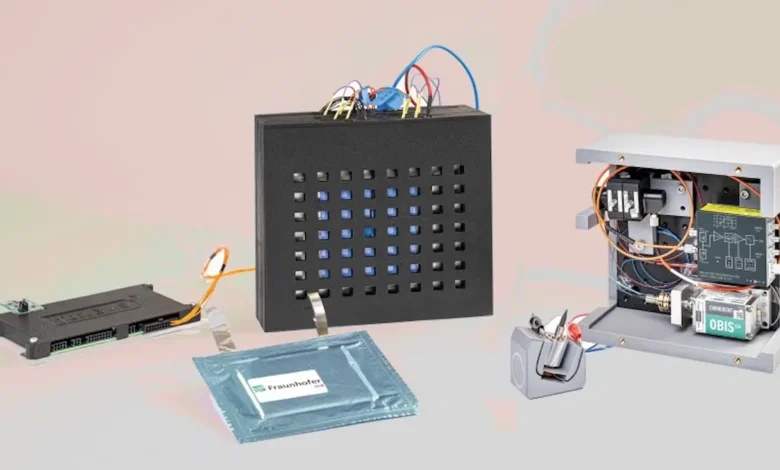
Researchers at the Fraunhofer Institute have developed a complete battery system demonstrator based on aluminum-graphite dual-ion batteries (AGDIB). It is intended to demonstrate the stability of a new battery cell chemistry not only in the laboratory, but also in a more realistic scenario.
AGDIB rechargeable cells are considered a safe, cost-effective and future-proof lithium alternative for high-performance applications such as dynamic grid stabilization. The advantage is that the active materials aluminum and graphite are cheap and available in large quantities.
Without lithium: aluminum-graphite battery for grid stability
The AGDIB is a high-performance storage system that network operators can charge and discharge at high rates in a very short period of time. This makes the battery ideal for applications such as dynamic grid stabilization. In this area, batteries are used that compensate for frequency fluctuations with many microcirculations with low energy content.
This promotes high performance. Unlike many established battery systems, the AGDIB enables very high discharge rates and also high charge rates, which is required for grid applications such as providing virtual inertia.
The researchers’ development focused on the entire value chain. This ranges from sustainable, lithium-free cell chemistry to the integration of a wireless battery management system (BMS) to considerations about recyclability.
Technology and structure of the system
The test system consists of eight battery cells that look like packets (AGDIB pouch cells). These cells are connected together to form a battery block (called Battery module
), which is connected in a specific arrangement.
There is a control system to ensure that the battery works safely and efficiently. A small part of it is wirelessly connected to the main controller and can therefore communicate securely with it. In addition, the prototype uses a very modern technology to precisely measure the current: a quantum sensor that is based on diamonds.
Because this sensor is incredibly sensitive, it can detect both tiny and enormous current fluctuations with extreme precision. Its measuring range is huge and covers five so-called Orders of magnitude
away. This means he sees tiny details and the big peaks at the same time.
The recyclability of the cells and modules was also taken into account: the cell recyclability was assessed using a physical separation process that avoids toxic chemicals.
Also interesting: