
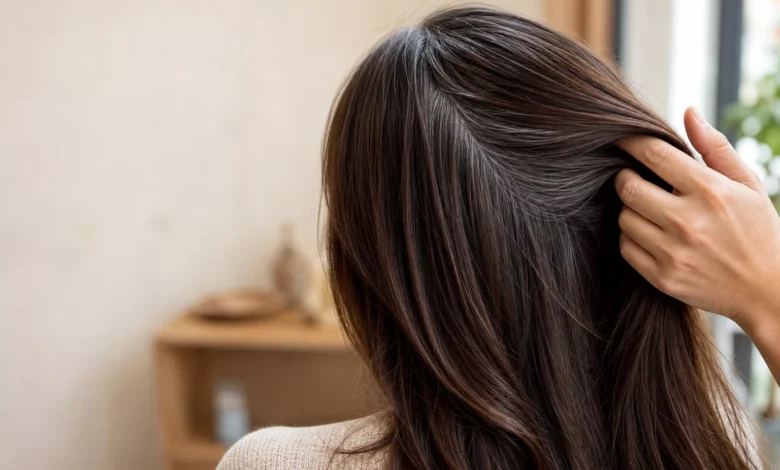

The first gray strands usually appear on the crown and around the temples – and suddenly you are faced with the choice: re-dye the roots every four weeks or wear the gray completely open. Gray blending for brown hair is the third way that many overlook. Instead of painting over the gray, it is woven into your existing hair color with fine strands. The result looks grown instead of colored, and the growing roots no longer give you away after two weeks. Dark hair in particular is an ideal basis for this – here you can read which technique suits your gray level and how often you really need to go to the hairdresser.
In short
- principle – Gray strands are incorporated into the natural hair color with highlights and lowlights, not painted over completely.
- Ideal for brown hair – The contrast between brown and gray can be softly blended in a targeted manner.
- Fewer appointments – Instead of every four weeks, an interval of 8 to 12 weeks is usually sufficient.
- Three techniques – Highlights with foil, balayage or block highlights, depending on the gray distribution.
What exactly is gray blending?
Gray Blending means something like “mixing in gray” – and that’s exactly what the technique describes. The colorist does not paint over your gray with a single color, but rather works in fine, lighter and darker strands so that the gray areas blur into them. The gray is not fought against, it becomes part of the color play.
The difference to the classic root coloring is crucial. With full coloring, a hard line is created as soon as the hair grows back: the colored length at the bottom, a gray stripe at the top. This line does not exist with gray blending because the strands are flowing. As the hair grows, the transition only shifts gently downwards – this is hardly noticeable.
Why does this work so well on brown and dark hair? Because here we work with the existing tone instead of against it. Her brown remains the stage, the gray and ashy strands set the accents. Heavy bleaching is rarely necessary, which is gentle on the hair. If you like the look for older women, you will find a variant of gray blending specifically for women over 50 – but the technology itself knows no age.

These three techniques work best on brown hair
Not all gray fits the same way. In some cases it is finely distributed over the entire head, in others it collects in strands in one place. This depends on which method your colorist chooses.
foil weave
The classic among the techniques. Fine highlights and lowlights are sectioned off, wrapped in foil and tinted individually. The advantage: maximum control. The colorist can place each strand exactly where the gray is and match the shade precisely. This is the most reliable choice for evenly distributed gray because the distribution can be planned.
Balayage
With balayage, the colorist works freehand with a brush, without any foil. The color is applied loosely, creating soft, seamless transitions – no visible roots, no strict lines. The result looks sun-kissed and unobtrusive. Ideal if you want a subtle look and want your gray to be gently blended rather than emphasized. How gray strands can be dyed into brown hair shows how fluid these transitions can be.
Block highlights
The most modern and bold variant. Here, wider, visible sections are created instead of many fine strands. The effect is more dramatic and graphic – something for everyone who doesn’t want to hide the gray, but wants to showcase it. Block highlights are particularly suitable for very gray or curly hair, where fine strands would be lost in the volume anyway.

To quickly find out which technology is right for you:
- Foil weave: medium effort, very precise result – for evenly distributed gray and everyone who values control.
- Balayage: low regrowth effect, soft character – for a subtle, natural look without a root line.
- Block highlights: Eye-catching, modern result – for stronger or curly gray and a confident appearance.
The colorist’s trick: ashy instead of golden
This is where it is decided whether gray blending looks classy or cheap. The most common mistake with dark hair is a warm cast – the strands turn yellowish or coppery and then look like bleaching has grown out. That’s why good colorists deliberately tone the gray strands ashy.
Cool beige, ash brown and silver are the basic tones that blend most harmoniously with true gray for brown-haired people. They neutralize the heat and make the transition look natural instead of orange-tinged. A second trick is lowlights: individual darker strands that are placed between the light ones. They add depth and dimension so that the head does not appear flat and monochrome, but rather alive.
Ask specifically about these points during your consultation. A good colorist first checks your hair structure and looks at where and how much gray is actually located – only then does the decision on technique and nuance come. It is best to have the planned tones shown on one strand of hair. If you want to see how far you can go with playing with silver tones, you’ll find inspiration in these new techniques for chic gray hair.

How often do you go to the hairdresser? Care and durability
That is the strongest argument for gray blending: the appointment rhythm. Anyone who dyes the roots in the classic way often has to sit in the chair again every four weeks because otherwise the gray stripe will flash up in a telltale way. With gray blending, 8 to 12 weeks are usually enough because there are no hard roots that need to be concealed.
Between major appointments, a so-called glossing keeps the color fresh. This quick treatment covers the hair like a glossy film, refreshing the cool tones and protecting them from fading. Expect to gloss every few weeks if your strands appear duller.
Proper care at home noticeably prolongs the result. A color protection shampoo and suitable conditioner keep the color fresh for longer. If the ashy strands turn warm over time, a silver shampoo that neutralizes yellow tints every few washes will help. Blow-drying and styling less hot also protects the cool tones. Further ideas on how to highlight strands in brown hair complete the picture.

What’s Hot

hair color
These vitamins can strengthen thin hair in 30 days
Pro tips
- Advice first: Have the hair structure and gray distribution checked before the technique and color are determined – this will determine the result.
- Demand ashy: Expressly ask for cool shades (ash brown, beige, silver) instead of golden tones, otherwise the gray will quickly look like overgrown bleaching.
- Plan for glossing: A gloss every few weeks keeps the shine and cool color fresh and bridges the time until the next big appointment.
- Dosing silver shampoo: Only use it every few washes and not every time – too often makes the strands dull instead of fresh.
Gray blending is not a compromise, but rather a relaxed approach to graying. They do not change color over time and do not reveal the gray completely, but allow the two to elegantly merge together. This is a godsend for brown hair: easy to care for, natural and suitable for everyday use – regardless of whether you are 35 or 65.
Frequently asked questions
Is gray blending just for older women?
No. The technique is based on your gray level, not your age. Even if you get your first gray strands in your mid-30s, you can of course have them woven in instead of immediately starting with the monthly re-dyeing.
How often do I have to have gray blending recolored?
Typically every 8 to 12 weeks instead of every four weeks as with classic root dyeing. Because there is no hard root, the look grows out unobtrusively. A gloss in between keeps the color fresh.
Is gray blending also suitable for heavily graying hair?
Yes, this is where block highlights in particular come into their own. They create wider, visible sections that provide structure even with a lot of gray and curly hair. Your colorist will decide which technique works best based on the gray distribution.