HAVANA — Cuba has spent decades presenting tourism as the economic showcase of its socialist system: a source of foreign currency, employment, and international engagement that could operate without requiring the country to surrender political control.
That model is now approaching its limits.
Hotels stand partly empty. International airlines have suspended or reduced services. Cruise terminals remain largely unused. Electricity shortages disrupt resorts as well as Cuban homes, while shortages of fuel, food, and imported supplies have made it increasingly difficult to deliver the standard of service expected by international travelers.
The collapse has been dramatic. Cuba received about 4.7 million international visitors in 2018. By 2025, the annual total had fallen to approximately 1.8 million. During the first five months of 2026, the island recorded only 359,491 international arrivals, a decline of more than half from the corresponding period of 2025. First-quarter hotel occupancy was reported at just under 13 percent.
The immediate crisis has been intensified by the United States pressure on countries supplying oil to Cuba. Fuel scarcity has contributed to blackouts and aviation disruption, with international carriers suspending flights or arranging refueling stops outside Cuba. Air France and Air Canada were among the airlines affected during the first months of 2026.
Yet it is at this point of extraordinary weakness that Havana has begun making some of its most far-reaching economic concessions since the 1959 Revolution.
An Opening Born of Necessity
Cuba’s new economic package reportedly contains more than 175 measures intended to expand private enterprise, attract foreign capital, and reduce the state’s direct operational role. The reforms include broader private-property activity, changes to state enterprises, private financial services, and greater opportunities for foreign participation. Cuban leaders continue to describe the measures as a modernization of socialism rather than its abandonment.
For tourism investors, two changes stand out.
The first is the reported authorization of 100 percent foreign ownership of new tourism developments, potentially allowing international investors to build and own hotels or resorts without the traditional requirement for a state joint-venture partner.
The second is greater control over procurement. Foreign hotel operators are expected to receive broader authority to import food, equipment, furnishings, and operational supplies directly rather than depending entirely on slow and frequently unreliable state distribution systems.
These reforms amount to a remarkable acknowledgment: Cuba can no longer expect the state to finance, supply, and manage the recovery of its tourism sector.
But changing the ownership rules does not automatically produce investment.
Before committing hundreds of millions of dollars, an international hotel company or infrastructure fund will want to know whether contracts will be enforced, whether electricity and water will remain available, whether staff can be hired and paid competitively, and whether profits can be converted into hard currency and transferred abroad.
Investors must also evaluate their exposure to United States sanctions, banking restrictions, and potential legal claims arising from property nationalized after the Revolution.
Cuba may be offering ownership. It has not yet eliminated the risks attached to ownership.
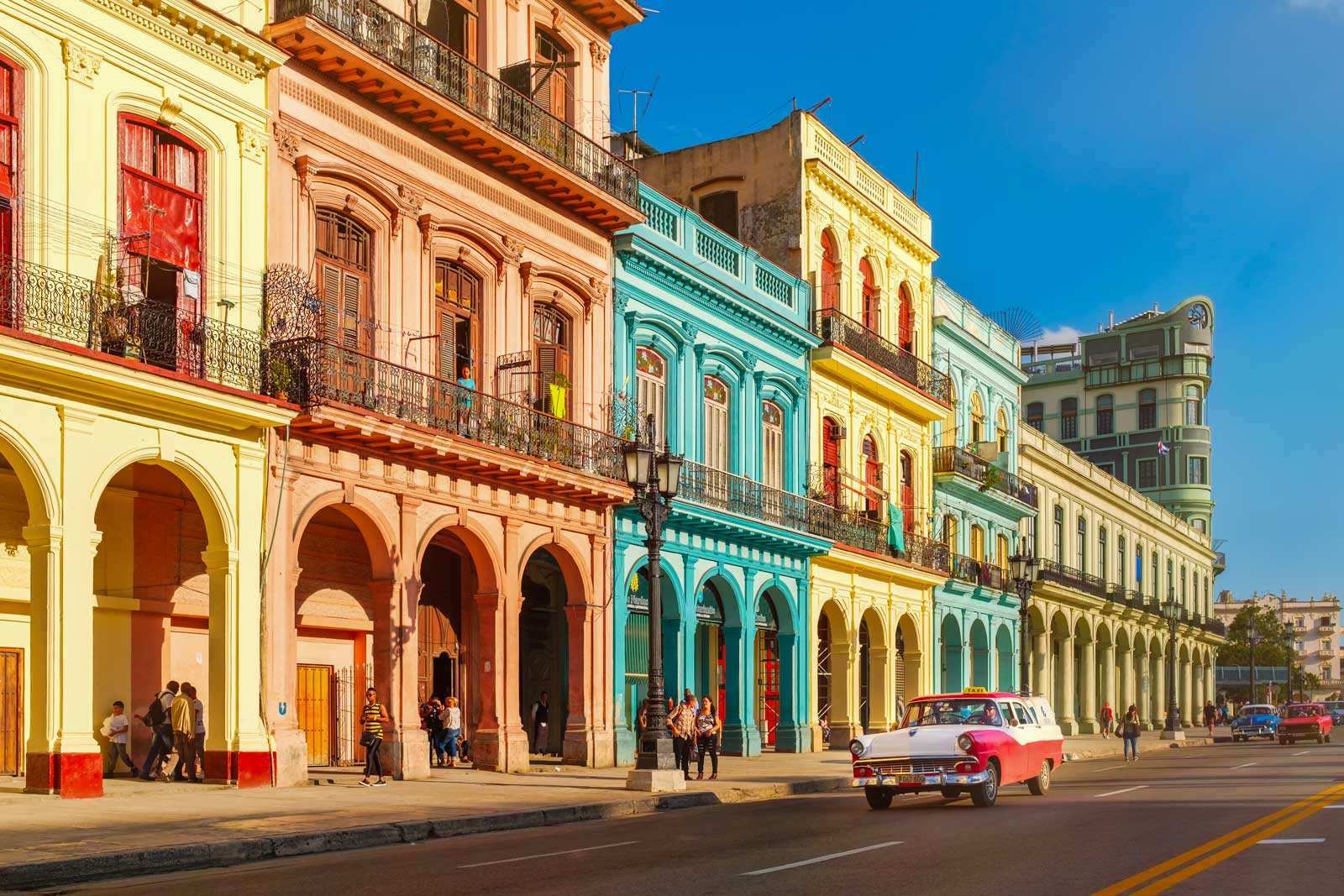
The Official Travel Guide to Cuba · Visit Cuba
Cuba’s official travel and tourist information web site. Everything about vacation in Cuba. Find inspiration and guides for your next trip to Cuba.
Three Futures for the Island
The most likely near-term outcome is neither immediate collapse nor rapid recovery.
Cuba could remain in an extended state of limbo: introducing selective market reforms while preserving Communist Party political control, attracting a limited number of investors from countries prepared to tolerate sanctions and operational risk, and continuing to suffer from shortages and weak demand.
A second path would involve deeper but controlled liberalization, resembling aspects of the economic transformations undertaken by Vietnam and China. Under this model, Cuba would preserve one-party government while expanding private business, foreign investment, market pricing, and enterprise autonomy.
For that path to succeed, however, Havana would have to do more than permit foreign hotel ownership. It would need to establish credible commercial courts or arbitration systems, improve financial transparency, reform the currency system, give private businesses reliable access to imports and allow tourism revenues to circulate more widely through the Cuban economy.
The third scenario would emerge from a geopolitical settlement involving Washington and Havana.
A significant relaxation of United States restrictions could rapidly transform Cuba’s tourism prospects. The island’s proximity to Florida, extensive coastline, cultural heritage, established resort areas, airports and marinas would make it one of the most closely watched tourism markets in the Americas.
But international institutions cannot deliver that political settlement themselves.
They can create conditions for recovery, provide expertise, and convene governments and businesses. They cannot compel the United States to remove sanctions or require Cuba to change its political system.
What UN Tourism Could Do?
UN Tourism, formerly known as the UN World Tourism Organization, is the United Nations agency responsible for promoting responsible, sustainable, and accessible tourism. It works with member governments on tourism policy, statistics, investment frameworks, education, destination management, and technical cooperation.
Cuba is already an active participant in UN Tourism initiatives. In 2024, the agency held a community-based tourism seminar in Cuba focused on placing local communities at the center of tourism development. Under present conditions, UN Tourism could help Cuba in several concrete areas.
It could conduct an independent assessment of the tourism sector, covering demand, accommodation quality, aviation access, workforce requirements, infrastructure, and investment barriers.
It could assist Cuba in producing internationally comparable tourism statistics. Reliable data would be crucial, as investors are unlikely to commit capital without the ability to independently assess visitor numbers, hotel performance, operating costs, and market demand.
The organization could also prepare a Cuba-specific version of its “Tourism Doing Business” investment guidelines, identifying credible projects while explaining regulatory requirements, risks and potential returns. Its investment work is expressly designed to improve enabling frameworks and promote sustainable tourism capital.
UN Tourism could additionally support training in destination management, digital marketing, community tourism and hotel administration through its education and executive-training programs.
Most importantly, it could encourage Cuba to avoid rebuilding tourism solely around isolated, state-linked beach enclaves. A better recovery would connect hotels with private restaurants, farmers, transport operators, artists, guides, and local accommodation providers.
But UN Tourism has firm limits.
It cannot finance Cuba’s energy grid or hotel construction on the scale required. It cannot guarantee investors that they will be able to repatriate profits. It cannot suspend United States sanctions, settle confiscated-property claims, or force Cuba to publish commercially sensitive information.
Nor is it a supranational tourism regulator. Its recommendations depend on government cooperation.
What the WTTC Could Do
The World Travel & Tourism Council represents the global private sector, bringing together senior executives from major hotel groups, airlines, airports, cruise companies, tour operators, technology businesses, and other travel industries. Its role is research, advocacy, and public-private coordination rather than regulation.
For Cuba, the WTTC could serve as an informal bridge between Havana and the international companies whose capital and operational expertise would be needed for recovery.
It could convene a Cuba tourism investment working group involving hotel operators, airlines, banks, insurers, tour companies and destination-management specialists.
Such a group could establish the minimum commercial conditions that would be required before leading companies would consider entering or expanding in Cuba. These might include transparent procurement, independent audits, direct employment arrangements, internationally recognized arbitration, environmental safeguards, and dependable access to foreign currency.
WTTC research could also model the economic impact of different recovery scenarios. One scenario could examine the effects of continued sanctions and limited non-U.S. demand. Another could assess gradual regulatory opening. A third could estimate the impact of the restoration of American travel and cruise access.
That work would help separate realistic investment opportunities from political optimism.
WTTC could also promote common sustainability, workforce, and crisis-preparedness standards among international companies considering Cuba. The organization has experience developing sector frameworks and coordinating companies around responsible growth and recovery protocols.
But WTTC cannot direct its members to invest, and 30+ per cent of its members are U.S. companies that are restricted from investing in Cuba.
Hotel groups, airlines, and cruise operators ultimately answer to shareholders, lenders, insurers, and national laws. WTTC cannot indemnify a company against sanctions penalties, guarantee a Cuban contract or make an unprofitable airline route commercially viable.
It could give Cuba access to the conversation. It could not guarantee the outcome.
The Caribbean Tourism Organization’s Regional Role
The Caribbean Tourism Organization describes itself as the region’s tourism development agency, providing research, marketing, training, policy collaboration, and technical support to its government and private-sector members.
Cuba, however, does not appear on the CTO’s publicly listed group of government destinations. The organization’s current government membership is primarily composed of English-, French-, and Dutch-speaking Caribbean jurisdictions, despite its broader description as including Spanish Caribbean participation.
That limits the CTO’s formal ability to act directly on Cuba’s behalf.
The most useful first step would therefore be structured engagement—possibly observer status, affiliate participation, or eventual government membership if politically and institutionally acceptable.
A closer relationship could bring Cuba into regional air-connectivity planning, tourism statistics, workforce development, crisis management, and joint marketing.
CTO already maintains an aviation task force and convenes airlines, airports and governments to discuss regional airlift. Its 2026 program has included an Air Connectivity Summit focused on integrating aviation and tourism development.
Cuba could benefit from inclusion in multi-island itineraries rather than competing solely as a stand-alone destination. Tour operators could combine Havana or Santiago with Jamaica, the Bahamas, the Dominican Republic, Mexico, the Cayman Islands or other regional gateways, subject to visa, aviation and sanctions rules.
CTO could also expand hospitality training and sustainable tourism education through the Caribbean Tourism Institute.
However, the organization cannot order member governments to restore flights, reduce taxes or accept Cuba into collective marketing campaigns. Aviation taxes, entry rules, and foreign policy remain sovereign decisions.
CTO must also protect the interests of its existing members. Some Caribbean destinations may see Cuba’s eventual reopening—especially to unrestricted U.S. tourism and cruises—as a competitive threat rather than merely a regional opportunity.
The organization could facilitate cooperation, but it could not eliminate competition.
UNESCO and the Risk of Selling Cuba’s Heritage
Cuba’s tourism appeal extends far beyond beaches. Old Havana, Trinidad, Cienfuegos, Camagüey and other cultural landscapes give the island a heritage identity unmatched by most resort competitors.
That creates an important role for UNESCO.
UNESCO has already been working in Cuba on heritage safeguarding and community resilience. In Trinidad and the Valley de los Ingenios, it has supported capacity building and, in 2026, launched an accelerator that offers mentoring and microfinance for cultural and creative projects connected to sustainable tourism.
UNESCO could help ensure that foreign investment does not turn historic centers into hotel districts emptied of local residents and cultural life.
It could support visitor-management plans, restoration standards, community consultation, and programs allowing musicians, craftspeople, artists, and independent cultural businesses to benefit directly from tourism.
It could also advise on carrying capacity so that a future surge in visitors does not damage fragile buildings, public spaces, or living traditions.
But UNESCO cannot prevent every inappropriate development. It can monitor compliance with World Heritage obligations, provide assistance, and raise international concern, yet land-use enforcement remains the responsibility of Cuban authorities.
Heritage status is not a substitute for national planning law.
ICAO, Airlines, and the Connectivity Problem
No tourism recovery is possible without safe, dependable air access.
The International Civil Aviation Organization can provide Cuba with technical and implementation assistance related to aviation safety, security, regulation, air navigation, and airport systems. ICAO’s implementation-support programs are intended to help member states apply international standards and strengthen civil aviation oversight.
ICAO could help Cuba assess airport infrastructure, modernize regulatory systems, strengthen safety oversight, improve passenger processing, and develop credible aviation data.
It could also support aviation satellite accounts showing how air connectivity contributes to employment, trade, and tourism investment.
But ICAO cannot order commercial airlines to serve Cuba.
Routes depend on fuel availability, passenger demand, insurance, aircraft economics, bilateral aviation agreements, and sanctions compliance. An airport may satisfy international standards and still receive few flights because airlines cannot make the route profitable or legally manageable.
ICAO can help make Cuba technically ready. It cannot manufacture commercial demand.
The ILO and the Question of Who Benefits
Tourism investment is often presented in terms of hotel rooms, visitor expenditure, and foreign exchange. Yet the ultimate test is whether it improves conditions for Cuban workers.
The International Labor Organization has developed guidelines on decent work and socially responsible tourism, covering employment quality, social protection, workplace rights, training, and occupational safety.
The ILO could assist Cuba in designing employment standards for foreign-owned or foreign-managed hotels.
Those standards should address direct payment of workers, transparent wage deductions, nondiscrimination, occupational safety, social protection, training, and access to grievance mechanisms.
This is particularly important because foreign investment will generate public resentment if luxury properties receive reliable electricity, food, and imported supplies while nearby communities remain in short supply.
The ILO could help develop systems through which hotel investment creates genuine career pathways rather than a divided labor market in which tourism workers depend primarily on tips and informal payments.
But the ILO cannot enforce Cuban labor law itself. Its effectiveness would depend on access to workplaces, credible data, and cooperation from the government, employers, and worker representatives.
UNEP and the Danger of Rebuilding the Old Model
Cuba’s economic emergency creates pressure to approve almost any project that promises foreign currency.
That is precisely when environmental safeguards are most vulnerable.
The United Nations Environment Program works with governments and tourism businesses on resource efficiency, sustainable consumption, waste reduction, pollution control, and environmental planning.
UNEP could help Cuba establish environmental criteria for new resorts, including water use, coastal protection, energy efficiency, waste treatment, plastics reduction, and climate resilience.
This matters because many Cuban tourism zones are exposed to hurricanes, coastal erosion, saltwater intrusion, and rising temperatures. Building conventional high-consumption resorts without reliable water, sewage, and electricity systems would deepen local vulnerability.
Cuba could instead position new developments as renewable-energy and resource-efficiency projects. Hotels could incorporate solar generation, battery storage, water recycling, and local food procurement, reducing pressure on the national grid and import system.
UNEP can provide technical frameworks and partnerships. It cannot prevent Havana from approving environmentally damaging construction, nor can it finance every improvement required.
The Development Banks That Largely Cannot Lend
Cuba’s greatest tourism constraints are not promotional. They are infrastructural.
Hotels cannot function reliably without electricity, water, transport, telecommunications, waste management, and food supply chains.
These are precisely the areas normally supported by multilateral development banks.
Yet Cuba is not positioned like most Caribbean states.
World Bank membership requires membership in the International Monetary Fund, and Cuba is not part of the IMF-World Bank institutional system.
Cuba is also not among the Inter-American Development Bank’s 26 borrowing member countries. The IDB finances and provides technical expertise to its member states, but it cannot simply begin ordinary sovereign lending to a non-member country.
The Caribbean Development Bank likewise does not currently serve as an ordinary borrowing member for Cuba.
These institutions can include Cuba in regional research and dialogue, as some recent Caribbean development analyses have done, but large-scale lending would generally require political decisions and changes to membership or eligibility.
That leaves bilateral development agencies, export-credit institutions, UN programs, and investors from Europe, Canada, China, the Gulf, and Latin America as the more immediate potential sources of project support.
What Countries Beyond the United States Could Do
The rest of the world cannot fully evade American sanctions, particularly because so much international banking, insurance, and corporate finance is tied to the United States.
But other governments still have meaningful options.
The European Union and its member states could finance renewable energy, urban rehabilitation, vocational training, and small-business development. European governments could also provide political-risk guidance and clarify the legal boundaries within which their companies may operate.
Canada could support aviation recovery, hotel training, agricultural supply chains, and independent Cuban enterprises. As one of Cuba’s historically important visitor markets, it could help stabilize demand if reliable air service and operating conditions return.
Mexico could facilitate regional aviation, food trade, and humanitarian energy arrangements, though any such action would have to be weighed against exposure to U.S. trade pressure.
Caribbean and Latin American governments could develop multi-destination routes and encourage their private sectors to explore opportunities in Cuba. They could also provide technical cooperation in agriculture, renewable energy, and disaster preparedness.
Gulf states could finance high-end resorts, marinas, airports, and renewable-energy systems. Saudi-funded UNESCO activity in Cuba already demonstrates how Gulf financing can support cultural and community-based tourism rather than only large luxury developments.
China could provide infrastructure, telecommunications, transport, and energy investment, although heavy dependence on a single geopolitical partner would create new financial and strategic risks.
Any responsible international engagement should attach conditions—not necessarily conditions demanding immediate political transformation, but commercial and social safeguards.
Foreign-supported projects should disclose ownership structures, publish environmental assessments, protect local access to beaches and public spaces, provide direct benefits to Cuban workers and include mechanisms for independent dispute resolution.
Otherwise, foreign investment could reinforce concentrated state and military-linked economic power without materially improving the lives of ordinary Cubans.
What International Organizations Cannot Fix
The list of potential partners is long: UN Tourism, WTTC, CTO, UNESCO, ICAO, the ILO, UNEP, airlines, development agencies, and international hotel groups.
But their collective capacity should not be exaggerated. They cannot guarantee political stability. They cannot erase the history of expropriated property. They cannot force international banks to process Cuban transactions. They cannot make the national electricity grid reliable without major investment.
They cannot require Havana to allow independent courts, free trade unions, unrestricted private enterprise or transparent public accounts. They cannot require Washington to change course.
And they cannot ensure that tourism revenue reaches the Cuban population rather than remaining concentrated in state enterprises, foreign operators, and politically connected institutions.
Those are political choices, not tourism-development problems.
A Possible International Compact
The most constructive role for outside organizations would be to support a coordinated framework for Cuban tourism recovery.
UN Tourism could lead the policy and statistical work. WTTC could organize private-sector participation. CTO could integrate Cuba into regional aviation, training, and market planning. UNESCO could protect cultural assets. ICAO could assess aviation readiness. The ILO could develop labor safeguards. UNEP could establish environmental and climate standards.
Partner countries could then finance specific projects within that common framework.
Such an initiative should begin with low-risk, high-public-benefit areas:
- Restoring heritage buildings and public spaces.
- Installing renewable energy for hotels and surrounding communities.
- Modernizing water and waste systems.
- Training workers and independent entrepreneurs.
- Supporting local agriculture and food supply chains.
- Improving tourism statistics and investment transparency.
- Rebuilding aviation capacity and safety systems.
- Expanding community-owned cultural and nature tourism.
Large, isolated luxury resorts should not be the first or only priority.
Cuba already possesses tens of thousands of hotel rooms. Its immediate problem is not simply a lack of accommodation. It is the absence of reliable energy, connectivity, supplies, finance, and confidence.
A Test of Reform