
Norwegian was once the disruptive young airline that challenged legacy carriers with low fares and a red-nosed fleet. Now it is preparing to become something bigger: not just an airline, not just the owner of Widerøe, but a vertically integrated Nordic travel group controlling flights, package holidays, hotels, charter aircraft, loyalty, retail and customer data.
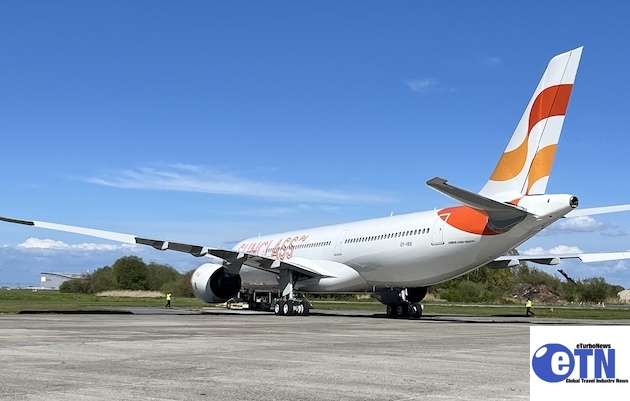
The airline’s agreement to acquire Nordic Leisure Travel Group, owner of Ving, Spies, Tjäreborg, Globetrotter, Sunclass Airlines, Airshoppen and a portfolio of concept hotels, is being presented as a “milestone in Nordic travel history.” It may be exactly that. It may also become a test case for how far airlines can move downstream into the customer relationship before regulators, travel agents and tour operators begin asking harder questions.

Norwegian to acquire Nordic Leisure Travel Group
Norwegian has entered into an agreement to acquire Nordic Leisure Travel Group (NLTG), the leading hotel and leisure travel experiences company in the…
The deal, valued at approximately SEK 7.94 billion, would bring together Norwegian, Widerøe and NLTG under one ownership structure. Norwegian says the combined group would serve around 30 million customers annually, operate close to 160 aircraft and increase annual group operating revenue by nearly 50 percent. Closing is targeted for the second half of 2026, subject to shareholder and regulatory approval, including EU competition clearance.
For Norwegian, the logic is clear. Flights alone are volatile, seasonal and margin-sensitive. Package holidays, hotels, ancillaries and loyalty can produce repeat business and higher revenue per passenger. In the words of Norwegian CEO Geir Karlsen, every flight becomes “a potential gateway to a full holiday experience.”
That sentence is the heart of the story.
For consumers, the promise is attractive: one booking, one journey, one loyalty currency, one group coordinating aircraft, hotels and holiday brands. For shareholders, the appeal is equally direct: more customer data, more cross-selling, earlier booking visibility and more control over demand. For hotels owned by NLTG, Norwegian’s network could become a powerful pipeline of guests.
But for independent travel agents, competing tour operators and destination suppliers, the same integration may look less benign. When an airline owns the customer funnel, the holiday brand, the hotel inventory and the loyalty platform, competitors can fear being pushed to the margins. The traditional chain — airline to tour operator to travel agent to consumer — begins to collapse into one corporate ecosystem.
This is not entirely new. Europe has long had integrated travel groups. TUI remains the most obvious example: airlines, hotels, cruises, tours and retail under one umbrella. British Airways Holidays and easyJet holidays show how airline brands can expand into packages. Lufthansa Group has Discover Airlines and Eurowings Holidays, and Eurowings formally moved deeper into tour operating in 2025. IAG, Ryanair, easyJet and others have all experimented with packaging, platforms and direct digital sales.
What makes Norwegian’s move different is the direction and scale. This is not merely an airline bolting a white-label holiday platform onto its website. Norwegian is buying the leading Nordic holiday group, including established consumer brands, its own airline, its own hotel concepts and a travel-retail platform. It is moving from distribution partner to owner of the supply chain.
The market reaction has been mixed. Aviation analyst Hans Jørgen Elnæs praised the deal on LinkedIn, calling it a move that cements Norwegian’s Nordic footprint and creates a more flexible integrated model, comparable in some ways to easyJet’s holiday strategy. He argued that the transaction gives Norwegian a stronger defense against any future bidder looking at the “red nose” airline.
Pareto analysts highlighted cross-selling and aircraft-utilization opportunities, especially the ability to sell package tours and hotel stays to Norwegian’s existing customer base. On the hotel side, Skift’s hospitality discussion pointed to a striking commercial detail: NLTG’s owned hotels represent a smaller share of holiday volume but a much larger share of gross profit. That helps explain why Norwegian is interested in more than flight feed.
But not all analysts are convinced. Nordea reportedly questioned whether Norwegian would be more attractive as a pure-play airline in a European market still defined by airline consolidation. Its concern goes to the strategic trade-off: investors who want a lean airline may not welcome hotel assets, charter complexity, tour-operator risk and consumer-package obligations.
There are also regulatory questions. The companies say the Sunclass, Norwegian and Widerøe networks have limited overlap, which may reduce classic route-by-route competition concerns. But competition authorities may also look at broader effects: access to customers, package distribution, hotel supply, loyalty incentives and whether rival tour operators could be disadvantaged in capacity, pricing or visibility.
The travel agent issue is even broader. European travel associations have spent years warning that airlines are increasingly seeking more control over distribution. The debate over New Distribution Capability, direct-channel incentives and GDS surcharges has already shown how sensitive the balance is between airline control and independent retailing. ECTAA and ETTSA have argued in past distribution papers that non-airline players worry about governance, access, transparency and the risk of airlines setting rules for the wider distribution chain.
The Lufthansa example is instructive. Lufthansa Group’s distribution-cost charge on bookings outside direct channels became one of the most controversial examples of airline power over travel sellers. Travel agents complained that such strategies pushed customers toward airline-owned channels and made independent comparison more difficult. That controversy was about ticket distribution, not tour-operator ownership. Norwegian’s acquisition adds another layer: the airline would not only influence how flights are sold, but would also own holiday brands competing for the same end customer.
That does not make the deal anti-competitive by definition. Vertical integration can reduce friction, improve service and create stronger consumer protection when one group is accountable for the full journey. Package travelers often value certainty. Families booking Ving, Spies or Tjäreborg may appreciate knowing that aircraft, hotel concepts, retail extras and loyalty benefits are coordinated. In a fragmented travel world, simplicity sells.
The concern is what happens when simplicity becomes dependency.
If Norwegian controls the flight, the package, the hotel, the retail add-ons and the loyalty relationship, independent agents may find themselves selling a product where the strongest economics are reserved for the group’s own channels. Rival tour operators may worry about access to seats at competitive rates. Hotels outside the owned portfolio may wonder whether they will be second choice in search results or package recommendations. Consumers may enjoy convenience but see fewer truly neutral comparisons.
That is why the NLTG acquisition is more than an airline merger story. It is a customer control story.
Norwegian’s rise has always been about challenging established structures. In the 2000s, it challenged legacy airlines. In the 2010s, it challenged long-haul economics and paid a heavy price. After restructuring, it returned as a more disciplined Nordic carrier. Now, in 2026, it is challenging the boundaries between airline, tour operator, hotelier and travel retailer.
If the deal succeeds, Norwegian could become the most complete travel platform in the Nordics — a regional answer to TUI, with the agility of a low-cost carrier and the customer intimacy of a holiday company. If it fails, it could become a reminder that airlines are hard enough to run without adding hotels, charter complexity and package-travel exposure.
The central question for regulators and the trade should not be whether airlines may sell holidays. They already do. The question is whether an airline that owns the holiday company, the charter airline, the hotel brands, the retail platform and the loyalty relationship can still guarantee fair access, transparent choice and healthy competition.
For travelers, the Norwegian-NLTG deal may mean easier holidays. For the travel industry, it may mean a new phase in the battle over who owns the customer.