As the FIFA World Cup begins, concerns are growing that US visa and travel restrictions are preventing some players, officials, and fans from fully participating. Critics argue that these policies undermine FIFA’s long-standing mission of promoting global understanding, friendship, and unity through football’s biggest international celebration.
With the opening matches only days away, it is becoming increasingly difficult to argue that the United States is living up to the spirit of a truly global FIFA World Cup.
Across America, host cities are ready. Communities have organized festivals, concerts, fan celebrations, and cultural programs designed to welcome visitors from every corner of the globe. Millions of Americans are genuinely excited to share their country, their hospitality, and their enthusiasm for football.
Yet while the American people are opening their arms to the world, the US government has placed a significant dent in that welcoming spirit.
The clearest example is Iran.
Recent reports confirm that Iran’s national team has been forced to establish its World Cup base in neighboring Mexico rather than in the United States. Iranian players are permitted to enter the United States only on match days, then return to Mexico immediately afterward. Instead of enjoying the same preparation, recovery time, media access, and tournament atmosphere available to other teams, Iranian players face a unique logistical burden that many view as a competitive disadvantage.
Even more trouble is that a substantial number of Iranian federation officials, advisers, and support personnel have reportedly been denied visas. Football teams do not compete with players alone. Coaches, analysts, medical staff, administrators, and technical personnel are essential parts of every World Cup delegation. Excluding portions of that support structure undermines the principle that all participating nations should be treated equally.
Iranian supporters face an even harsher reality. Reports indicate that fans from Iran are effectively unable to obtain access to attend matches in the United States, meaning an entire football nation may be represented on the field but absent from the stands.
The issue extends beyond Iran.
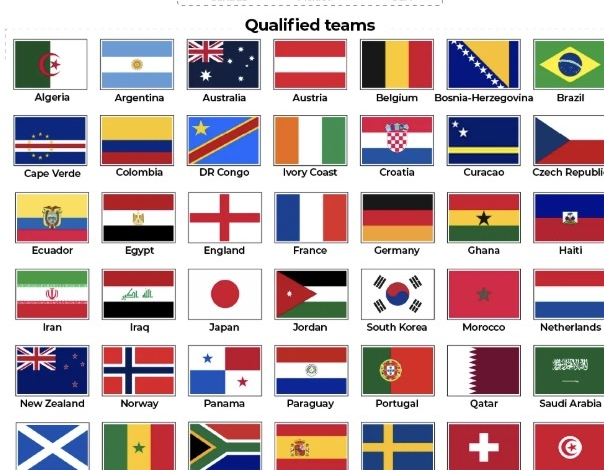
Similar strict rules were announced from Iraq, where the country is attending the World Cub again after more than 40 years.
Players, officials, journalists, and supporters from a number of countries in Africa, the Middle East, and other regions have encountered significant visa hurdles and uncertainty. For supporters from football-loving nations such as Senegal and Ghana, the message increasingly feels less like “welcome to the World Cup” and more like “watch from home.” While not every visa application is denied, the barriers are substantial enough to discourage participation and limit the diversity that has always made the World Cup unique.
This is particularly disappointing because FIFA tournaments have historically represented the exact opposite. They have been among the few global events where politics, geography, and ideology temporarily give way to human connection. Fans from rival nations eat together, celebrate together, and discover that they have far more in common than what divides them.
For generations, the World Cup has been a festival of humanity as much as a football tournament.
The concern today is not whether the stadiums will be full. The concern is whether the world will truly be there.
A World Cup where players commute across an international border on match day, where support staff are excluded, and where thousands of fans are unable to attend because of their nationality is not fully living up to FIFA’s vision of football uniting the world.
The United States still has an opportunity to be remembered as a great host. Its people, cities, and football communities are doing everything possible to welcome the world.
But as kickoff approaches, the uncomfortable reality is that many around the globe no longer feel equally welcome. And that may become one of the defining stories of the 2026 FIFA World Cup.