Wind turbines often produce the most electricity precisely when no one needs it and are then switched off. A system is now coming online in South Dakota that aims to solve this problem with an unusual approach: over 200 carbon blocks store excess wind power as glowing heat.
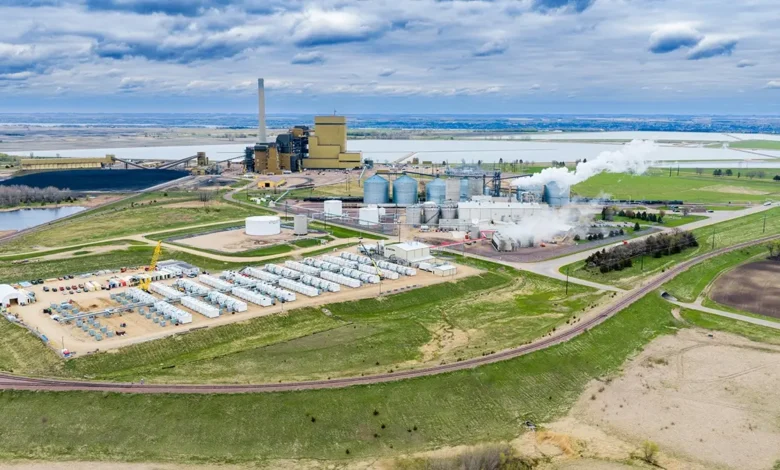
The US wind industry is looking for ways to prevent plants from being shut down when electricity demand is low. To stop energy losses, the biofuel company POET is building a new storage facility in South Dakota. The system at the Big Stone City location is intended to absorb excess, cheap wind power during off-peak times. Jeff Broin, founder and CEO of POET, said:
Our nation’s energy future will be one of innovation, and that’s exactly what we’re focused on – pushing the boundaries of what’s possible and delivering viable solutions that strengthen national security and rural economies. By investing in next-generation technologies, we are paving the way to a biofuture powered by American energy.
The idea: The system stores energy and makes it available to the factory when needed. The Californian start-up Antora Energy is providing the technology for the project. At the center of the facility are more than 200 special blocks made of solid carbon. These heat up strongly due to the wind current and begin to glow. The process is reminiscent of the glowing wires in a standard toaster.
Wind energy from the toaster: How glowing carbon blocks generate electricity and heat
Unlike traditional batteries, the system serves a dual purpose. The system either generates electricity or supplies heat for industrial processes. To do this, operators heat the battery so that it emits a beam of light that has 500 times the intensity of sunlight. It can be used to provide high-temperature heat for industrial processes or to convert special cells back into electricity.
These capture the infrared light emitted by the hot blocks and convert it. Research into this technology began in the 1960s. For a long time, costs were high and efficiency was low, which is why the system was overshadowed by conventional solar cells. However, through improved manufacturing and performance, the start-up achieved 40 percent efficiency in 2022 at temperatures in the 400 degree Celsius range.
40 percent efficiency – and soon even more?
Researchers expect that the efficiency values can exceed the 50 percent mark in the future. Construction of the storage facility in South Dakota took less than twelve months. The system will go into operation gradually, with full output expected to be available by October 2026, according to the project partners.
At the same time, the company is expanding its own production in California. An initial pilot plant in Sunnyvale is already producing the new types of cells. At the same time, the company is building a large commercial factory in San Jose. These steps are intended to make unused wind power economically attractive.
Also interesting: