European Travel Commission Re-Elects Miguel Sanz as Europe Tourism Leaders Meet in Montenegro

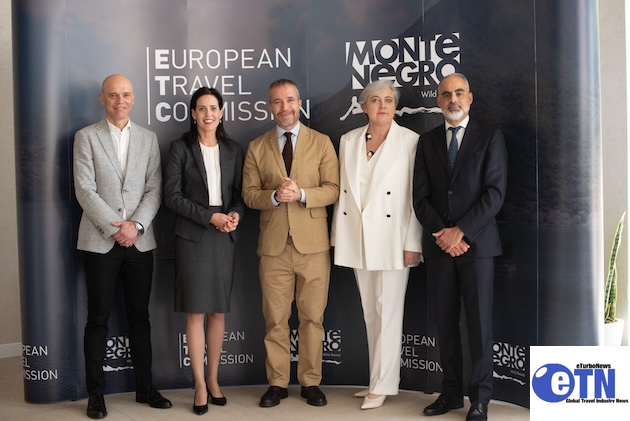
The European Travel Commission re-elected Miguel Sanz as President during ETC General Meeting #111 in Montenegro, where tourism leaders from 32 European destinations discussed destination branding, sustainability, and digital transformation. ETC also welcomed Booking.com, Skyscanner, GetYourGuide, and Feratel as new associate members, strengthening public-private tourism cooperation.
Bay of Kotor Hosts Europe’s Tourism Leadership Gathering
The European Travel Commission (ETC) brought together leaders from 32 national tourism organizations across Europe for its 111th General Meeting, held from May 26–28, 2026, in Montenegro’s UNESCO-listed Bay of Kotor. The gathering marked one of the most significant annual meetings for Europe’s tourism leadership community, focusing on the evolving role of destination branding in an increasingly digital, competitive, and sustainability-driven travel environment.
Hosted by the National Tourism Organization of Montenegro, the event highlighted how European destinations are adapting to changing traveler expectations, digital transformation, sustainability pressures, and the need for year-round tourism strategies.
During the meeting, ETC members re-elected Miguel Sanz, Director General of Turespaña, as President of the organization for another term. Arnar Már Ólafsson, Director General of the Icelandic Tourist Board, was elected as ETC’s new Vice President.
The organization also expanded its private-sector partnerships by welcoming four new associate members: Booking.com, Feratel, GetYourGuide, and Skyscanner.
Miguel Sanz Continues Leadership of ETC
Since first assuming the presidency in 2023, Miguel Sanz has positioned ETC as a stronger collaborative platform for Europe’s tourism sector. Under his leadership, the organization intensified cooperation among national tourism boards, expanded advocacy efforts with European institutions, and promoted sustainable tourism strategies aimed at reducing overtourism and seasonality.
Sanz emphasizes the need for balanced growth and stronger coordination among destinations of all sizes.
“ETC will continue to strengthen its role as a platform for cooperation across Europe, ensuring that both large and smaller destinations benefit from our joint efforts,” Sanz said following his re-election.
His renewed mandate signals continuity in ETC’s priorities, particularly in sustainability, tourism dispersal, resilience, and strengthening Europe’s global competitiveness.

ETC Corporate
The European Travel Commission (ETC) is the non-profit organization responsible for the promotion of Europe as a tourist destination in third markets
Iceland’s Arnar Már Ólafsson Named Vice President
ETC members also elected Arnar Már Ólafsson as Vice President, bringing nearly four decades of tourism expertise to the organization.
Ólafsson has long been associated with sustainable destination management and policy tourism development in Iceland, a destination frequently studied as a model for balancing tourism growth with environmental protection.
He stressed that Europe’s tourism future depends on protecting natural and cultural assets while maintaining economic benefits for local communities.
“The future of European tourism depends on our ability to balance growth with the protection of natural and cultural resources,” Ólafsson said.
His appointment reflects ETC’s growing emphasis on sustainability-led tourism governance.
ETC Expands Private Sector Collaboration
A major development during the General Meeting was the addition of four major travel technology and distribution companies as associate members.
New ETC Associate Members
- Booking.com joins ETC as one of the world’s largest online travel platforms, offering destination marketing reach and traveler intelligence.
- Feratel brings expertise in tourism technology, destination management systems, and visitor information platforms.
- GetYourGuide strengthens ETC’s focus on experiences, activities, and local tourism products.
- Skyscanner contributes aviation and travel demand insights, flight search data, and consumer travel trends.
The inclusion of these companies reflects ETC’s increasing focus on data-driven tourism management and stronger public-private collaboration.
The European Travel Commission is one of Europe’s most influential tourism organizations, primarily responsible for promoting Europe as a destination in long-haul international markets.
ETC’s Core Activities
1. Destination Marketing
ETC coordinates pan-European marketing campaigns promoting Europe to travelers from North America, Asia-Pacific, Latin America, and the Middle East.
2. Market Intelligence and Research
The organization regularly publishes:
- Tourism trend reports
- Consumer sentiment research
- Air connectivity analysis
- Sustainability studies
- Long-haul travel forecasts
These reports are widely used by national tourism boards and tourism ministries.
3. Sustainability Advocacy
ETC has increasingly focused on:
- Tourism dispersal strategies
- Reduction of overtourism
- Climate adaptation
- Community based tourism
- Sustainable mobility
- Year-round tourism development
4. Cooperation with EU Institutions
ETC works closely with European institutions to ensure tourism remains integrated into broader EU economic and sustainability policies.
5. Crisis management and recovery
During the COVID-19 pandemic and subsequent recovery years, ETC played a major role in:
- Coordinating recovery messaging
- Sharing best practices
- Monitoring travel restrictions
- Supporting destination recovery planning
6. Digital Tourism Development
Recent ETC priorities include:
- AI-driven destination marketing
- Smart tourism systems
- Tourism data integration
- Digital visitor management
- Online reputation and branding strategies
While ETC is often viewed as Europe’s umbrella destination marketing organization, it operates differently from other major tourism associations such as ETOA, UN Tourism, WTTC, and NECSTouR.
ETC vs ETOA
European Travel Commission (ETC)
Primary role: Destination promotion and tourism policy cooperation among European national tourism organizations.
Membership Base: National tourism organizations (government-backed tourism boards).
Main focus areas:
- Destination branding
- Market intelligence
- Sustainability
- Long-haul tourism promotion
- European tourism cooperation
Primary Audience: Governments, tourism ministries, destination marketing organizations.
European Tourism Association (ETOA)
Primary role: Business advocacy and commercial networking for the tourism industry.
Membership Base: Tour operators, hotels, attractions, destinations, transport companies, DMCs, and tourism suppliers.
Main focus areas:
- Tourism business advocacy
- Travel trade networking
- B2B contracting events
- Regulatory lobbying
- Group travel and inbound tourism
Primary Audience: Private sector tourism businesses.
Key Difference
ETC primarily represents destinations and public tourism authorities, while ETOA represents commercial tourism operators and businesses.
ETOA is particularly influential in advocating on issues such as visas, taxation, travel regulation, group travel policies, and cross-border tourism barriers affecting operators.
Meanwhile, ETC concentrates more heavily on destination competitiveness, branding, sustainability, and tourism strategic development.
ETC vs. UN Tourism (Formerly UNWTO)
UN Tourism
UN Tourism operates at the global intergovernmental level under the United Nations system.
Focus areas:
- Global tourism policy
- International development
- Tourism statistics
- Sustainable development goals
- Emerging market tourism growth
Unlike ETC, which is Europe-focused, UN Tourism operates globally and includes governments from all regions.