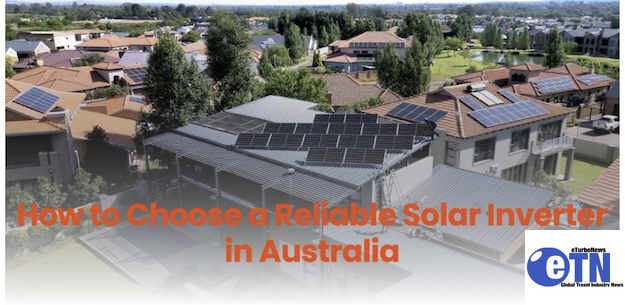
Australia now has over four million rooftop solar installations, with more than 300,000 new systems added in 2024 alone. Solar has become mainstream.
But as demand grows, so does the number of solar inverters in the market. With thousands of products available, how do you cut through the noise? Well, the most objective and reliable way to vet a solar inverter is to check whether the brand meets Australian standards.
Why Compliance Isn’t Optional for Your Solar Inverter
Some buyers focus only on price, brand aesthetics, or a salesperson’s pitch. That approach carries real risk. Compliance with Australian standards is a legal and functional requirement. When a PV inverter falls short, the consequences can be serious.
- Safety issues
An inverter that fails to meet standards may not behave correctly during grid disturbances, voltage spikes, or fault conditions. It can create hazards for household wiring, appliances, and even the broader grid. For homeowners and facility managers, that is not a risk worth taking.
In fact, research found that as many as 40% of grid-tied inverters installed with rooftop solar systems since 2016 may not comply with some mandatory settings, causing issues for grid reliability and security.
- Unexpected delays
A non-compliant inverter can stall a project at the connection approval stage. From 18 December 2021, the National Electricity Rules require all grid-connected inverters to comply with AS/NZS 4777.2:2020, and inverters without this certification are no longer eligible for listing by the Clean Energy Council. If the product is not on the approved list on the day of installation, the system cannot be connected. Delays mean lost time, additional labor costs, and frustrated clients.
- Financial Loss
Non-compliance also has direct financial consequences. Inverters that do not meet AS/NZS 4777.2:2020 are not eligible to receive Small-scale Technology Certificates under the Small-scale Renewable Energy Scheme (SRES), which is a key government incentive for solar buyers in Australia. For a residential or commercial solar project, that forfeited rebate can represent thousands of dollars.
The Australian Standard Every Solar Inverter Must Meet
AS/NZS 4777.2 is the core inverter standard. It specifies the expected performance and behavior of inverters at low voltages (such as households or small-scale commercial properties) and the necessary tests for compliance.
The standard was updated in 2020 to reflect the realities of Australia’s high solar penetration. The revised standard delivers improved specificity regarding the conditions in which inverters should stay connected to or disconnect from the grid, along with optimization of parameters to maximize the value of smart inverter capabilities. In plain terms, it ensures that a residential solar inverter or commercial solar inverter responds intelligently to grid conditions rather than simply switching off at the first sign of instability.
The most recent update, AS/NZS 4777.2:2020 Amd 2:2024, came into effect in August 2025, with non-compliant models removed from the Clean Energy Council’s approved products list. When you evaluate any solar inverter brand for an Australian project, confirming CEC listing under the current amendment is the first box to tick.
Sungrow: A Brand Built Around Australian Standards
When it comes to brands that have made Australian compliance central to their product strategy, Sungrow stands out clearly.
Sungrow has been recognized as the No. 1 Inverter Manufacturer and No. 1 Residential Battery Manufacturer in Australia for 2024, according to rankings published by SunWiz, a leading Australian solar industry authority. That recognition actually reflects more than a decade of deliberate investment in the local market.
With 12 years in the Australian market, Sungrow has delivered over 400,000 systems, powering Australian families and businesses. The company maintains a dedicated Australian office in North Sydney, a local technical support team, and a broad network of trained installers across the country. For buyers who want confidence that local presence matters.
Sungrow offers both residential solar inverters and commercial solar inverters. Their PV inverter products have passed multiple international authoritative certification tests, including TÜV, CE, AS4777, CEC, and CSA.
Additionally, Sungrow achieved full certification aligned with South Australia’s Dynamic Export Limits requirements ahead of the July 2023 deadline, demonstrating the company’s ability to stay ahead of regulatory changes.
Conclusion
A PV inverter that carries the right certifications, comes from a brand with a proven track record, and is empowered by genuine local support is not just a safer choice — it is a smarter long-term investment.
Sungrow checks all three boxes. Whether the project is a family home in Queensland or a commercial facility in New South Wales, the range, the compliance credentials, and the support network are in place.
Visit sungrowpower.com/au/en or speak with a certified Sungrow installer to find the right model for your needs.