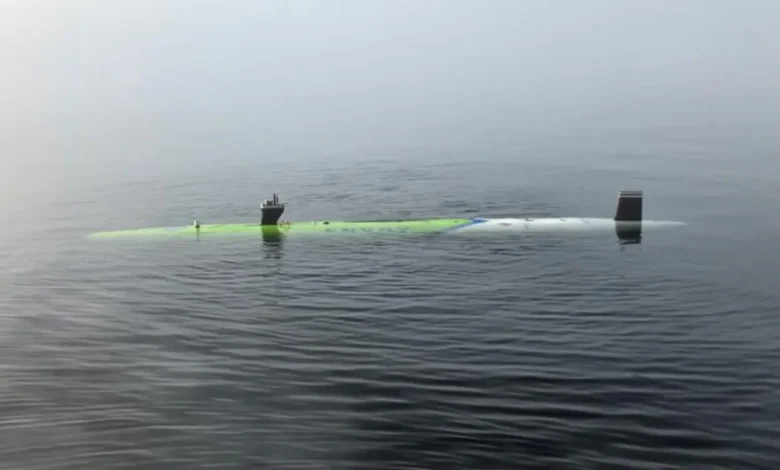
Autonomous underwater vehicles have so far quickly reached their limits: ranges that are too short, too many rescues and too much personnel effort. With the AUV Envoy, Cellula Robotics has now shown that hydrogen fuel cells can push these limits. The submarine traveled over 2,000 kilometers fully submerged.
On April 21, 2026, the company Cellula Robotics published the results of a test mission of its Autonomous Underwater Vehicle (AUV). The autonomous submarine, named Envoy, is said to have covered a distance of more than 2,000 kilometers.
The energy for this use comes from a hydrogen fuel cell system. The technology powered the vehicle throughout the duration of the mission. According to the manufacturer, the submarine exceeded the platform’s originally published performance specifications within the framework of a representative operational profile.
Hydrogen Submarine: Test Mimics Offshore Conditions
The test took place in a profile that simulated real operating conditions in the sea. The AUV did not move in a simple, straight line through the water. During the mission, the autonomous submarine is said to have performed more than 4,000 turns and various maneuvers.
These movement sequences would have significantly increased the energy requirement compared to a constant journey. Success under these conditions should prove the practical usability of the technology and provide operators with a realistic indication of the actually usable range in everyday work.
Impact on offshore operations
Longer diving times could significantly increase the efficiency of work on the open sea. The increased endurance means that vehicles have to be rescued and restarted less frequently. Neil Manning, CEO of Cellula Robotics, summarized the result:
The significance of this result is not just the distance traveled, but that it was achieved fully submerged in a mission profile that better reflects real-world subsea operations. This is what makes endurance meaningful for operators, with the potential for fewer salvages, more continuous operations and greater efficiency offshore.
Hydrogen as submarine propulsion
The fuel cell technology used was developed in collaboration with the company Infinity Fuel Cell and Hydrogen. The system produced water as a byproduct during operation. This underlines the potential for lower-emission missions below the sea surface in addition to the pure advantages in mission length.
William Smith, President & CEO of the partner company, described the result as evidence of the possibilities of hydrogen technology. The technology could reduce the need for human intervention in long-range missions. According to Smith, the solution supports the execution of powerful missions over long distances.
Also interesting: