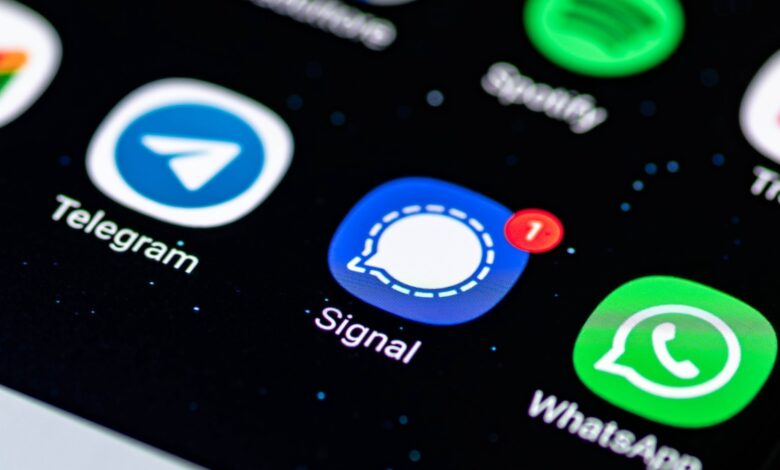
Signal is considered one of the safest messaging apps in the world. But what is behind the service’s end-to-end encryption? The Signal protocol combines three cryptographic methods that even convince the NSA and the EU Commission. We explain how Double Ratchet, AES-256 and X3DH work together and why a stolen key still doesn’t allow access to your chats.
The Signal Protocol uses a special technical framework to protect the privacy of its users. The so-called Double Ratchet algorithm forms the foundation. The system continually renews the encryption keys within an ongoing conversation.
The process promises solid security for every conversation. A mechanical comparison illustrates the principle behind it: A lock automatically recodes itself after each individual opening. Users benefit from this protection because even stolen keys do not allow access to past or future chats.
With AES-256: How Signal encrypts messages
AES-256 encrypts the data packets in the so-called Galois/Counter mode. According to the current state of technology, this method is considered secure against decryption attempts. An authentication code also guarantees the integrity of the data and is intended to exclude manipulation.
Signal says it does not store messages or metadata on its servers. This approach protects the privacy of the user and distinguishes the system from other providers. In the home market of the USA, however, this raises the question of whether the infrastructure is completely independent of foreign influences.
This is how Signal sets up end-to-end encryption
Before the first message, the system establishes a secure connection using the Extended Triple Diffie-Hellman (X3DH) procedure. During this process, the participating user devices exchange public keys. The mathematical basis for this exchange is Curve25519.
The X3DH protocol uses long-term identity keys, short-lived ephemeral keys and special one-time prekeys. These one-time prekeys prevent attackers from impersonating a user while the connection is being established. The mechanism is intended to protect communications even if an actor has recorded the exchange.
Elliptic Curve Cryptography enables high security with low computing effort. The efficiency of this method also protects the hardware of modern end devices. The system thus ensures a trustworthy identity between two communication partners.
Why the NSA and the EU Commission rely on Signal
US authorities such as the NSA and the cybersecurity agency CISA already recommend the service for securing private communications. FBI documents also confirm that encryption makes data access significantly more difficult for investigators. The European Commission also advises its staff to use the app for official communication.
However, the US Department of Defense raises concerns about national data sovereignty. There is an internal debate as to whether the service’s infrastructure will actually remain independent of foreign influences.
Open Source: How experts check Signal’s encryption
Experts continually review implementations for Android and iOS on GitHub. The open source nature of the project strengthens the professional community’s confidence in the integrity of the system. Researchers regularly examine the code for possible vulnerabilities.
Despite ongoing scrutiny in highly regulated areas, the application remains a secure digital privacy solution. Authorities are likely to continue to intensively debate the role of the app for sensitive data in the future. Users worldwide continued to trust in the technical stability of the protocol.
Also interesting: