
Charging electric cars in under four minutes: CATL wants to make this possible with the third generation of its Shenxing battery. The world’s largest battery manufacturer deliberately does not rely on larger batteries, but rather on extreme fast charging with a long service life. We explain how the new LFP cell with 15C charging rate works and why CATL is setting up 4,000 charging and exchange stations in parallel.
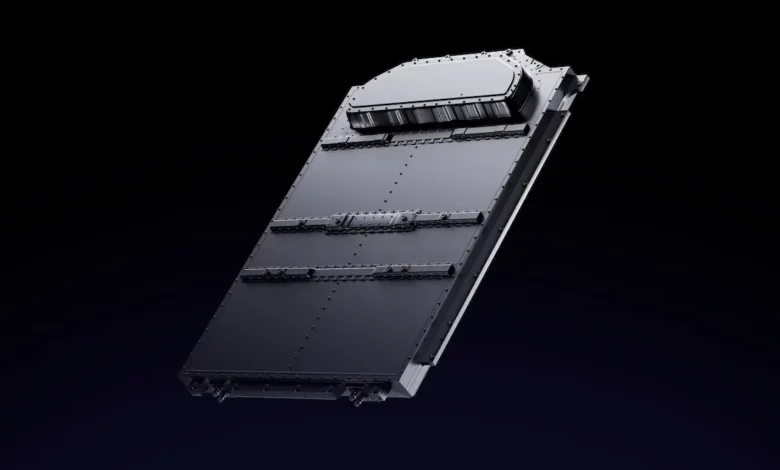
At the Super Technology Day in Beijing, CATL presented the third generation of its Shenxing Superfast Charging Battery. According to the company, under optimal conditions, the charge level of the energy storage device increases from 10 to 80 percent in just 3 minutes and 44 seconds.
Even in extremely cold temperatures of minus 30 degrees Celsius, a charge from 20 to 98 percent should be possible in around nine minutes. This speed is made possible by a peak charging rate of 15C. The focus on the charging speed of lithium iron phosphate cells (LFP) follows a targeted technological strategy.
Since LFP batteries are close to the theoretical limit of energy density, according to Wu Kai, senior scientist at CATL, fast charging is the optimal way for balanced development. This enables practical ranges through very short charging stops instead of increasingly larger and heavier battery packs.
How CATL protects the battery from aging despite the 15C charging rate
A central aspect of the development is controlling heat generation during the charging process. According to the Arrhenius equation, a battery temperature increase of ten degrees Celsius can double the internal side reactions and thus significantly shorten the lifespan of the cells.
The new battery reduces this risk through improved heat dissipation and precise control. As a result, the capacity of the memory should still be over 90 percent even after 1,000 complete cycles. Robin Zeng, Chairman of CATL, emphasized the importance of innovation quality for the global market. He explained that the success of Chinese technology is largely based on brand credibility.
4,000 stations by 2026: CATL’s plan for charging and battery replacement
The company plans to build a comprehensive infrastructure with 4,000 integrated systems by the end of 2026. These stations use the “Choco-Swap” system and the new “Choco-Swap #26” battery, which is based on an 800V high-voltage architecture. This means that the system is compatible with a wide range of modern vehicles in segments B to C.
The systems simultaneously function as stations for changing batteries and as high-performance charging points. A special feature is the possibility of delivering energy from the station batteries directly to the charging stations during peak load times. This should increase the utilization of the equipment to over 85 percent.
How fixed costs should be reduced to a fifth
According to the manufacturer, this integrated approach reduces the fixed costs for fast charging to a fifth of comparable systems. For users, this means a more flexible energy supply through the combination of charging and battery replacement. This would mean that the system would no longer depend solely on the availability of free charging stations.
According to CATL, more efficient energy conversion in the stations also reduces power loss by more than 13 percentage points compared to conventional systems. Ultimately, the seamless combination of ultra-fast charging and quick battery replacement is intended to minimize range anxiety. This dual approach could make electric cars much more suitable for everyday use for long distances and colder regions.
Also interesting: