The Chinese car manufacturer Geely has set a world record with its new i-HEV hybrid engine: consumption of just 2.22 liters per 100 kilometers. Behind this is a strategic change of course – away from pure electric cars and towards cost-efficient hybrid models. We explain how the technology works, which models you get and what that could mean for the European market.
Geely’s new i-HEV system uses artificial intelligence to dynamically regulate the energy flow in vehicles. The company says this improves overall energy efficiency by more than ten percent. The new hybrid engine achieves a thermal efficiency of 48.4 percent. This means it has a high level of efficiency that is untypical for series vehicles.
This high level of efficiency could be particularly relevant for everyday life, as less energy would be wasted. The electric drive should deliver 230 kilowatts of power. According to Geely, acceleration from zero to 30 kilometers per hour takes place in 1.84 seconds. The company has optimized the system specifically to meet the requirements of city traffic.
What’s behind Geely’s i-HEV hybrid engine?
Under combined conditions, the system should achieve a consumption of 2.22 liters per 100 kilometers. This value has reportedly been certified by Guinness and serves as independent proof of the efficiency promise. Geely is initially introducing the technology in two models: the Geely Preface (Xingrui) and the Geely Monjaro (Xingyue L).
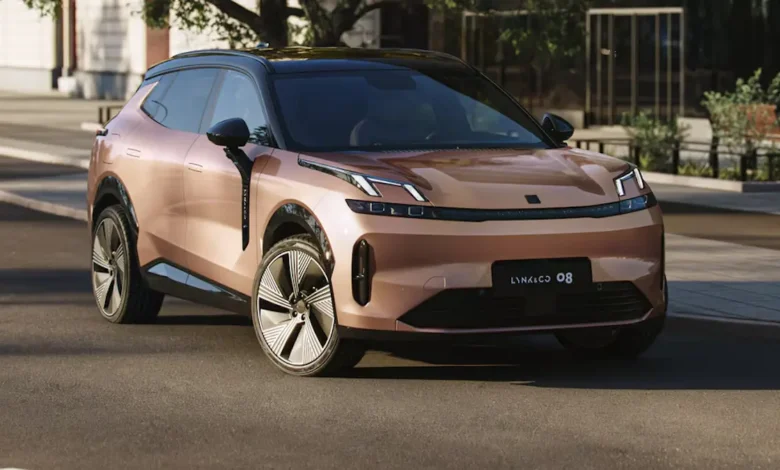
According to the Worldwide Harmonized Light Vehicles Test Procedure (WLTC) standard, the Preface i-HEV is said to have an average consumption of 3.98 liters per 100 kilometers. For the larger Monjaro i-HEV, the average value is 4.75 liters per 100 kilometers. Both models retain their familiar design, but receive new rims and color options. The interior uses dual screens and the Flyme Auto system.
2.22 liter consumption: These models get the technology first
Geely plans to expand the i-HEV system to other models such as the Emgrand and Boyue from 2026. The Emgrand i-HEV is the model that achieved the record figure of 2.22 liters.
The system can be combined with various engine variants, including 1.5-liter and two-liter engines, and is paired with an 11-in-1 electric drive unit.
This is in line with a trend in China where manufacturers are promoting hybrids as a cost-effective alternative to plug-in hybrids. Smaller batteries with just one to two kilowatt hours are intended to significantly reduce the dependence on expensive raw materials.
Why China is now relying on cheap hybrids instead of electric cars
In addition to hybridization, Geely continues to rely on alternative drives such as methanol. Chief Executive Officer Li Shufu has pointed out that methanol has ten times the energy density of lithium-ion batteries.
This could offer advantages in the range and weight of vehicles in the future. The regulatory framework in China supports this technology-open strategy, as government incentives for plug-in hybrids are decreasing.
With exactly 476,327 vehicles delivered in the first two months of 2026, Geely has the necessary market power to scale this rollout.
Also interesting: