The World Travel & Tourism Council reports that Middle East tourism surged in 2025, led by Saudi Arabia’s rapid growth and booming business travel. However, rising geopolitical tensions involving Iran could disrupt momentum in 2026, raising concerns about the region’s travel outlook.
Madrid- The Middle East’s tourism sector surged in 2025, delivering one of the strongest performances of any region worldwide, according to new data released by the World Travel & Tourism Council. Yet even as governments and industry leaders celebrate a year of rapid growth, rising geopolitical tensions — particularly involving Iran — are casting uncertainty about what comes next.
WTTC ‘Economic Impact Research’s
The figures, part of the WTTC’s latest Economic Impact Research, show a region that has not only rebounded from past disruptions but is now outpacing much of the global travel economy. In 2025, Travel & Tourism across the Middle East grew by 5.3 percent, surpassing the global average of 4.1 percent and reinforcing the region’s emergence as a central node in international travel.
At the heart of that expansion is Saudi Arabia, whose ambitious push to diversify its economy beyond oil has transformed it into the region’s dominant tourism engine. The Kingdom’s Travel & Tourism sector grew by 7.4 percent — nearly double the global rate — contributing $178 billion to GDP, or nearly half of the region’s total tourism economy.
International visitor spending in Saudi Arabia rose by 8.2 percent, while business travel — a key pillar of its strategy — surged by more than 55 percent. Conferences, investment forums, and large-scale events have helped position the country as an emerging hub for global commerce as well as leisure.
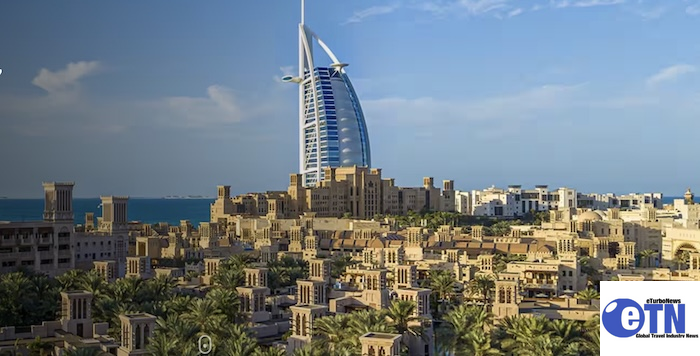
Elsewhere in the region, growth was broad-based. The United Arab Emirates maintained its role as a global gateway, with tourism contributing $68.5 billion to GDP. Jordan and Oman each posted growth of 5.5 percent, reflecting steady demand across both established and emerging destinations.
Across the Middle East, business travel rose by 23 percent, underscoring a shift toward higher-value, purpose-driven travel — and the region’s growing importance as a meeting point for diplomacy, trade, and investment.
“The Middle East continued to deliver strong Travel & Tourism growth in 2025,” said Gloria Guevara, adding that Saudi Arabia had “played a central role in driving this success.”
But beneath the strong numbers lies a more fragile outlook.
As 2026 unfolds, escalating geopolitical tensions threaten to disrupt the trajectory. Analysts point to the potential for conflict spillover, airspace restrictions, and shifting traveler perceptions — all of which could quickly dampen demand. The region’s interconnectedness, which has fueled its growth, also makes it vulnerable to instability.
Tourism in the Middle East has historically proven resilient, often rebounding quickly after periods of disruption. Still, industry leaders acknowledge that the pace and scale of recovery depend heavily on political stability — a factor largely beyond the sector’s control.
Despite these risks, the fundamentals remain strong. Governments across the region continue to invest heavily in infrastructure, aviation, and destination development, while deepening cooperation with private industry.
World Travel & Tourism Council
The World Travel & Tourism Council serves as the global private-sector voice of the Travel & Tourism industry. Its members include chief executives and leaders from airlines, hotel groups, cruise companies, tour operators, and technology firms.
World Travel & Tourism Council
The World Travel & Tourism Council (WTTC) represents the Travel & Tourism sector globally.
For more than three decades, the organization has produced data-driven research measuring tourism’s contribution to GDP, employment, and exports, helping shape policy and strengthen collaboration between governments and industry.
The Middle East to the Forefront of World Tourism
For now, 2025 stands as a high-water mark — a year when ambition, investment, and global demand converged to propel the Middle East to the forefront of world tourism. Whether that momentum can be sustained in 2026 may depend less on economics than on the shifting dynamics of geopolitics.