

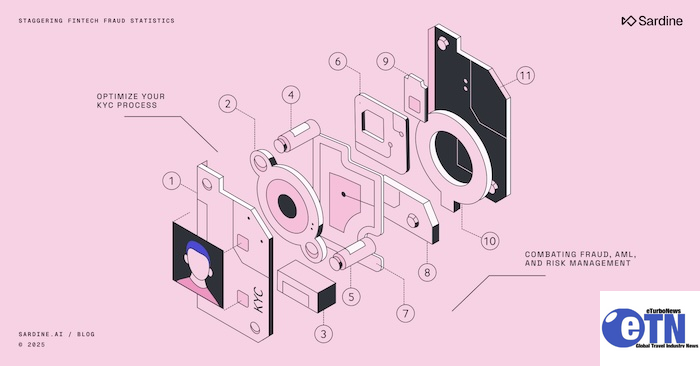
KYC is often treated as a compliance checkpoint, but for fintechs and digital financial products, it is also one of the most important conversion moments in the entire user journey. If the process is too slow, too rigid, or too confusing, legitimate users drop out. If it is too loose, fraud risk increases. That tension is exactly why KYC conversion rates matter so much.
For many teams, the mistake is thinking of KYC purely as a legal requirement rather than a product and risk design problem. In reality, onboarding performance is shaped by how well the business balances verification strength, customer trust, and operational efficiency. The strongest programs do not simply try to approve more users or block more fraud. They try to reduce unnecessary friction while still making smart risk decisions at the right moments.
That is the real challenge behind KYC optimization. Growth teams want a smoother funnel. Compliance teams want stronger controls. Fraud teams want better protection against synthetic identities, document abuse, and onboarding attacks. The best outcomes happen when those goals are treated as connected rather than competing.
Why KYC conversion rates drop even when the flow is compliant
A compliant onboarding flow can still perform poorly. Many businesses technically satisfy verification requirements while creating a customer experience that feels slow, repetitive, or hard to complete. From the user’s perspective, that often looks like friction with no clear reason.
Sometimes the problem is document upload difficulty. Sometimes it is poor mobile usability. Sometimes the flow asks for more information than is necessary for the customer’s risk level. In other cases, the issue is false positives, where legitimate users are forced into extra review because the system cannot confidently distinguish them from risky applicants.
Friction usually comes from weak precision, not just strict rules
One of the biggest causes of low KYC conversion is not that the business verifies too much. It is that the process applies too much friction to the wrong users. If every applicant gets the same heavy review path, the institution creates avoidable abandonment.
.png "Why KYC Conversion Rates Deserve More Attention From Growth and Risk Teams 2 Travel & Tourism News – Global, Trusted, Independent")
KYC and KYB: Smart Customer Due Diligence Solutions
Identity and business verification that incorporate device and behavior signals to stop more fraudulent users during onboarding, with fewer false positives.
This is why global identity verification and broader KYC infrastructure matter so much. Better verification systems help teams separate low-risk users from higher-risk ones earlier, which means they can reserve heavier checks for the cases that actually justify them.
Abandonment is often a signal of workflow design problems
When users leave during KYC, the cause is not always unwillingness to verify. In many cases, it reflects unclear instructions, repetitive inputs, poor document capture support, long pauses, or insufficient trust in why the information is being requested. That means KYC abandonment reduction is not only about loosening controls. It’s about making the workflow easier to understand and complete.
Risk-based KYC is one of the strongest ways to improve conversion
A major reason some onboarding flows underperform is that they treat every user as if the same level of verification is always necessary. In practice, user risk is not uniform. Some applicants can be verified confidently with a lighter path, while others need additional scrutiny.
Tiered verification improves both conversion and control
A risk-based KYC approach allows businesses to apply the right level of friction to the right user. That might mean a smoother path for low-risk applicants and step-up verification for users whose device, behavior, identity, or document signals look more concerning.
This kind of tiered KYC verification helps improve KYC conversion because it reduces unnecessary burden on legitimate users without removing protection for high-risk cases. It also tends to create a more defensible operating model, since the business can show that stronger review is being driven by risk rather than applied randomly.
Better segmentation leads to better onboarding outcomes
The more precisely a business can segment users by risk, the less it has to rely on blunt onboarding rules. That improves both conversion and fraud prevention. Instead of forcing everyone into the same process, teams can optimize the experience around risk confidence.
That is often where the biggest gains come from, not by weakening KYC, but by making it smarter.
Device and behavior signals can reduce unnecessary KYC friction
A document alone does not always tell the full story. Two users may submit equally valid-looking information while presenting very different levels of underlying risk. That is why modern KYC optimization increasingly depends on more than document checks alone.
Device context improves confidence earlier
When a business can see whether the onboarding session is coming from a trustworthy device environment, it has a better chance of reducing false positives. A legitimate user on a stable, low-risk device may not need the same level of scrutiny as an applicant showing signs of obfuscation, automation, or suspicious environment changes.
This is where device intelligence for KYC becomes especially valuable. Device and behavioral context can help businesses make stronger risk decisions without forcing every user through a heavier document or manual review path.
Behavioral cues can support better KYC decisions
Behavioral biometrics can also help teams identify whether the applicant interaction looks human, consistent, and trustworthy. Fraudsters may be able to mimic some identity attributes, but they often struggle to mimic the full pattern of legitimate onboarding behavior. Used carefully, these signals can help reduce KYC false positive rates and improve the overall onboarding experience for real users.
KYC optimization is not just about speed
Faster onboarding is valuable, but speed alone is not the right goal. A business can speed up KYC by removing checks, but if fraud rises or compliance quality weakens, that is not real improvement. The better question is whether the business can increase completion rates while preserving trust and defensibility.
Good KYC optimization improves quality, not just throughput
Strong KYC process optimization focuses on clarity, precision, and smart escalation. That includes:
- asking for only the information needed at the right stage
- making document capture easier on mobile
- reducing repetitive user steps
- using automated KYC workflows where confidence is high
- routing edge cases into stronger review paths
- keeping the user informed about what is happening and why
These kinds of improvements help businesses increase conversion without sacrificing the integrity of the onboarding program.
Conversion and compliance should not be framed as opposites