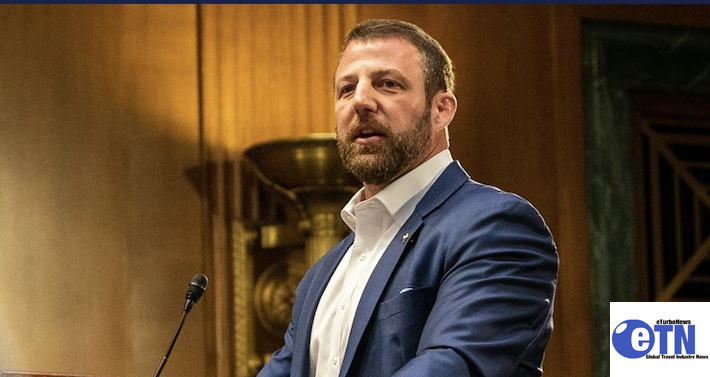
Sen. Markwayne Mullin‘s expected leadership of the US Department of Homeland Security signals tighter—not easier—US travel. While industry leaders hope for faster processing ahead of the 2026 FIFA World Cupvisitors should expect stricter vetting, social media scrutiny, and higher barriers to entry.
As former President Donald Trump moves to appoint Markwayne Mullin as the top official at the US Department of Homeland Security, the travel industry is putting on a hopeful face. Publicly, leaders are talking about “efficiency,” “modernization,” and “global competitiveness.” Privately, many are likely asking a more uncomfortable question: is there any realistic path to making the US easier to visit under this leadership?
The answer, at least for now, leans toward no—with a narrow, conditional “maybe.”
The Reality: Security Will Dominate
Mullin is not being nominated to soften US borders. His political identity is rooted in strengthening them. His alignment with Trump signals continuity with policies that prioritize:
- Expanded vetting of travelers
- Broad data collection, including social media disclosure requirements
- Increased discretion for border agents
- Potential financial barriers, such as higher fees or even bond-like entry requirements for certain visa categories
None of these trends point toward a more welcoming system. They point toward a more scrutinized, conditional, and expensive one.
For international visitors, that translates into a simple expectation:
more questions, more data, more uncertainty.
US Travel Association
US Travel is the national, non-profit organization representing and advocating for all components of the travel industry.
The Travel Industry’s Optimism—Strategic, Not Naïve

The US Travel Association, led by Geoff Freeman, is urging swift confirmation. On his face, that may seem contradictory. Why support a nominee tied to stricter entry policies?
Because the industry understands something critical: They are unlikely to get a less enforcement-focused DHS under this administration. So instead, they are betting on influence—not ideology.
Their hope is that Mullin will:
- Invest in faster screening technology
- Streamline airport processing
- Reduce visa backlogs
In other words, make a stricter system move fasterrather than make it more permissive.
The 2026 World Cup Test
The looming pressure point is the 2026 FIFA World Cup. The US will need to process millions of visitors in a short window. If current barriers remain—long visa wait times, invasive screening, high costs—the country risks:
- Lower attendance
- Diplomatic friction
- Reputational damage as a host nation
This is where the “maybe” comes in. Not because policy will soften—but because logistics may force adaptation.
Will Social Media Checks and Financial Barriers Stay?
Here’s the hard truth:
Policies like social media disclosure are not temporary—they are part of a broader shift toward data-driven border control.
Similarly, proposals involving financial guarantees or higher entry costs reflect a system increasingly designed to:
- Filter risk
- Shift the burden onto the traveler
- Deter overstays through economic means
Under Mullin, these tools are far more likely to expand rather than disappear.
Is There Any Hope for Travelers?
Yes—but it depends on how you define “better.”
Unlikely improvements:
- Less intrusive vetting
- Fewer disclosure requirements
- Lower costs
More plausible improvements:
- Faster airport lines
- More automated screening
- Shorter processing times (for those approved)
In short: the experience may become more efficient—but not more forgiving.
The Bottom Line
The travel industry’s endorsement of Mullin is not a sign that easier travel is on the way. It is a recognition that they must work within a tightening, not a loosening, system.
For international visitors, the message is clear:
- Expect to share more of your digital life
- Expect higher costs and stricter scrutiny
- Hope for speed—not simplicity
If Mullin is confirmed, the US may succeed in hosting global events such as the World Cup and the Olympics.
But it will probably do so on its own terms—secure, controlled, and, for many travelers, increasingly difficult to access.