Cuba is entering a deeper crisis, with failing infrastructure and a collapsing tourism sector pushing livelihoods to the brink. As pressure mounts, the question is no longer whether the island can endure—but whether the United States and the wider world will act to stabilize it, or allow conditions to deteriorate further.
Cuba is entering a new phase of crisis—one that feels less like a downturn and more like a slow unraveling.
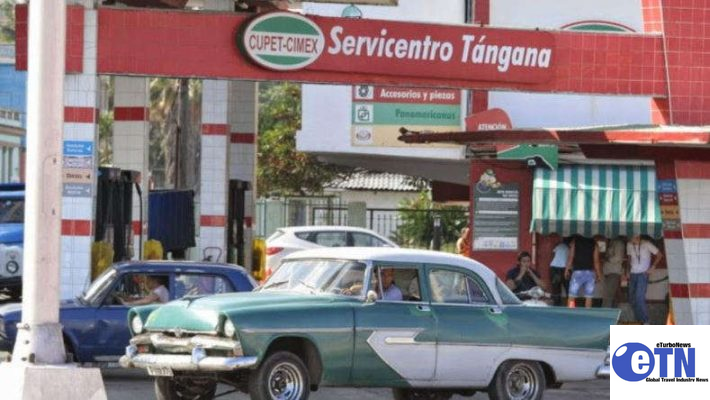
For decades, the island has endured economic hardship, political isolation, and external pressure. But what is happening now is different in both intensity and implication. Power outages are widespread. Fuel shortages are crippling transportation. Tourism—one of the country’s last economic lifelines—is faltering under the weight of travel warnings and declining confidence.
This is not a temporary disruption. It is a structural breakdown. And yet, the global response has been strikingly muted.
A Tourism Economy on the Brink
Tourism in Cuba is not just an industry; it is a survival mechanism.
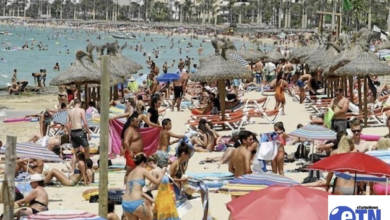
Over the past decade, a fragile but dynamic private sector has emerged around it—family-run guesthouses, independent restaurants, local guides, and drivers. These small enterprises depend almost entirely on the steady arrival of foreign visitors. Now, that flow is slowing down.
As infrastructure weakens and uncertainty grows, travelers hesitate. Airlines adjust. Governments issue advisories. And the consequences ripple quickly through an economy with little capacity to absorb shocks.
For many Cubans, the loss of tourism income is not abstract. It is immediate and personal.
Pressure Without Endgame
At the center of Cuba’s predicament lies a familiar but unresolved dynamic: its relationship with the United States.
For decades, US policy has exerted enormous influence over Cuba’s economic reality. Sanctions, restrictions, and financial barriers have constrained the island’s ability to access capital, energy, and global markets.
What is less clear is the strategic objective today. Is the goal to encourage reform through pressure? To isolate indefinitely?= Or to wait for internal conditions to force change?
The absence of a clearly articulated endgame has created a vacuum—one filled increasingly by speculation that the current trajectory is not meant to stabilize Cuba, but to test its limits.
Intervention or Attrition?

Cuba Travel – Tourism Portal
Cuba Travel has the best tourist guide for your trips to Cuba. Find tourist destinations, attractions, facts and all the right information for your Cuban vacation.
It is highly unlikely that the United States would pursue direct military intervention in Cuba. The geopolitical costs would be prohibitive, and the international backlash significant.
But power does not always manifest through force.
There is another possibility—less visible, but no less consequential: that the current approach relies on sustained pressure and strategic patience, allowing economic and social strain to accumulate over time.
In this scenario, change is not imposed from the outside. It emerges from within, under conditions shaped externally. For those living through it, the distinction matters little.
A Region That Cannot Speak Loudly
Cuba’s crisis is unfolding in a region that understands its stakes—but struggles to respond.
Caribbean nations share deep historical and cultural ties with the island. They also share a common economic reality: dependence on tourism, much of it originating from the United States. That dependence shapes diplomacy.
Publicly challenging US policy toward Cuba carries risks that few governments in the region are willing to take. As a result, concern is often expressed quietly, if at all. The silence is not indifference. It is a constraint.
No Cavalry on the Horizon
Speculation about support from global powers such as China or Russia persists, but the likelihood of a comprehensive economic rescue remains slim.
Both countries maintain strategic relationships with Cuba, yet neither has demonstrated a willingness to commit the scale of resources required to stabilize its economy or revive its tourism sector. External support, if it comes, is likely to be selective and limited. Not transformative.
The Limits of Resilience
Cuba’s greatest asset has always been the resilience of its people. Decades of adversity have produced a society adept at adaptation and survival.
But resilience is not inexhaustible. Today, signs of strain are increasingly visible—particularly among younger generations. Emigration pressures are rising. Private businesses face mounting uncertainty. Daily life is shaped by unpredictability.
The question is no longer whether Cubans can endure hardship. It is how much more can be asked of them.
What Comes Next?
Cuba is approaching a threshold.
If current conditions persist, the consequences are likely to extend beyond economics: increased migration, deeper social pressures, and a further erosion of the very sectors—like tourism—that have provided a measure of stability.
At that point, the choices facing external actors, particularly the United States, may become more urgent and more constrained. Engagement, if it comes, may come later—under less favorable conditions, and with higher costs.
A Crisis Measured in Silence
What is most striking about Cuba’s current moment is not only the severity of its challenges, but the relative quiet surrounding them.
There are no dramatic headlines, no singular event commanding global attention. Instead, there is a steady accumulation of pressure—economic, social, and human. But slow-moving crises are no less consequential than sudden ones. And ignoring them doesn’t make them disappear.
The Question That Remains
Cuba’s future will ultimately be shaped by a combination of internal decisions and external forces. But one question looms over all others:
Will the international community—led by the United States—choose to help stabilize the island before conditions deteriorate further? Or will it continue on its current course, allowing pressure to build until change becomes inevitable?
Inaction, in this context, is not neutral. It is a policy choice. And for Cuba, time is running short.