A new analysis method from the Federal Institute for Materials Research and Testing promises significantly faster detection of the controversial PFAS chemicals. Instead of complex laboratory analyses, a mobile rapid test that can detect the eternal chemicals within 15 minutes could be sufficient in the future.
PFAS are considered eternal chemicals and can now be found in almost all areas. Since they have been used in numerous everyday objects for decades because of their water, grease and dirt-repellent properties, they can now be found almost everywhere.
But the synthetic substances are – as the name eternal chemicals suggests – hardly degradable and therefore leave their traces in water, soil, food and even the human body. They are suspected of causing cancer, weakening the immune system and impairing fertility.
To date, the detection of PFAS has been considered complex and expensive. As a rule, samples have to be taken and examined in specialized laboratories. But that could change in the future, because researchers at the Federal Institute for Materials Research and Testing (BAM) have developed a rapid test for eternal chemicals that provides evidence in just 15 minutes.
Rapid test for forever chemicals could revolutionize analysis
PFAS are found in coated pans, waterproof outdoor jackets and grease-repellent food packaging. But the eternal chemicals can also be found in fire extinguishing foams – one reason why they are found in soil and groundwater in many places.
But so far, PFAS could only be detected in the laboratory using a time-consuming process. The analyzes have so far been expensive and required highly qualified personnel. The evaluation could also take several days, making quick decisions – for example in the case of acute environmental pollution – much more difficult.
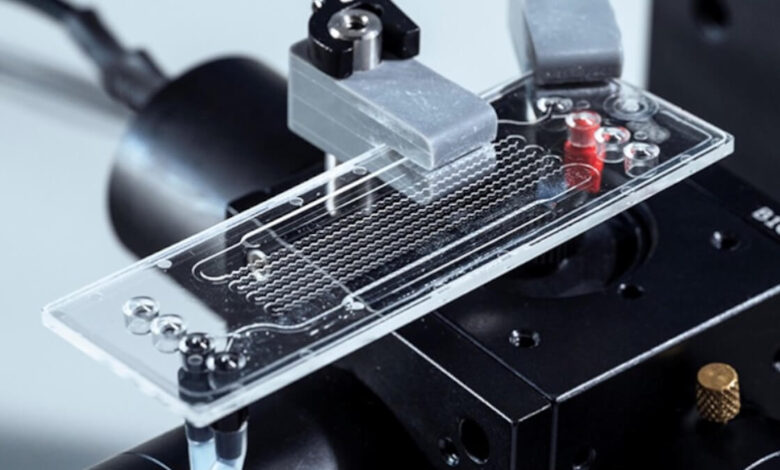
However, the researchers at the Federal Institute for Materials Research and Testing can now detect eternity chemicals in less than 15 minutes with their new rapid test. To do this, they have developed a compact sensor system that detects PFAS in aqueous samples directly on site. Even small amounts of the eternal chemicals can be detected in this way.
“PFAS are a global problem,” explains Knut Rurack, an expert in chemical and optical sensors at BAM. “With our technology, we create the basis for rapid on-site analyzes that support authorities and companies in monitoring and remediating contaminated sites.”
Rapid test detects eternity chemicals in mini laboratory
The system can be used mobile and, according to the BAM researchers, can be simply understood as a “pocket-sized mini laboratory”. A combination of tiny fluorescent particles works with a microfluidic platform.
“Our goal was a robust, user-friendly and scalable system,” says Rurack. “The combination of materials science and microfluidics opens up new avenues for monitoring cleanup and remediation processes as part of environmental management – not only for PFAS, but also for other pollutants.”
No complex laboratory equipment is necessary for the PFAS rapid test, which significantly reduces the analysis effort. The results of the BAM study are now in the renowned specialist journal Nature Communications was published and was selected there as an “Editors’ Highlight” as one of the most important works of the past few months in the field of “Materials Science and Chemistry”.
Also interesting:

🤑 Get a €200 bonus
Open yours now free Santander checking account and dust for a short time up to 200 euros bonus for new customers. It’s worth being quick!
Secure €200 now
Requirements apply, advertisement