Sea algae have found a way to protect themselves from excessive sunlight and at the same time generate vital energy. Researchers at Osaka Metropolitan University discovered a hidden pigment called siphonein that prevents cell damage. These findings could serve as a technical blueprint for more resilient solar modules.
The background: Photosynthetic organisms use delicate structures known as light-harvesting complexes (LHCs) to efficiently absorb sunlight. Under normal conditions, chlorophyll captures light and efficiently transmits this energy to reaction centers.
However, at extremely high levels of light, chlorophyll often enters a harmful triplet state that produces aggressive oxygen compounds. To avert this danger, organisms use so-called carotenoids, which control the excess energy and quickly dissipate it again.
Siphonein: How the algae prevents heat death
The researchers studied the sea green alga Codium fragile, which has unusual pigments such as siphonein and siphonaxanthin. This type of algae protects itself from radiation damage and oxidative damage to cells. The special carotenoids make it possible to optimally use the prevailing blue-green light to generate energy.
In experiments, harmful signals disappeared completely in the algae, in contrast to land plants such as spinach, which demonstrates the high protective effect. Using special techniques such as electron spin resonance spectroscopy (EPR) and quantum simulations, the scientists identified siphonein as the crucial protective pigment.
It sits at the so-called L1 site within the light-harvesting complex LHCII and binds directly to a cluster of chlorophyll molecules (Chl a610-a612). There it deactivates excess energy highly efficiently using triplet-triplet energy transfer (TTET) before it can destroy the sensitive cells.
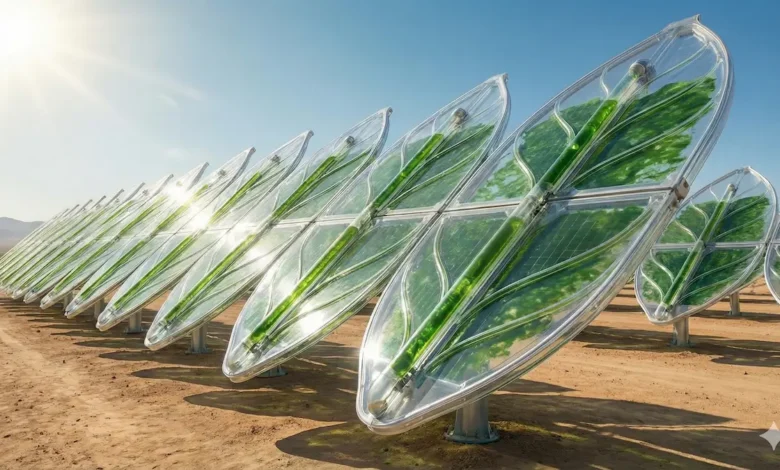
Algae as a blueprint for efficient solar systems
The results provide a blueprint for artificial pigments that can optimize light collectors in technical systems, according to the researchers in their study, which appeared on October 1, 2025 in the journal Cell Reports Physical Science. The analysis illustrates how the electronic structure of the pigment regulates energy dissipation highly efficiently.
Longer-lasting and more efficient renewable energy systems are within reach thanks to these biological discoveries. This could also protect future solar systems from heat death and significantly extend their lifespan.
With in-depth knowledge of molecular structural features, researchers are now designing pigments that are intended to specifically increase the efficiency of technical light harvesting antennas. Ultimately, molecular design should help to permanently optimize the light output in artificial systems.
Also interesting: