
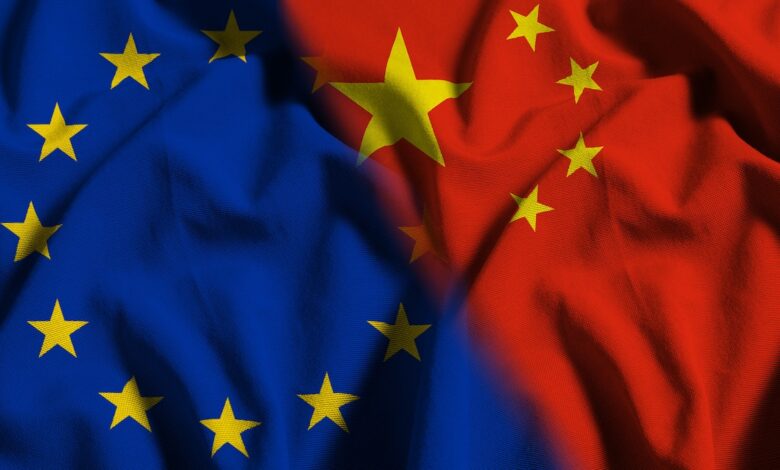
The EU has been struggling internally for some time over how to handle Chinese telecommunications technology. Now the European Commission has presented a draft law that could ban Chinese companies like Huawei and ZTE from Europe. Beijing is anything but amused. A commentary analysis.
Huawei and ZTE form the backbone of European mobile networks
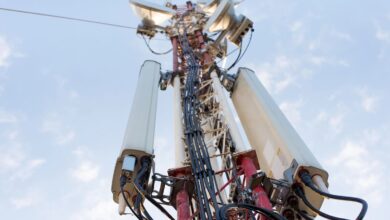
- Since the introduction of LTE around 15 years ago Huawei and ZTE are the backbone of European mobile networks. The two Chinese companies offered components for the technological infrastructure at prices that their European competitors could not keep up with. A large part of the mobile network in Europe is therefore still based on antennas, radio stations and network technology from Huawei and ZTE.
- Due to suspected Security risks and possible influence by China The use of foreign technology has come under increasing criticism in recent years. Germany has already decided to ban Chinese suppliers Huawei and ZTE. From 2027, components may no longer be used in data centers and for the 5G network. The German network operators must replace affected radio masts by the end of 2029. Brussels wants to ensure that all EU countries implement similar measures in the future.
- The background to the concerns is that Chinese companies are required by law to cooperate closely with the state are. The fear: Beijing could instruct Huawei and ZTE to install technical backdoors in order to sabotage European mobile networks in the event of a conflict. However, the EU Commission’s draft law still has to be discussed in Parliament and the Council of the 27 member states. A ban could take effect in three years at the earliest.
Without ZTE and Huawei? EU wants to build digital “Fortress Europe”.
Concern is growing in Brussels that both sensitive data will flow to China Interfering signals from the Far East be sent to Europe. It’s no longer just about mobile communications, but about power grids, rails and health care.
The EU Commission therefore no longer thinks of cybersecurity in purely technical terms, but in geopolitical terms – and wants one digital “Fortress Europe” build. This may be desirable in the long term. But a little more diplomatic tact would definitely be appropriate.
Huawei and ZTE are not mentioned by name, but are clearly addressed. According to the EU Commission, a company should no longer only be considered risky if the technology does not meet safety standards, but if it does restrictive laws which force it to hand over data to a government that does not accept independent courts.
With a view to the European branches of Chinese companies, at least this point should be addressed diplomatic level let it be regulated. Also in order not to burden network operators unnecessarily and not to endanger jobs in Europe.
Voices
- EU Digital Commissioner Henna Virkkunen in a statement: “Cybersecurity threats are not just technical challenges. They are strategic risks to our democracy, our economy and our way of life. With the new cybersecurity package we will have the means to better protect our critical ICT supply chains, but also to decisively combat cyberattacks.”
- The Chinese Foreign Ministry told Reuters: “Transforming trade into security and political issues will hinder technological progress and economic growth and benefit no one. The facts have shown that in a few countries, the removal of Chinese telecommunications companies’ high-quality and secure equipment not only hinders their domestic technological development but also results in severe financial losses.”
- The Mobile industry association GSMA tries to be diplomatic: “We share the Commission’s goal of strengthening cybersecurity in Europe. However, measures must be risk-based and implementable, strengthen cybersecurity risk management and ensure network connectivity. Not all equipment elements are equally sensitive. Apart from the lack of proportionality, the unrealistic deadlines pose the risk of significant disruption and additional costs.”
EU security promises must be based on evidence
From a purely economic perspective, the EU’s plan initially sounds tempting. Because a ban on Huawei and ZTE would have more orders for European companies, shorter supply chains and thus also a positive climate aspect result. Such a mobile network “Made in Europe” would certainly have charm. But this romanticism only works on paper.
Ultimately, the European mobile phone operators would have to bear the costs, which are likely to be passed on to consumers. According to the EU Commission, it should only be a few cents per month. But it is unclear whether this calculation will work.
Because: Fewer providers mean less competition and competition is a friend of low prices – and the enemy monopolistic dead spots. In addition, there are possible retaliatory measures from China, which could hit the EU hard, as many member states are dependent on Chinese components, especially in the energy sector.
In principle, however, less dependency is desirable. And: Even if they are implemented with full force, they are EU plans less apodictic than suggested. But the EU’s security promise must be based on evidence and not on suspicion. Because anyone who builds walls should know what they are protecting themselves from – and what they are including with it.
Also interesting: