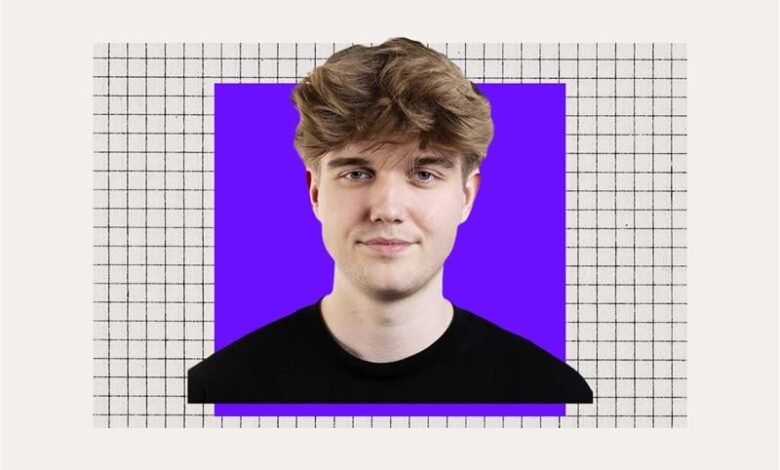

At the age of 18, Moritz Holländer founded one of Europe’s fastest-growing startups according to the British Financial Times: His Berlin ad tech company Almedia took third place in the FT1000 2025 ranking with an annual sales growth rate of 474 percent. Today he is 23 years old and is on the current 30 under 30 Forbes list for the DACH region.
The core of Almedia’s business is “reward-based marketing”. For this purpose, Holländer runs the Freecash app, where users receive money for testing other apps, games or registrations.
According to its own information, Almedia achieved sales of around 29 million euros (as of 2023), reached over 60 million users worldwide and paid out more than 150 million dollars to them. The original two-man team grew rapidly: Almedia currently employs around 130 people.
This is how Freecash works
Almedia operates a rewards platform called Freecash; it functions as an interface between platform users and advertisers. Companies use Freecash to acquire new users or collect product feedback by setting tasks with financial incentives. For users this means: Earn money through simple actions such as app registrations or product tests.
You get around two euros for registering with TikTok or small amounts for installing mobile games. For some games, the compensation increases with game progress and can add up to several hundred euros.
Read too

We met Moritz Holländer for an interview at Almedia. We talked to him about why he dropped out of college, about 13-hour workdays, about failures, how he managed to build a company without VC, and why the Covid-19 pandemic played into his hands.
Founder scene: Moritz, you founded Almedia in 2020 at the age of 18 – what was the trigger for you to want to build something of your own at such a young age?
Moritz Holländer: I have always been interested in entrepreneurship and wanted to start something of my own, do my own business. That was always my plan. From an early age as a child – I was maybe twelve – I sold small things on eBay. I also worked on YouTube with affiliate links, promoting websites or creating blogs. I started small side businesses while I was at school until I graduated from high school.
At 18, I was old enough – about six months after graduating from high school – to officially start my own company. I wanted to do something that I already knew a little bit about.
You then bootstrapped Almedia, i.e. without investors, using your own financing. How did you manage that?
I designed my business around this and thought about what I could do without VC money. At that time I had around 20,000 euros of my own capital. I have weighed up; Because many things that don’t require capital at all aren’t really scalable. But I wanted to do something that had a foundation, something with a product behind it, but I had limited capital.
I then found the niche Freecash: The way it works is that people complete surveys or other tasks online, for example to get virtual items in a game. I did some research and then knew that there were several players in this niche, but comparatively few. There were around four websites that had a turnover of between 10,000 and 20,000 euros per month.
And I knew that this was something that you could build yourself with little capital and still be able to sell yourself. I saw directly what I could do better than the existing providers. My co-founder at the time then coded for me and I took over the management of the business. After a year he left and I continued.
I was able to pay myself a salary in the first month.

What did you learn during this initial period and when were you ready to pay yourself your first salary?
At the beginning I did a bit of everything and didn’t yet have a sense of what was important and what wasn’t. I didn’t use my time very efficiently, but at the same time I did a lot to learn a lot – which was a good thing. That means I wrote a lot of emails, did my own taxes, and so on. The business started well straight away, there was organic traffic and so we were profitable in the first month. So I was able to pay myself a salary in the first month.
Read too

You founded the company in 2020 – just before the Covid-19 pandemic. Was it an advantage or disadvantage that many people stayed at home for your digital business?
Basically, the timing was right for founding the startup. For me personally, the pandemic made the alternative of studying even less attractive. (laughs) I felt less bad that I focused on my business instead of my studies at the FU (editor’s note: Free University of Berlin) because I quickly saw: It works and I don’t need the studies for it.
My parents probably still want me to study. But they also supported me in becoming self-employed.
Over five years have passed since 2020 and the founding of Almedia. The company has evolved. What tasks have you handed over and to what extent has your team grown since then?
I think the most important thing was that I found a very good person for tech. The next assignment I handed in was everything related to finance and accounting. I gave up all areas that I had no knowledge of as quickly as possible in order to focus on the product.
What does your daily business look like?
We now have over 100 people at Almedia – so my everyday life looks different than it did at the very beginning. That means I have to give more. For me it’s a challenge because I’m still in this mindset that I would love to do anything.
I get seven or eight hours of meetings a day and it doesn’t feel like a burden.
I have a lot of meetings a day because we have a lot of new people in the team – I have seven or eight hours of meetings a day. That may sound unproductive, but in the meetings we update each other, I am involved in decisions and at the same time the employees are directly involved.
Above all, I am involved in the topics of user acquisition and B2B, i.e. looking after advertisers. My day starts between 9 and 10 in the office and I stay until nine or ten in the evening – and also on weekends. It doesn’t feel like a burden, I always enjoy the work. And that’s why I don’t think long working days are bad.
You are a young founder and boss, you lead a young team. How would you describe your leadership style?
I want to be able to understand what someone is doing, understand problems and thus be able to do my part. I want to stay involved, but also transfer and give up responsibility. I want my employees to be able to do a lot and take on responsibility. And at the same time I’m very pushy, so I want us to do things quickly and not wait too long. This means that the pace in the company is fast. Everything just goes bang, bang, bang.
What has been your biggest success so far in recent years?
It is a great success that we managed the switch well with Almedia; from a remote startup with friends to a real business with an office in Berlin. We had the switch in March 2023 when we rented our office. It wasn’t that easy for us at first because we weren’t used to working in the office. We hired a lot of new people during this time and had to learn a lot ourselves in the hiring process.
It was perhaps a disadvantage that we had no investors and could not benefit from a wealth of experience in people management and team building. We learned a lot and wasted a lot of time because we brought the wrong people into the team and then waited too long, which created chaos. Now, almost three years later, we are at a completely different level. This is probably my greatest success.
Read too

You just talked about learning – what was your biggest mistake that you learned from? What did you take away from it?
We have five company values, one of which is focus. And what was a failure back then was that precisely this focus was missing. We grew a lot until it leveled off briefly. In order to stimulate growth again, we started several projects at the same time – five projects, five approaches and we were only five people. That means everyone did everything and nothing was really right. We worked on unnecessary projects for half a year that we never released. So focus was our biggest learning as a team. For me as CEO it is important to select the right projects and set a focus.
We want to reach unicorn level in the next two years.
What do you have planned for 2026? What is your goal with Almedia?
We are moving to a second office with Almedia, where we want to stay long-term. We will probably be approaching 150 to 200 in the Almedia team. This means we also have to adapt our structure and way of working. In terms of sales, our goal is to achieve at least a billion run rate per year in the next two years, i.e. to reach unicorn levels in terms of both sales and valuation.
Read too

What tips can you give to young founders who are just starting out with their startup?
For me personally, it worked well to focus on a niche in which I could stand out relatively quickly. Many founders initially look for an extremely large market, which has a lot of potential, but I think it’s easier, more sustainable and more fun if you can quickly celebrate your first successes. A niche market is suitable. Then it’s important to be good at it and expand from it.